The AirSafe.com News

↑ Grab this Headline Animator

Showing posts with label passenger. Show all posts

28 June 2014

Passenger killed by shots fired at airliner

24 June 2014; Pakistan International Airlines (PIA); A310-300; AP-BGN; flight PK756; Peshawar, Pakistan - The aircraft was on a scheduled international flight from Riyadh, Saudi Arabia to Peshawar, Pakistan, when it was struck by several bullets shortly before landing. Two cabin crew members and one passenger were hit, and the passenger died of her injuries. There were no other injuries among the 10 other crew members or 177 other passengers.

According to one Pakistani newspaper, an airline official stated that the plane was 5.6 kilometers (3.5 miles) away from the runway when it was hit by gunfire from the ground.

This was the eighth event involving a passenger fatality on an A310, and the first since a June 2009 crash that killed all but one person on board the aircraft.

This was the ninth event involving a passenger fatality on a PIA flight, and the first since a July 2007 crash that killed all 41 passengers and four crew members on board the aircraft.

Related information
Crashes and other fatal passenger events on the A310
Fatal passenger events involving PIA

13 June 2014

Can the 737 be attacked by hackers? - The FAA wants your feedback

Last Friday (6 June 2014), the FAA published a proposal for additional requirements that would make it less likely that someone could hack into critical electronic systems on some 737 models. The language is a bit dense, but the implication is that several models of the 737 (the 737-700, -700C, -800, -900ER, -7, -8, and -9 series) have an unusual design feature that allows access to the airplane's critical systems and data network by way of the passengers service computer systems.

It is not at all clear that this is a current danger, or if a 737 has already been hacked. For more details, you can review the Federal Register item that discusses this issue (Federal Register Vol. 79, No. 109, pages 32642-3), and for further details you can find out more in the docket folder for Docket FAA-2014-0302

What's the problem?
According to the FAA, the applicable airworthiness regulations do not contain adequate or appropriate safety standards to prevent inappropriate access to critical information systems. The special conditions that the FAA wants to add to the regulations contain additional safety standards that would presumably establish a level of safety equivalent to existing airworthiness standards.

The FAA wants your comments
The FAA would like to hear what you have to say, and invites everyone to contribute to this rule making effort. You can send written comments, data, or or other information to the FAA. While the most helpful comments would reference a specific portion of the special conditions, the FAA will consider all comments. The closing date for comments is 21 July 2014.

The FAA accepts comments online, by, fax, by mail, or it in person:

  • Online: Visit this link to the comment page, or if that does not work, visit http://www.regulations.gov and search for docket number FAA-2014-0302-0001

  • Mail: Send comments to Docket Operations, M-30, U.S. Department of Transportation (DOT), 1200 New Jersey Avenue SE., Room W12-140, West Building Ground Floor, Washington, DC 20590-0001.

  • Hand Delivery or Courier: Take comments to Docket Operations in Room W12-140 of the West Building Ground Floor at 1200 New Jersey Avenue SE., Washington, DC, between 9 a.m. and 5 p.m., Monday through Friday, except federal holidays.

  • Fax: Fax comments to Docket Operations at 202-493-2251.

Common questions about the comment process

  • Can anybody leave a comment?: Yes

  • Do I have to be some kind of computer or aviation expert: No

  • Will my comments make a difference?: Hard to say

Additional resources
Overview at regulations.gov
FAA docket folder

Photo of Boeing 737-8ZS cockpit: Wikipedia

21 February 2014

Advice on how to prevent injuries from inflight turbulence

Turbulence happens on just about every flight, but most of the time the amount of turbulence is very small, and the level of risk is very low. Two turbulence events that happened earlier this week, one involving a Cathay Pacific 747 and the second a United Airlines 737 both led to injuries, and also received quite a bit of media attention.

These two events served as a reminder reminders of just how serious students can be, and the need for passengers to be aware of the potential danger.The following insights and advice should keep you from becoming one of those statistics.

Airline turbulence basics
You can experience turbulence for many reasons, typically due to weather conditions such as thunderstorms. Severe turbulence can happen in any phase of flight, but it's most likely to be hazardous during cruise when passengers and crew may be out of their seats and not belted in. In most cases a passenger experiencing turbulence will feel nothing more than a slight vibration. At the other extreme are those rare events that are severe enough to throw passengers around the cabin.

What causes turbulence?
Turbulence is air movement that normally cannot be seen. While it may sometimes be associated with weather conditions like thunderstorms, it can also happen in the following situations, which could happen even on a clear day.

  1. Thermals - Heat from the sun makes warm air masses rise and cold ones fall.
  2. Jet streams - Fast, high-altitude air currents shift, disturbing the air nearby.
  3. Mountains - Air passing over mountains can lead to turbulence as the air mixes above the air mass on the other downwind side.
  4. Wake turbulence - If an aircraft travels too close to another aircraft, the trailing aircraft may pass through an area of chaotic air currents caused by the lead aircraft.

How bad can it get?
Turbulence effects can range from the barely noticeable to the potentially dangerous. What you may feel can range from feeling a slight strain against your seat belts, to being forced violently against your seat belts, and having unsecured items (including yourself if you are unbuckled) being being tossed about the cabin.

Reducing your risks from turbulence
When the flight crew expects turbulence, they will work with the cabin crew to make sure that passengers are in their seats and belted in, and that serving carts and other loose items are properly secured. Even when turbulence is not expected, you should take a few basics steps before and during the flight to ensure your safety:

  • Follow the instructions of the crew - If the crew suggests that passengers return to their seats, do so as soon as you can.
  • Wear your seat belt at all times - Turbulence events can happen even during a smooth flight on a cloudless day. Turbulence is not always predictable and may arrive without warning.
  • Be aware of your overhead bin - If you are sitting under an overhead bin, make sure that the door is properly closed. Also, avoid sitting under a bin that is heavily packed or that contains one or more heavy items. If you can, move to a seat that is not directly under a bin.

Resources
Turbulence injuries on a United flight out of Denver - 18 Feburary 2014
AirSafe.com turbulence information
Passengers killed by turbulence
FAA turbulence information
How to measure turbulence while you fly
Using child restraints on aircraft
Airline pilot Patrick Smith weighs in on turbulence

Photo credit: Civil Aviation Safety Authority of Australia

18 February 2014

Turbulence injuries on a United flight out of Denver

17 February 2014, United Airlines 737-700, flight 1676, near Billings, MT: Yesterday, several passengers and crew members were injured in a turbulence event involving a United Airlines 737-700 that was en route from Denver, CO to Billings, MT, with at least one passenger hitting the ceiling hard enough to damage a panel. According to the FAA, the captain declared a medical emergency, and the aircraft landed without further incident. The event took place in the early afternoon, and the aircraft was reportedly in clear skies at the time of the incident.


United 737-700 in Billings, MT after turbulence event

The aircraft apparently encountered turbulence during descent that caused several flight attendants and unrestrained passengers to be tossed in the air. Most of the the injuries were minor, and only one victim, a flight attendant, required hospitalization.

Among those tossed in midair was an infant, who landed in a nearby seat and was not injured. According to United, there were 114 passengers and five crew members on board, and three flight attendants and two passengers were injured. Since the 737 has two flight crew members, this implies that all of the flight attendants who were on board were injured.

Turbulence events are not that rare, with the NTSB noting hundreds of such events in their online database. The FAA notes that in the 10-year period from 2002-2011, a total of 110 passengers and 219 crew members were injured by turbulence.

AirSafe.com has extensive background information on inflight turbulence at turbulence.airsafe.com, including advice on how to reduce turbulence risks and a link to a mobile phone app that will allow you to measure turbulence while you fly.

While significant turbulence events that lead to injuries occur several times a year, fatal events are much more infrequent. The last turbulence event that led to a passenger death was in 1997 on a United Airlines 747 that was on a flight from Japan to the US.


Fear of flying and turbulence
Capt. Tom Bunn of the SOAR fear of flying program offers insights into what causes turbulence, and shows passengers a method for controlling the anxiety that turbulence causes some passengers.

Get help NOW from the fear of flying experts at SOAR

Download AirSafe.com's fear of flying resource guide


Resources
AirSafe.com turbulence information
Passengers killed by turbulence
FAA turbulence information
How to measure turbulence while you fly
Using child restraints on aircraft
Airline pilot Patrick Smith weighs in on turbulence

Photo credit: Caleb VanGrinsven

01 January 2014

AirSafe.com Airline Safety Review for 2013

This 18th annual review discusses five fatal airline crashes and two other significant events from 2013. The five fatal airline crashes from 2013 represents the fewest fatal passenger events since AirSafe.com was launched in 1996. The two significant events both involved cargo jet crashes that killed all of the crew members. This past year was also unusual in that the majority of these events either occurred in the US or involved a US airline.


Crashes Killing Airline Passengers

  1. 29 January 2013; SCAT Airlines Canadair CRJ-200ER; UP-CJ006; flight 760; Almaty, Kazakhstan: The aircraft was on a domestic scheduled flight from Kokshetau to Almaty, Kazakhstan, crashed during approach about five kilometers (3.1 mi) from the destination airport, near the village of Kyzyltu. All five crew members and 16 passengers were killed.
    Wikipedia entry for this crash.

  2. 6 July 2013; Asiana Airlines; 777-200ER; HL7742; flight 214; San Francisco, CA: The aircraft was on a scheduled international flight from Seoul, South Korea to San Francisco, and the rear of the aircraft struck a seawall just short of the runway while landing. The tail section broke apart, and both horizontal stabilizers and the vertical fin separated from the aircraft. Both engines and the main landing gear also separated from the aircraft. The aircraft caught fire after it came to rest, but not before all of the crew and most of the passengers were able to escape. All 16 crew members survived, but thee of the 291 passengers, all teenage girls from China, were killed.
    - AirSafeNews.com article from 13 July 2013
    - AirSafeNews.com article from 10 July 2013 on the role of the autothrottle
    - AirSafeNews.com on early findings of the crash investigation
    - Dr. Todd Curtis and former airline pilot Capt. Tom Bunn on the role of the media
    - Other 777 plane crashes
    - Wikipedia page on this accident
    - Other Asiana plane crashes

  3. 7 July 2013; Rediske Air DHC-3 Otter; N93PC; Soldotna, AK: The aircraft was on a nonscheduled domestic flight from Soldotna, Alaska to Bear Mountain Lodge, alsoo in Alaska. The aircraft crashed during takeoff, killing the pilot and all nine passengers.

  4. 16 October 2013; Lao Airlines ATR 72-600; RDPL-34233; flight QV301; near Pakxe, Laos: The aircraft was on a scheduled domestic flight from Vientiane, the capitol of Laos, to Pakxe in southern part of the country. It crashed into the Mekong river during its approach and sank. The crash occurred about eight kilometers (five miles) from the airport. All five crew members and 44 passengers were killed.
    Fatal ATR 72 crashes

  5. 17 November 2013; Tartarstan Aircompany 737-500; VQ-BBN; flight 383; Kazan, Russia: The aircraft was on a scheduled domestic flight from Moscow to Kazan, Russia, and crashed during a landing attempt. Early reports indicated that it was at least the second landing attempt. All 44 passengers and six crew members were killed in the crash and subsequent fire.
    Fatal events involving airlines of the former Soviet Union


Other Significant Events
  1. 29 April 2013; National Airlines 747-400; N949CA; Bagram Air Base, Afghanistan: The aircraft had just departed on a cargo flight to Dubai, UAE when the aircraft entered a stall and crashed near the end of the runway. At one point, the aircraft had rolled to the right in excess of 45 degrees. Although the crew was able to put the wings more or less level, the aircraft impacted the ground at a high vertical speed, causing an explosion and fire. All seven crew members were killed.
    Fatal 747 crashes

  2. 14 August 2013; UPS A300F4-622R; N155UP; flight 1354; Birmingham, AL: The aircraft was on a domestic cargo flight from Louisville, KY (SDF) to Birmingham, AL (BHM), crashed and burned during a landing attempt. The aircraft was destroyed in the crash and subsequent fire, and both pilots were killed. There were no other occupants, and no one was killed or injured on the ground.
    Additional details on the crash
    Other A300 plane crashes


Fatal and serious events by year
1996, 1997, 1998, 1999, 2000, 2001
2002,2003, 2004, 2005, 2006, 2007
2008, 2009, 2010, 2011, 2012, 2013


AirSafe.com Bonuses
All subscribers to the AirSafe.com mailing list at subscribe.airsafe.com will be able to download free copies of all of the recent AirSafe.com books, including the latest, AirSafe.com Family Air Travel Guide.

Also available is the AirSafe.com Fear of Flying Resource Guide, with an overview of the symptoms of fear of flying, as well as recommended resources for managing or eliminating these fears.

31 October 2013

FAA to allow airlines to lift many mobile device restrictions

The Federal Aviation Administration (FAA) announced on 31 October 2013 that it will allow passengers to use personal electronic devices (PEDs) during all phases of flight, and is immediately providing the airlines with guidance for implementing these changes.

These changes will not happen immediately. Airlines will first have to review their fleets and prove to the FAA that that they can safety allow passengers to safely use their devices in all phases of flight. The FAA expects that many airlines will be able to do so by the end of the year.

As with most changes to FAA regulations, these changes happened only after extensive consultations with technical experts and other representatives from the experts from the airlines, aircraft manufacturers, and the consumer electronics industry, as well as representatives from pilot, passenger, and flight attendant organizations.

What this means for passengers
These upcoming changes mean that passengers will soon be able use smaller devices like iPads, mobile phones, handheld video games, and ebook readers on the ground or in the air, with very limited exceptions. Electronic items will have to be either held or placed the seat back pocket during the actual takeoff and landing. The key rule changes that passengers should be aware of include the following:

  • Changes to PED policies will not happen immediately and will vary by airline, and may not apply to your particular aircraft. Check with your airline to see if and when you can use your PED.

  • Current PED policies remain in effect until an airline completes a safety assessment, gets FAA approval, and changes its PED policy.

  • Your airline may have a PED use policy that is more restrictive than the FAA policy.
  • While in flight, mobile phones and devices that can connect to the Internet will have to remain in airplane mode while in flight (the cellular connection must be disabled).

  • You may use the Internet connection on your device if your airline offers an in-flight wireless connection.

  • Even if your airline offers an in-flight wireless connection, it may not allow you to make voice calls using Skype or a similar Internet-based voice communication system.
  • Your airline may also allow you to use short-range Bluetooth accessories, like wireless keyboards.

  • You will have to stow heavier devices like laptops under seats or in the overhead bins during takeoff and landing.

  • During the safety briefing, the airline will request that you pay attention to the safety briefing.

  • There may still be some situations where the airline may request that you not use your PED, and if this happens, follow crew instructions and immediately turn off your device.

Related resources

Photo credit: Anna Langova

17 October 2013

Lao Airlines ATR 72 crash kills all 49 on board

16 October 2013; Lao Airlines ATR 72-600; RDPL-34233; flight QV301; near Pakxe, Laos: The aircraft was on a scheduled domestic flight from Vientiane, the capitol of Laos, to Pakxe in the southern part of the country. It crashed into the Mekong river during its approach and sank. The crash occurred about eight kilometers (five miles) from the airport. All five crew members and 44 passengers were killed.

About this aircraft
According to Airfleets.net, this ATR 72 was the newest aircraft in the Lao Airlines fleet, having been delivered to the airline fewer than seven months ago.

About the ATR 72
This is the sixth crash of an ATR 72 passenger flight involving at least one fatality. The previous events were:

  1. 31 October 1994; American Eagle (Simmons Airlines) ATR 72-200; N401AM; flight 4184; near Roselawn, IN: This was a scheduled domestic flight from Indianapolis, IN and Chicago, IL. During descent, the crew activated the airframe deicing system. The crew was in a holding pattern at about 10,000 feet (3050 m) and while the aircraft was descending to 8,000 feet, the aircraft went out of control due to the effects of icing and crashed. The four crew members and 64 passengers were all killed. The icing occurred in areas of the wings that were beyond the area protected by the deicing system.
    Fatal American Airlines Events
    Wikipedia Entry for this Accident
    NTSB Accident Report Volume I  (Summary)
    NTSB Accident Report Volume II  (Summary)

  2. 6 August 2005; Tuninter ATR 72-200; near Palermo, Italy: The aircraft was on an unscheduled international flight from Bari, Italy to Djerba, Tunisia when the aircraft reportedly developed engine trouble. The crew ditched the aircraft off the coast of Palermo. The aircraft had been on a scheduled domestic flight from Kish Island in the Persian Gulf. Two of the four crew members and 14 of the 35 passengers were killed.
    Fatal Events for Airlines of the Middle East and Africa

  3. 4 August 2009; Bangkok Airways ATR 72-200; HS-PGL; flight 266, Koh Samui, Thailand: The aircraft was a scheduled domestic flight from Krabi to Koh Samui, Thailand, and skidded off the runway during the landing, hitting the control tower building. One of the four crew members was killed, but all 68 passengers survived.

  4. 4 November 2010; AeroCaribbean; CU-T1549; ATR 72-212; Flight 883; near Guasimal, Sancti Spiritus Province, Cuba: The aircraft was on a domestic flight from Santiago to Havana, Cuba. The crew reported an emergency situation shortly before the aircraft crashed in mountainous terrain. All seven crew members and 61 passengers were killed.
  5. 2 April 2012; UTair ATR 72-200; VP-BYZ;flight 120; Tyumen, Russia: The aircraft was on scheduled domestic flight from Tyumen to Surgut, Russia. The airplane crashed broke up, and caught fire in a field about 1.5 miles (2.5 km) from the end of the departure runway. All four crew members and 27 of the 39 passengers were killed. This was the second fatal passenger jet crash involving this airline. The first was a 17 March 2007 crash of a UTair Tupolev Tu134A in Samara, Russia that killed six passengers.
    Fatal crashes of airlines of Russia and the former Soviet Union
    Additional information about this crash

Graphic: Central Intelligence Agency

09 August 2013

Passengers are not required to see or understand preflight safety briefings

While passengers, especially those who fly frequently, often ignore the preflight safety briefing, they do serve a vital purpose, and over the last few decades these briefings have no doubt allowed passengers and crews to avoid serious injuries and deaths during emergencies. However, the experience of one passenger, who is also a career aviation safety professional, highlights the fact that airlines may not be required to ensure that passengers can hear or understand these safety briefings.

On 20 July 2013 I flew on a SAS MD82 from FCO (Rome) to CPH (Copenhagen), and I was in seat 33A. A panel was just in front of my seat and I could not see the safety demonstration carried out by the flight attendant standing many rows ahead (see photo below). In the same time, listening by the loudspeaker (in English and probably Danish) was difficult and irregular. No other safety information was given before takeoff.


The view from seat 33A on an SAS MD82

I don’t need to receive a safety demonstration as I have been working in the Italian Civil Aviation Authority for more than 30 years, but the handler and the airline did not know this when they assigned that seat to me. The aircraft was also full of Italians who probably weren’t able to fully understand the message without a visual demonstration. If the demonstration had been different from the usual I would not have been able to understand it at all.

Now I am pretty sure that everything has been done according to the rules, only I would like to know which rules. Is that seat certificated for all kind of passengers? For example many airlines require that emergency exit seats are available only for English speaking people (for example Air Canada). As I think that many MD82s are still in service in the USA, what is your opinion about this topic? - Valter

Dr. Todd Curtis of AirSafe.com responds
You raise an interesting set of questions. I'm not aware of the rules around the world for passenger safety briefings, but in the US, airlines that fly aircraft that are of size of the MD82 have very clear guidance on the visibility of flight attendants during the safety briefing. FAA Advisory Circular AC121-24C describes what is required to be, or should be, covered in oral passenger briefings. In the section that discusses passenger briefing requirements for operations that include flight attendants, it states the following:

The pretakeoff oral briefing should be given so that each passenger can clearly hear it and easily see required demonstrations.

By that standard, it appears that your flight, if it had been a US airline, would not have been in compliance with the requirements of this FAA Advisory Circular.

This advisory circular also requires that an airline provide passenger briefing information in the languages used by the airline. However, there are no requirements that every passenger should be given an oral safety briefing in a language that is understood by that passenger, and there are also no requirements that accommodations be made for passengers who may have limited sight or hearing.

When it comes to exit row seating, in the Advisory Circular the FAA strongly encourages, but does not mandate, that air carriers require crewmembers to provide a preflight personal briefing to each passenger seated in an exit seat. The FAA did not mention whether an exit row passenger should also understand English.

In summary, it appears that the FAA gives US airlines wide latitude when it comes to passengers safety briefings, and from your description of your SAS experience, only the fact that you were not able to see the flight attendant give the briefing would have fallen short of FAA requirements. On your particular flight, the relevant requirements would have been the appropriate European regulations that would have been in effect for SAS.

One of those regulations appears to be European Regulation (Reg CE 8/2008), which unlike the FAA regulation does not specifically require that the safety demonstration be visible to every passenger. Like the FAA Advisory Circular, this European regulation does not specify that the briefing be given in language that a passenger can understand.

18 May 2013

Review of Cockpit Confidential, the latest book from Partrick Smith

Cockpit Confidential, the latest book from Patrick Smith, is very much an insider's guide to the airline business in general and the life of an airline pilot in particular. This book is about the airline business and about airline careers, but perhaps more importantly it is a story about a love affair. Not the kind that is short, passionate, and comes to a dramatic end at the first sign of trouble, but a love that runs deep, the kind that evolves and matures over decades, and that is strong enough to survive more than a few trials and tribulations.
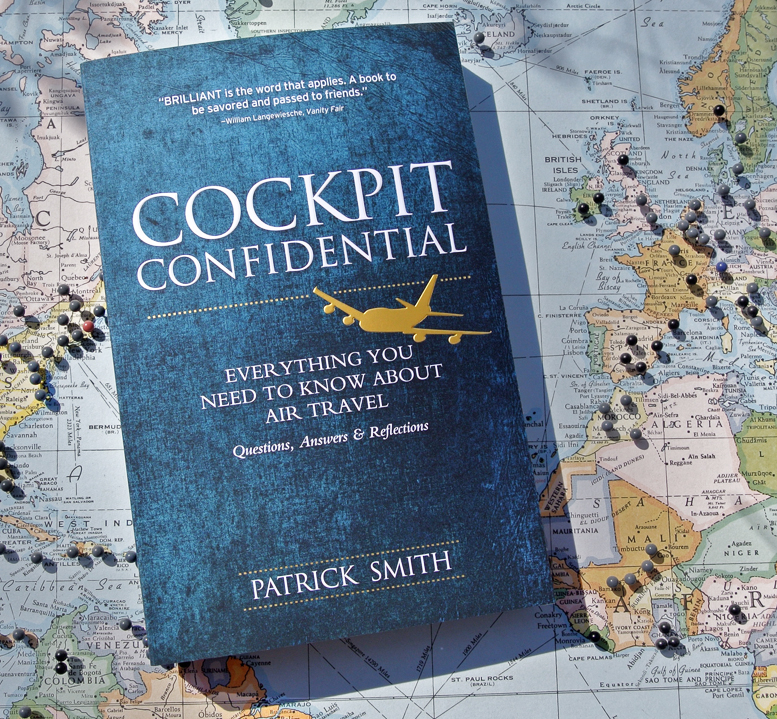

Patrick shares his lifelong love affair in ways that can be appreciated by current and aspiring aviation professionals, as well as by the average passenger. He addresses a variety of questions about aviation, including questions about how airplanes work, how pilots work their way up the ranks, and why airlines behave in they way they do toward customers and employees. Will it answer every question a passenger or future pilot would have? Certainly not. However, for anyone who has a deep interest in the world of airlines, this book is a real treat.


Do you have questions about how airliners can fly? You'll have some of your basic questions answered. want to know about the funny noises your plane makes? Patrick can give you a heads up. How about all those questions you have about the mysterious and glamourous life of an airline pilot. Surprisingly, Patrick does have tales of pleasant five star luxury suites, but also not so romantic stories of cooking ramen in the hotel coffee pot.

Are you ticked off about the state of airlines today? So is Patrick. Any reader who has spent a significant amount of time in an airplane, either in the cockpit or the cabin, will certainly recognize some of the situations that Patrick has seen or experienced.

Want to be an airline pilot? If so, definitely read this book. Patrick's career as a professional pilot has spanned several decades, several airlines, several setbacks, and several radical changes in the airline business. His descriptions of the high and low points of his career, as well as the positive and negative aspects of the typical airline pilot's career, aren't sugar-coated at all, and in my opinion should be required reading for anyone considering a flying career.

As Patrick explains, becoming a pilot takes years of sacrifice and determination, and different challenges will have to be overcome once a pilot puts on that uniform for the first time.

Ask Patrick Smith a question
This week, Todd Curtis of AirSafe.com will interview Patrick Smith about his book and about the airline business. Do you have a question for Patrick? If so, send your question to feedback.airsafe.com.

Resources
Buy the book today!

27 February 2013

JetBlue passenger dies during flight

26 February 2013; JetBlue A320; Flight 462, en route Ft. Myers, FL to Boston, MA: Shortly after takeoff from Ft. Myers, Fl, an older male passenger experienced a medical emergency. In spite of efforts by the flight attendants and at least one medical professional, the passenger died of unspecified causes. There were six crew members and 149 passengers on board.
According to FlightAware.com, the flight lasted two hours and 24 minutes, departing Ft. Myers 29 minutes late at 5:14 pm, and arriving in Boston five minutes behind schedule at 7:38 pm. The flight was nearly full, with 149 passengers and 150 passenger seats according to SeatGuru.com.
Why this event will not count in safety statistics
This event, while tragic, will likely not count in any official accident and incident statistics of the FAA and NTSB. Typically, only serious injuries or deaths that were somehow connected with an airliner flight are required to be reported. Death by natural causes, which this case appears to be, would not count.
AirSafe.com takes a similar approach, and events involving only deaths by natural causes are not included in any of the sites listings of events by year, airline, or aircraft model. AirSafe.com incudes a category defined as a Significant Event, but this event did not have any of the characteristics associated with a Significant Event. That may change based on the finding of the death investigation.

AirSafe.com WebinarsTomorrow's Webinar Rescheduled

The live webinar originally scheduled for Thursday February 28, 2013 on how TSA rules affect passengers who fly with one or more sex toys has been rescheduled for Thursday March 28, 2013.
This webinar will discuss TSA rules with respect to what is allowed in checked and carry-on bags, with an emphasis on what sex toys and sex toy accessories are allowed in flight. The webinar will also provide advice on what passengers can do to minimize or eliminate problems with TSA security screening.

09 February 2013

Video of AirSafe.com webinar on effects of major storms on airline passengers now available

During the height of the snowstorm that hit the east coast of the US on february 8th, Dr. Todd Curtis of AirSafe.com conducted a webinar on passenger issues related to major weather-related disruptions, and offered attendees numerous resources for dealing with these issues.

Photo credit: Chattanooga Times Free Press

Note: The webinar has ended, but you can see a video of the webinar below:

If you want to be a part of future webinars, please join the AirSafe.com mailing list at subscribe.airsafe.com

If subscribe, you will also have access to free copies of the three books mentioned during the webinar:

Each mailing has a link at the bottom of the email that takes you to the download page for the following books:

- AirSafe.com Baggage and Security Guide
- AirSafe.com Airline Complaint Guide
- AirSafe.com Family Air Travel Guide

If you are already a mailing list member, check your last email for a link to these books.

If you wish to connect with Dr. Curtis or with AirSafe.com, you can do so at the following:

Follow AirSafe.com
Twitter: http://bit.ly/XPgs1k
Facebook: http://on.fb.me/Wdo4g8

Follow Dr. Todd Curtis
LinkedIn: http://linkd.in/WLPECt
Facebook: http://on.fb.me/VBwKRb

08 February 2013

Webinar on Airline Passenger Issues During Severe Storms

The severe snowstorm that is hitting the east coast of the US today has caused major disruptions to airline schedules and to the plans of passengers. This webinar will discuss some of the key airline delay polices due to weather-related causes and how they affect passengers, and will also offer attendees numerous resources for dealing with these issues.

Photo credit: Chattanooga Times Free Press

Note: The webinar has ended, but you can see a video of the webinar below:

If you want to be a part of future webinars, please join the AirSafe.com mailing list at subscribe.airsafe.com

09 January 2013

What's wrong with the 787? - Hard to say for now

Earlier this week on January 7th, a Japan Airlines 787 at Boston's Logan Airport had a fire in the auxiliary power unit (APU) compartment of the aircraft, causing some damage to the aircraft and an injury to a firefighter. There was only a maintenance and cleaning crew on board, no passengers were injured, and as the NTSB photo below shows, there was relatively little fire damage in the APU compartment.


While most APU fires which cause minor damage don't usually merit much in the way of attention by either the news media or the NTSB, this event was different. The NTSB launched an investigation that included representatives from Boeing, FAA, Japan Airlines, and the Japan Transport Safety Board. This kind of involvement by multiple agencies usually happens for either accidents or very serious incidents. This was certainly not an accident as defined by the NTSB, but the NTSB's reaction implies that this is being considered to be a serious event, very likely for at least a couple of reasons:
  • The 787 had a number of prior incidents since entering passenger service last year, including an electrical problem that led to an emergency landing of a United 787 in New Orleans in December 2012, just a month after United began flying this aircraft model.
  • The 787 had a number of development issues that delayed commercial flights for several years.

This fire very likely heightened public attention for the 787 and led to a couple of minor incidents getting a higher than usual amount of national and international media attention. On January 8th, the day after the APU fire at Boston, another Japan Airlines 787, also at Boston, had a minor fuel problem that delayed a flight. About 40 gallons of fuel leaked from the aircraft. This leak was from a vent designed to release fuel rather than from a broken fuel line or some other system malfunction. The plane departed for Japan later that day.

The following day, on Janury 9th, ANA airlines in Japan, which was the first airline to operate the 787, cancelled a flight after the crew received an error message concerning the braking system. These last two events are so minor that the airlines are not required to report them to the FAA, NTSB, or similar civil aviation authorities in other countries.

Why is this happening to the 787?
Boeing's development of the 787 was different in two significant ways from that were a significant departure from previous large passenger jets. The first difference was the extensive use of composite materials for major components of the aircraft structure, and the second was the extensive use of contractors to design and build major aircraft systems, work that previously had been by Boeing.

Neither of these facts explain why these incidents have occurred. While many of the incidents that have occurred have involved the 787 fuel and electrical systems, there is nothing to directly several recent 787 incidents, including the following:

  • An electrical problem that forced the December 2012 emergency landing, along with a related electrical problem found later in another United 787.
  • A grounding of a Qatar 787, also in December 2012, after finding a similar electrical problem.
  • A July 2012 engine failure during a taxi test of newly manufactured 787
  • A December FAA Airworthiness Directive (AD 2012-24-07) requiring 787 operators to inspect part of the engine fuel system for possible improper installations.

What does this mean for passengers?
Unless the NTSB, FAA, Boeing, or the current 787 operators find something significant that may affect the safety of the 787, the recent events, however dramatic, are not a cause for concern. The 787 is a new aircraft model that currently has fewer than 50 aircraft in service, with over a third of the aircraft being delivered only in the past three months, and with six of the eight operators having fewer than six months experience flying this model. The first commercial flight was in October 2011, and Japan Airlines only began flying the aircraft in April 2012.

The recent NTSB investigation may have been launched in part because it is a new model and because there may be useful insights gained from thoroughly investigating incidents such as the Boston APU fire. As operators around the world gain more operational experience with the 787, there will certainly be more incidents. However, unless several of these incidents have one or more causes that are both related and unexpected, there would be real reason to suspect that the 787 has some sort of issue that is exposing passengers and crews to excessive safety risks.

Is it safe to fly on the 787?
If you define safety as an acceptable risk, then the 787 is safe to fly because there is nothing that currently indicates that the 787 has a much greater likelihood of experiencing safety-related problems compared to other large jet airliners. However, that answer may change as a result of the current NTSB investigation or after the airlines flying the 787 gain greater operational experience.


31 December 2012

AirSafe.com Airline Safety Review for 2012

This 17th annual review discusses seven fatal airline crashes and three other significant events from 2012. The seven fatal airline crashes from 2012 equals 2008 as the year with the fewest fatal passenger events since AirSafe.com was launched in 1996. All but one of these seven events, a fatal crash last week in Canada that killed one passenger, occurred outside of North America and western Europe.

In addition to the seven airline crashes, there were five other significant crashes that did not kill an airline passenger, though four of these events involved airliners, and all five involved at least one fatality.

Among the 12 events from 2012, some of the more noteworthy included the following:

  • The death of a lap child in a crash were all other passengers and crew survived
  • A foiled hijacking attempt in China
  • A crashed that killed the entertainer Jenni Rivera.
  • Five crashes with no survivors


Crashes Killing Airline Passengers
  1. 2 April 2012; UTair ATR 72-200; VP-BYZ;flight 120; Tyumen, Russia: The aircraft was on scheduled domestic flight from Tyumen to Surgut, Russia. The airplane crashed broke up, and caught fire in a field about 1.5 miles (2.5 km) form the end of the departure runway. All four crew members and 27 of the 39 passengers were killed. This is the second fatal passenger jet crash involving this airline. The first was a 17 March 2007 crash of a UTair Tupolev Tu134A in Samara, Russia that killed six passengers.
    Fatal crashes of airlines of Russia and the former Soviet Union

  2. 20 April 2012; Bhoja Airlines; 737-200; AP-BKC; flight B4 213; Islamabad, Pakistan: The aircraft was on a scheduled domestic flight Karachi to Islamabad, Pakistan, and crashed in a residential area near the airport. The aircraft was completely destroyed in the crash, and all six crew members and 121 passengers were killed. Among those killed were several children and one newlywed couple. This was the airline's inaugural flight on this route.

    This was the 72nd time that passengers have been killed on a 737 airline flight, and the first since an August 2011 crash in Canada.
    Fatal 737 crashes
    Crash rates by model

  3. 14 May 2012; Agni Air; Dornier 228-200; 9N-AIG; near Marpha, Nepal: The aircraft was on a scheduled domestic flight from Pokhara to Jomson, Nepal, and crashed into the side of a mountain near Marpha, Nepal. Shortly before the crash, the crew had turned back toward Pokhara because of weather conditions at Jomson. Two of the three crew members and 13 of the 18 passengers were killed.

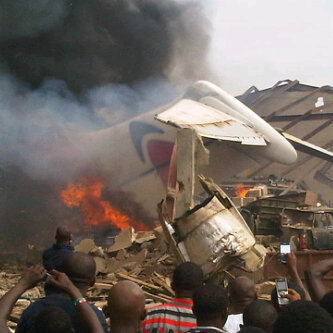
  4. 3 June 2012; Dana Air; MD83; 5N-RAM; flight 992; Lagos, Nigeria: The aircraft was on a scheduled domestic flight Abuja to Lagos, Nigeria, and crashed in a residential area near the airport. The plane reportedly struck a power line and then crashed into at least one apartment building. The aircraft was completely destroyed in the crash, and all seven crew members and 146 passengers were killed. At least 10 people on the ground were killed as well.

    Fatal MD80 series crashes

  5. 28 September 2012; Sita Air Dornier 228;-200; 9N-AHA; Flight 601; Kathmandu, Nepal: The aircraft was on a scheduled domestic flight from Kathmandu to Lukla, Nepal, and crashed shortly after takeoff. The aircraft reportedly struck a vulture about 50 feet off the ground. The bird hit the right engine, and the plane crashed while the crew was attempting to returen to the airport. All three crew members and 16 passengers were killed.
    Fatal Dornier crashes

  6. 22 December 2012; Kivalliq Air Fairchild Metro 3; C-GFWX; Flight 671; Sanikiluaq, Canada: The aircraft was on a scheduled domestic flight from Winnipeg to Sanikiluaq, Canada, and crashed just short of the runway during a second landing attempt. There was limited visibility due to darkness and blowing snow at the time of the crash. Both crew members survived, but one of the seven passengers, a six-month-old boy being held in his mother's lap, was killed.

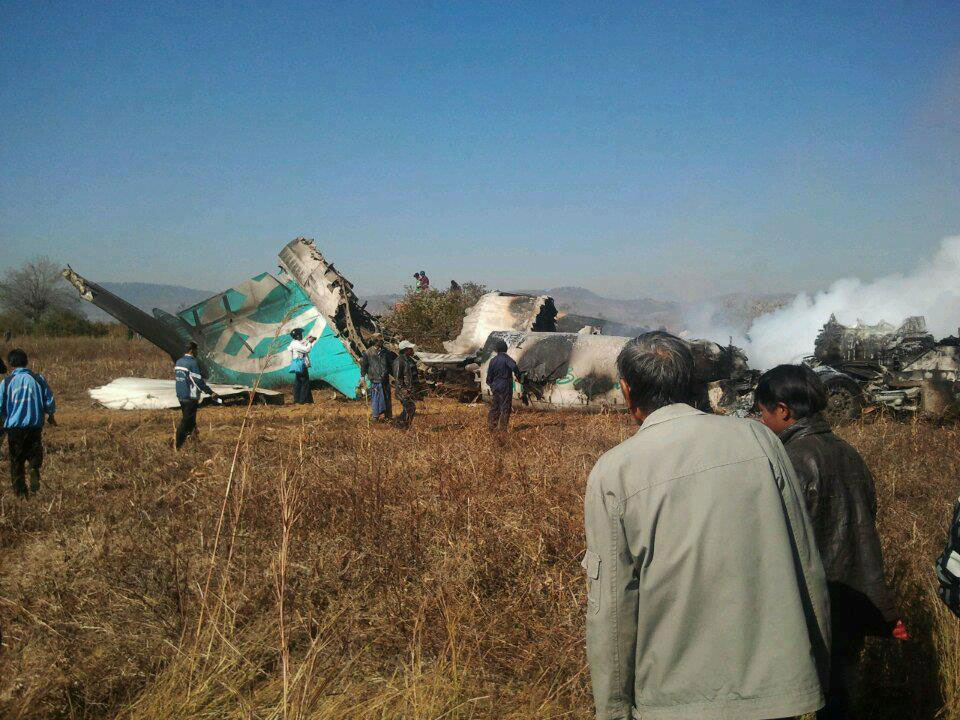
  7. 25 December 2012; Air Bagan Fokker 100; XY-AGC; Flight 011; Heho, Myanmar: The aircraft was on a scheduled domestic flight from Mandalay to Heho, Myanmar, hit a set of power lines during a landing attempt, and crashed about a kilometer short of the runway. There was fog in the vicinity of the airport at the time of the crash. The aircraft broke up and there was a post-crash fire. All six crew members survived, but one of the 65 passengers was killed. A person on the ground was also killed.
    Fatal Fokker 100 crashes
    Aviation Herald article on crash


Other Significant Events
  1. 9 May 2012; Sukhoi Superjet 100; near Jakarta, Indonesia: The aircraft was on an unscheduled demonstration flight that had departed from Jakarta, Indonesia. After departure, the crew circled nearby Mt. Salak, and began a descent from 10,000 feet to 6,000. The aircraft crashed into the side of the mountain at about 5,100 feet. There were no survivors. Among the 37 passengers were members of the media and representatives from a number of Indonesian airlines.

    This aircraft type had entered commercial airline service the previous month, and the manufacturer Sukhoi had been taking the accident aircraft on a promotional tour through a number of countries in Asia. This was a demonstration flight that had invited guests as passengers, rather than a flight that was available to the public, so it is not counted as a fatal event as defined by AirSafe.com

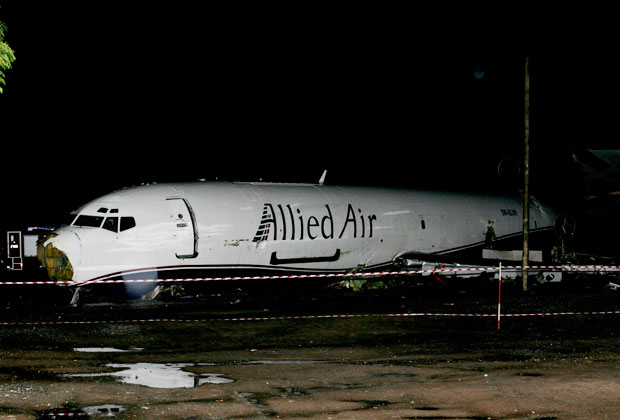
  2. 2 June 2012; Allied Air; 727-200; 5N-BJN; flight 111; Accra, Ghana: The aircraft was on a cargo flight from Lagos, Nigeria, to Accra, Ghana, and overran the runway after landing. The aircraft struck a minivan on a nearby road, killing all 10 of the occupants. None of the four crew members were killed.

    Because no airline passengers were killed, this is not counted as a fatal event as defined by AirSafe.com.

    Fatal 727 crashes

  3. 29 June 2012; Tianjin Airlines; Embraer ERJ 190; B-3171; flight 7554; en route Hotan to Urumqi, China: The aircraft was on a scheduled domestic flight from Hotan to Urumqi, China, when three hijackers attempted to take over the aircraft. The hijackers reportedly carried explosives and attempted to break into the cockpit. The hijackers were subdued by passengers and crew members, and the aircraft returned to Hotan. Two of the three hijackers later died of injuries received during a fight with the crew and passengers. None of the the nine crew members or the 89 passengers were killed. Because only hijackers were killed, this crash was not counted as a fatal event as defined by AirSafe.com.

  4. 9 December 2012; Starwood Management; Learjet 25; N345MC; near Iturbide, Mexico: A chartered private jet carrying the singer and entertainer Jenni Rivera crashed near Iturbide, Mexico while en route on a domestic flight from Monterrey, Mexico to the Toluca, Mexico airport near Mexico City. Both pilots and all five passengers, including Rivera, were killed in the crash. The Learjet was cruising at about 28,000 feet and entered into a high speed descent, crashing in mountainous terrain. Because this was not an aircraft normally used in passenger airline service, this crash was not counted as a fatal event as defined by AirSafe.com.

  5. 29 December 2012; Red Wings Airlines; Tupolev 204-100; RA-64047; flight 9268; Moscow, Russia: The aircraft was on an unscheduled repositioning flight from Pardubice, Czech Republic to Moscow, Russia. After touching down, the aircraft overran the runway, and collided with an embankment next to a highway, causing the aircraft to break up. While various pieces of aircraft wreckage struck cars on the adjacent highway, no one on the ground was killed (See video below).

    Five of the eight crew members were killed. It had been snowing prior to the crash, and there was a significant crosswind at the time of the landing. Because there were no passengers on the aircraft, this crash was not counted as a fatal event as defined by AirSafe.com.

    Plane crashes in Russia and the former Soviet Union


Fatal and serious events by year
1996, 1997, 1998, 1999, 2000, 2001
2002,2003, 2004, 2005, 2006, 2007
2008, 2009, 2010, 2011, 2012


AirSafe.com Bonuses
All subscribers to the AirSafe.com mailing list at subscribe.airsafe.com will be able to download free copies of all of the recent AirSafe.com books, including the latest, AirSafe.com Family Air Travel Guide.

Also available is the AirSafe.com Fear of Flying Resource Guide, with an overview of the symptoms of fear of flying, as well as recommended resources for managing or eliminating these fears.

08 December 2012

Airline complaint site threatened by United Airlines

If you fly long enough, you will experience an airline flight that is far from perfect, so bad that you not only want to complain to the airline, but to also share your experience with the world. While all airlines get complaints, few airlines have had as many complaints as United Airlines. Years before their merger with Continental, a merger which many believe led to a significant drop in the quality and consistency of the customer experience, United was one of the leading airlines for complaints. In fact, there were so many complaints that since 1997, the web site Untied.com (untied as in shoelaces) has exclusively featured complaints about United.

The site is unusual in that it has been up for over 15 years, and has kept a laser-like focus on the problems at United. The site has been supported almost entirely by the efforts of its creator Jeremy Cooperstock, an engineering professor at McGill University in Montreal, who also has his own story to tell about how United Airlines has treated him. However, the unique resource that Jeremy has created is at risk of being destroyed.

Lawsuits against Untied.com
Two recent lawsuits allege, among other things, that the site violates the airline's copyright and trademarks because it looks like the United Airlines website. The airline claims that it isn't trying to stop airline complaints from being publicized, but rather that they are trying to protect the airline' customers because they may confuse Coopperstock's site with the airline's site. Jeremy has a different interpretation, that the airline's suit is without merit, and that their goal goal is to put a strain on his time and money and to encourage him to shut down the site.

How to Help Untied.com
Jeremy has started a legal defense fund for his site at http://www.untied.com/SLAPP. AirSafe.com encourages you to donate what you can to help Jeremy keep his site alive. You can also help by visiting untied.com and sharing any complaints you may have about United, or their merger partner Continental.

24 July 2012

AirSafe.com Air Launches Traveler Ebook Project

After the positive response to AirSafe.com's first ebook, AirSafe.com Baggage and Security Guide, we've decided to launch a new series of ebooks aimed at air travelers, and we'd like to ask for your help.

Like the first ebook, this one will be provided without cost to the traveling public, and will provide air travelers with a valuable resource that will help them avoid or manage many of the common problems they face when they fly.

Check out the Ebook Project Video


The Problem
For years, AirSafe.com has provided the traveling public with vital information about airline safety, airport security, and other issues that matter to travelers. But because this information is available exclusively online, it is often out of reach just when you need it most...
  • An airline damaged your luggage, and you want to make sure that you ask the right questions and get the right paperwork filled out.
  • The gate agent announces your flight is cancelled, and you need to book an alternate flight quickly.
  • On the way to the airport, you realize you left your driver's license at home, and you need to know what alternative IDs the TSA will accept.
  • A TSA agent is conducting what you think is an inappropriate search, and you don't know how to respond to the situation.
All these situations are covered by AirSafe.com, but are not accessible to airline passengers if they can't get online. If passengers had this kind of information in their smartphones or a tablet device, it could be a great help to them.

The Solution
AirSafe.com plans to take the best of its online information and put it into a series of ebooks that anyone can download for free and keep on hand at all times. A traveler in trouble just turns on a smartphone and all the information he or she needs is available in an instant.

The Project
The goal of the project is to use the insights gained from running AirSafe.com to create several ebooks, each of which covers a specific area of common air traveler concerns:
  1. Airline Complaints Do's and Don'ts - Will cover the basic rules and requirements that passengers must follow when they file a complaint against an airline, airport, or government agency.
  2. Travel with Children - Will include many of the common concerns parents face when flying with infants or children, plus key information for parents whose children need to fly alone.
  3. Dealing with common travel issues - This ebook will give very practical advice on how to deal with problems like lost bags, cancelled flights, air rage, and inappropriate behavior by security personnel.
  4. Once all three ebooks are completed, a fourth one containing all the content from the first three ebooks will also be published.

How You Can Help
AirSafe.com has teamed up with Indiegogo to ask you to support this project. This project seeks to collect $5,000, and all of the money will be used for professional services such as editing and ebook formatting, in order to ensure that the products will work with all popular ebook devices and smartphones, including the Kindle, Nook, iPad, and iPhone.

Your support will help ensure that these ebooks will continue to be offered for free, and will be able to help travelers for years to come.

Contribute
You can contribute using PayPal or a credit card, and everyone who contributes $1 or more will receive AirSafe.com's thanks, as well as other benefits. Please visit books.airsafe.com for more details.

Find Out More
Visit books.airsafe.com or check out the video above to find out more about this project and more about the work of AirSafe.com.

03 May 2012

Bird Strikes and the FAA Rules on Passenger Electronics

On April 19, 2012, Delta Flight 1063, a 757 flying nonstop from JFK Airport in New York to Los Angeles, was forced to return to JFK and make an emergency landing after its right engine experienced a bird strike shortly after takeoff.

One of the passengers, New York Times bestseller Grant Cardone, happen to have been using his iPad to make a video when he caught a glimpse of the flock of birds involved in the strike.

Grant Cardone video of bird strike

Cardone caught the incident on his iPad, despite the fact that electronic devices like iPads are supposed to be turned off during that part of the flight.

The video has gotten Cardone in trouble with the FAA and he's recently received a warning letter letting him know that a record of his rule infringement will be kept for two years. The letter reportedly stated that the FAA will not penalize Cardone so long as he has no other infractions over the next two years.

Why the FAA approach makes no sense
The current FAA regulations on electronic devices were developed in an era when there were few, if any, personal electronic devices on board. It is a safe bet that the average passenger has more than one device with them when they travel. The chance that a frequent flyer will forget to turn off an iPhone, Kindle, iPad, laptop, video game, etc. at least once is likely close to 100%.

Instead of sending threatening letters, it would make much more sense for the FAA to get together with the aviation industry and the flying public and create a set of new regulations that take into account both common sense and the reality that electronic devices will likely become much more popular in airline cabins. This is a point of view emphasized by AirSafe.com creator Dr. Todd Curtis in a May 3, 2012 interview on Washington, DC radio station WTOP.

Related information
Using personal electronic devices in flight
Bird strik hazards to aircraft
WTOP interview with Dr. Curtis on May 3, 2012
Protecting your laptop when you fly

12 September 2010

CBS Radio Interview about Suspicious Passengers

Dr. Curtis was interviewed by CBS Radio News about the August 2010 detention of two passengers in Amsterdam on suspicion of being involved in some kind of terror related event. The passengers were later released because they had done nothing wrong.

On August 30th, 2010, two men, Ahmed Mohamed Nasser al-Soofi and Hezam al-Murisi, who were both on their way to Yemen from the US, were arrested in Amsterdam after they had arrived on a flight from Chicago. They were arrested because they were suspected to be part of some kind of terror related activity, perhaps a dry run for an attempted bombing of an aircraft.

Al-Soofi had raised suspicion earlier in the day prior to his flight from Birmingham, Alabama to Chicago. After being chosen for additional screening, authorities found that he was carrying $7,000 in cash, and in his checked luggage were a cell phone taped to a small bottle, multiple cell phones and watches taped together, a knife, and a box cutter. Al-Soofi had violated no laws or regulations, so he was allowed to continue.

Later in Chicago, he had changed his flight, and his checked bags ended up going on a different flight. Coincidentally, Hezam al-Murisi, who also changed his flight to to one carrying Al-Soofi, also had his bags going on a different flight. US authorities asked Dutch authorities to detain the men, and they were both arrested after arriving in Amsterdam.

The CBS interview covered several subjects including whether the behavior of these passengers should have aroused suspicions. At the time of the interview, early reports suggested that they were traveling together. In fact, while the two were on the same flight out of Chicago, they did not know each other and were traveling independently, with only Al-Soofi starting his trip in Birmingham.

The Dutch authorities soon released both men, and dropped all charges. In short, although what the two men did during their trip looked unusual or even suspicious, they had done nothing wrong, and had broken no law or violated any regulation. The lesson to take away from this episode is that the US authorities, including TSA and Homeland Security, may be inclined to take all kinds of precautionary actions, including detaining passengers, if they suspect that someone is attempting to bring harm to an airplane flight.

Should passengers change their behavior to keep from being hassled? According to Dr. Curtis, that is a personal decision best left to individual passengers. In his opinion, you're free to act as suspicious as you want, just keep in mind that the price of freedom is an increased chance of being hassled or even detained.

Listen to the interview
(10:19)

Related AirSafeNews.com Articles
AirSafeNews.com article on the attempted bombing
Description of four key US terrorist and TSA security databases
BBC interview with AirSafeNews.com's Dr. Todd Curtis

16 August 2010

Aires Colombia 737 crash kills one passenger

16 August 2010; Aires Colombia; 737-700; HK-4682; San Andres Island, Colombia: The airliner was on a scheduled domestic flight from Bogota to San Andreas Island, Colombia. San Andreas Island lies off the east coast of Nicaragua. The aircraft took off from Bogota just after midnight and was attempting to land just before 2 a.m. local time during a storm.

The aircraft was reportedly struck by lightning just before touchdown. The airplane struck the runway and broke up into three large pieces. One of the 125 passengers was killed, and all six crew members survived.

Fatal Crash History of Aires Colombia
This was the third fatal crash involving Aires Colombia. Their two previous fatal crashes were in 1995 and 1985 and both involved Embraer Bandierante aircraft.

Fatal Plane Crash History of the 737
This was the 70th crash of a 737 that resulted in the death of at least one airline passenger. This is the sixth fatal plane crash involving one of the current production models of the 737 (737-600, 737-700, 737-800, and 737-900). All five previous fatal crashes involved the 737-800 model. The 737-700 had been involved in one previous fatal incident. In December 2005, a Southwest Airlines 737-700 ran off the runway at Midway Airport in Chicago and struck a car on a nearby road, which led to the death of one of the passengers in the car.

01 July 2010

Maggots Raining on Passengers Forces US Airways Flight Back to Gate

Some airline incidents are quite stranger than fiction, and that was the case on June 28, 2010 in Atlanta. US Airways flight 1537, which was scheduled to go from Atlanta, GA to Charlotte, NC, was taxiing prior to takeoff when passengers began noticing maggots falling from on overhead bin. The flight crew announced that they were returning to the gate because of a "minor emergency on board."

The source of the maggots was from a container of spoiled meat that was in the carry-on baggage of one of the passengers. The plane returned to the gate, where a ground crew cleaned out the aircraft before it was allowed to continue to Charlotte. The passenger who caused this situation was also allowed to continue, but on another flight. Only after the flight arrived at Charlotte did the airline fumigate the aircraft.

Comments from one of the passengers on this flight show just how disturbing this event was to them:
  • I heard the word ‘maggot' and that kind of got everybody creeped out...All of a sudden, I felt somebody flick the back of my hair and on the front of me came a maggot, which I flicked off me

  • I felt like they were crawling all over me because it only takes one maggot to upset your world

  • And as they're telling us to stay calm and seated, I see a maggot looking back at me and I'm thinking, ‘These are anaerobic, flesh-eating larvae that the flight attendants don't have to sit with
How Can Maggots Get on an Airplane?
In the US, the federal government restricts what kinds of animals or other live creatures are allowed on an aircraft, and what kinds of animals can be imported into the US. However, for domestic airline flights it is up to the airline to set rules for animals, and those rules typically deal with flying with pets and service animals. Also, while the TSA has many rules about what items are permitted and prohibited from checked or carry-on baggage, there are no specific restrictions on bringing either spoiled meat or insects through security.

AirSafe.com contacted US Airways directly, and a representative indicated that dogs, cats, and birds were allowed on flights, but not bees or other insects. Presumably this means that maggots would not have been allowed on the aircraft if the airline had been made aware of their presence. It is not clear whether the passenger who brought the maggots on board either received permission from the airline or was even aware that there were maggots in their baggage.

Video Report of the Maggot Event


Advice from AirSafe.com
Most airlines have very detailed rules on what kinds of live animals or biological specimens you can bring on an aircraft. If you are thinking about bringing any kind of animal or insect on board the aircraft, contact the airline ahead of time to see if your animal will even be allowed. If you are traveling internationally, make sure you are following all appropriate import and export rules. If you see something that may be a problem, for example someone sneaking an animal onto the aircraft, or a carry-on or checked baggage item that may be a health hazard, contact an airline representative immediately.