The AirSafe.com News

↑ Grab this Headline Animator

Showing posts with label qantas. Show all posts

24 March 2011

Qantas A330 diverts after cockpit fire

A Qantas Airbus A330-200 (VH-EBL), with 147 passengers and 11 crew members on board, was on a scheduled international flight from Manila to Sydney, and cruising about 420 miles (675 km) northwest of Cairns, Australia on 22 March 2011, when there was a small electrical fire in the cockpit.

According to several media reports, the fire was initially extinguished by an automated fire fighting system. The fire flared up several minutes later, and one of the crew members extinguished it with a fire extinguisher. The crew diverted to Cairns and landed about 50 minutes later. According to a Qantas spokesperson, an electrical fault caused smoke and small flames near the left windscreen. None of those on board were injured.

The Australian Transport Safety Bureau, which is Australia's equivalent to the US National Transportation Safety Board, is investigating this Qantas incident.

Previous A330 cockpit fire event
This is not the first Airbus A330 cockpit fire involving a Qantas aircraft. On 10 June 2009, this JetStar aircraft (JetStar is a subsidiary of Qantas) had a cockpit fire during a flight from Osaka, Japan to Australia's Gold Coast Airport (about 60 miles south of Brisbane).

According to a report from the Australian Transport Safety Bureau, while the aircraft was flying about 427 km southwest of Guam, the flight crew noticed a burning rubber smell on the flight deck. At about that time, two caution messages were displayed to the crew identifying a fault in the right windshield heating. This was followed by a loud bang along with a flash of light, followed by smoke and fire from the bottom right corner of the right windshield. All flight crew donned oxygen masks, and a crew member used a fire extinguisher to extinguish the fire. The aircraft diverted to Guam and landed without incident.

Additional Resources
2008 Qantas A330 event with injuries
Other noteworthy Qantas events
Fatal A330 crashes

Photos: Min Bajunid, Airbus

18 November 2009

Updates on Two Recent Qantas Accidents Involving an A330 and a 747

Second Interim Report on Qantas Accident of 7 October 2008
The Australian Transport Safety Bureau (ATSB) released its second interim report about a 7 October 2008 event when a Qantas A330-300 (VH-QPA, Flight 72) experienced an unexpected and rapid change in altitude while the aircraft was in cruise at 37,000 feet. The accident resulted in injuries to 110 passengers and nine crew members.

The first interim report identified two significant safety factors. First, one of the air data computers provided incorrect data that was not detected by the aircraft systems. Second, the aircraft's flight control computers did not process some of the aircraft's attitude data in a specific situation.

The second interim report did not identify the cause of the October 2008 event, but detailed the safety actions that have been taken that would prevent a recurrence of the event, including modifications to the A330's primary flight control computer and changes in flight crew operational procedures.


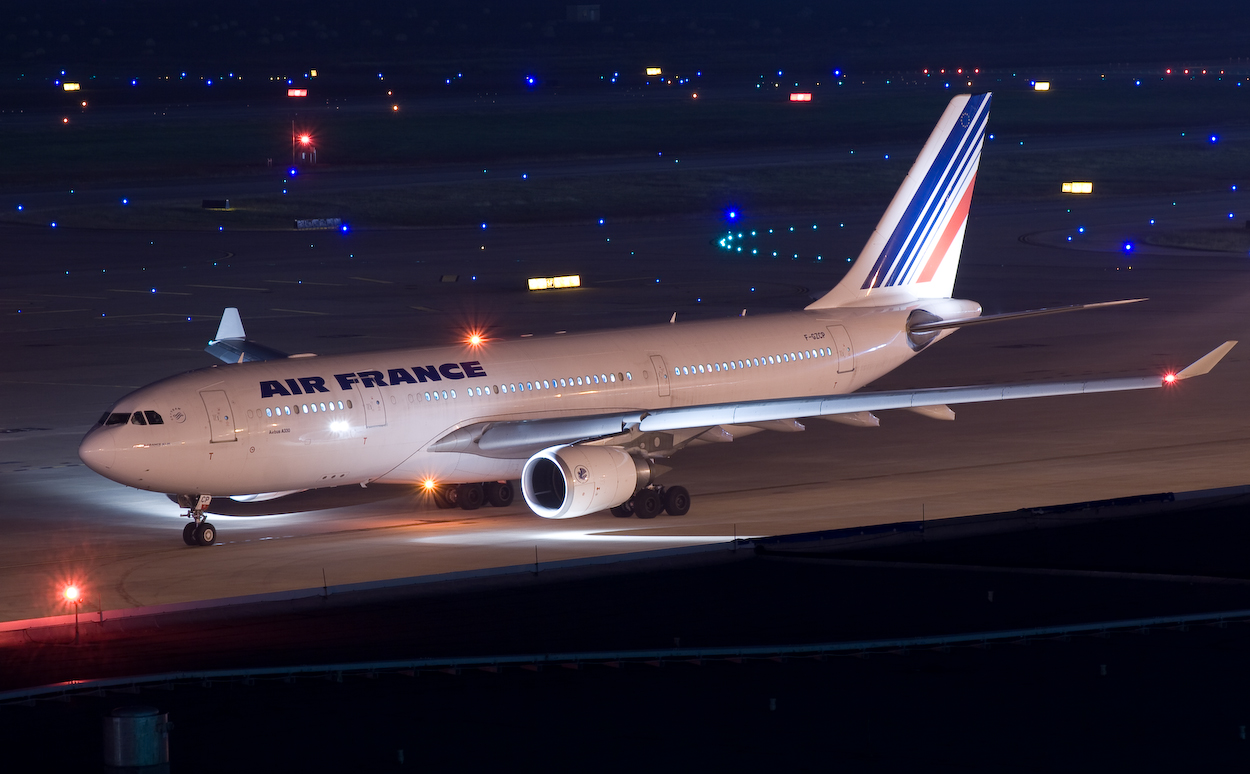
The ATSB addressed the possible relationship between the October 2008 Qantas A330 event and the June 2009 crash of an Air France A330-200 (F-GZCP, Flight 447). Although both investigations are ongoing, the ATSB pointed out several key differences between the two events:

• The air data computers on the two aircraft were different models, and constructed by different manufacturers.

• The cockpit messages and maintenance fault messages from both flights showed a significantly different sequence and pattern of events, with the maintenance messages that were transmitted by the Air France aircraft prior to the accident showing inconsistencies between the measured airspeeds and the associated consequences on other aircraft systems. No such messages were recorded by by the Qantas aircraft.

• The airspeed sensors (pitot probes), which were a issue of great concern in the Air France Accident, were not an issue in the Qantas accident because they were different airspeed sensor models made by different manufacturers.

Update on Qantas 747 Decompression Event
On 25 July 2008, a Qantas 747-400 (VH-OJK, Flight 30) experienced a rapid decompression while cruising at 29,000 feet after an oxygen cylinder that was part of the emergency oxygen system exploded and blew a hole in the fuselage. In their second interim report on the decompression event, the ATSB reported that there is no evidence of a safety problem with the oxygen bottles of the type involved in the accident.

ATSB reported that among the actions taken by Qantas were a fleet-wide safety inspections of oxygen system installations and a revision of flight crew emergency procedures, including the introduction of a new depressurisation checklist. Also, various tests have not been able to replicate the cylinder failure that initiated the accident.

Additional Information
You can find more details about these three accident investigations, including links to the interim reports from the investigating authorities, at the following pages:
Qantas 747 Depressurization Accident 25 July 2008
Qantas A330 In Flight Upset Accident 7 October 2008
Air France A330 Crash 1 June 2009

22 October 2008

Complacency and the Qantas A330 Accident of 7 October 2008

The accident earlier this month involving a Qantas Airbus A330 on a flight from Singapore to Perth seriously injured several passengers, but didn't result in any fatalities. While the event drew substantial news media attention in Australia and Asia, there was very little mention of it by major US media. This is very likely another example of how when it comes to airline events, it's difficult to get the attention of the US public, or of the policy makers in the US, if no one is killed.

My belief was that there would have been more media attention in the US if there had been at least one recent fatal event involving a US airline. While researching recent fatal US events, I found that the most recent passenger fatality on a US airliner was in August 2006. Looking back further, I realized that the US airline industry had quietly passed a milestone. The 26-month period between the last fatal US event and the date of this recording on October 21st, 2008 is the longest period without a passenger fatality on a US airliner since airlines in the US first began using jet aircraft in 1958.

One could argue that there's a certain amount of public complacency about airline safety when there are no major accidents. Looking through my archives, I found that this wasn't the first time I'd dealt with this subject. In late May 2004, the US airline industry was in the midst of another fatality-free period. At the time, it had been nearly 17 months since the last fatal US airline event. That month, I was interviewed as part of a National Public Radio program on airline safety that discussed some of the reasons for that absence of fatal events.

In the following segment, you'll hear my interview with Mike Pesca of NPR about some of the reasons behind the reduction of accidents. Also interviewed was David Evans of the publication Air Safety Week, who talked about how accidents drive the regulatory process.

Five months after the show aired, a regional airliner crashed in Missouri, killing both crew members and 11 of the 13 passengers, bringing to an end a 21-month period with no US passenger fatalities. Currently, the US airline industry has gone 26 months without a passenger fatality. This current fatality-free period is a sign that in spite of all the problems faced the industry, that the risk faced by passengers continues to decline.

Although this record is a positive sign for the industry, the recent Qantas event demonstrated that no airline, even one with no passenger fatalities in its history, is immune from accidents.

I'd like to remind the AirSafe.com audience that however good the system may be, there's always room for improvement. One way to improve things is to learn from those rare events such as what happened with Qantas earlier this month. AirSafe.com will continue to follow the accident investigation, and any future podcasts about the event, or news from the investigation, will be available at qantas.airsafe.org.

You can hear the associated podcast, which includes my interview with NPR, at:
http://www.airsafe.com/podcasts/show73-npr.mp3

11 October 2008

Interview with a Passenger on the Qantas A330 Accident Flight of 7 October 2008

This show features an interview with Keesin Ng, a passengers on a Qantas A330 aircraft that experienced a violent in-flight upset during a flight from Singapore to Perth on 7 October 2008. About 75 passengers and crew members were injured during this event, with 14 hospitalized with serious injuries such as fractures and lacerations.

The Australian Transport Safety Bureau, or ATSB, is currently investigating this event, and because of the extent of the injuries on board, the ATSB has classified it as an accident. In a media briefing three days after the accident, the ATSB reported that the Qantas A330-300 aircraft was in level flight at 37,000 feet when the pilots received messages from their aircraft's monitoring system indicating some kind of control system problem.

The aircraft reportedly had a uncommanded climb of about 200 feet, followed by a return back to 37,000 feet. About a minute after returning to cruising altitude, the aircraft abruptly pitched nose-down, to a maximum angle of about 8.4 degrees, and descended about 650 feet in about 20 seconds, before returning to the cruising level.

About 70 seconds later, there was a further nose-down pitch, to a maximum pitch angle of about 3.5 degrees, and the aircraft descended about 400 feet in about 16 seconds. During the first pitch-down event, a number of passengers and crew members were thrown about the cabin, resulting in a range of injuries.

The crew declared an emergency and diverted to Learmonth, landing about 40 minutes after the start of the event.

The interview occurred three days after the event with passenger Keesin Ng, who provides additional details about the in-flight drama. You can hear that interview at the link below:

Interview with Keesin Ng (MP3)


For additional information, including AirSafe.com's initial video and audio podcast about the accident and updates to the ATSB's accident investigation, visit qantas.airsafe.org

08 October 2008

Serious Injuries on a Qantas A330 Flight on 7 October 2008

A Qantas Airbus A330-300, with 303 passengers and 10 crew members on board, was on a scheduled international flight from Singapore to Perth. While in cruise, the aircraft reportedly experienced some type of sudden and unexpected altitude change. The crew issued a mayday call before diverting the aircraft to the airport at Learmonth, near the town of Exmouth, about 1100 kilometers or 680 miles north of its intended destination of Perth.

Overview of the Event


Other Podcast Links
Audio: MP3
Video: iPod/MP4 | WMV | Google Video | YouTube

About 36 passengers and crew members were injured, with over a dozen severe injuries. Reportedly, several occupants were slammed into the ceiling during the event. Most of the injuries were to passengers and crew in the rear of the aircraft, and at least one person was carried off the plane in a stretcher. About 13 of the most seriously injured were flown to Perth by four aircraft from the Royal Flying Doctor Service. One flight attendant was hospitalized with suspected head and spinal injuries. Other serious injuries included fractures, lacerations, and a concussion.

The Australian Transport Safety Bureau has a team of seven investigators currently working on this incident, and it will likely be several days before a preliminary cause is announced, and several months before a final report is issued.

This is the first significant passenger safety event for the A330. Qantas currently has 15 A330 aircraft in its fleet, including 10 of the A330-300 model.

This is the second significant safety event for Qantas this year. On July 25, an exploding oxygen bottle blew a hole in the fuselage of a Qantas 747 en route from Hong Kong to Melbourne, causing a rapid decompression and forcing an emergency landing in Manila. No passengers were injured in that event.

Other significant safety events for Qantas in the last decade include a 2000 event in Rome involving the collapse of a 747 landing gear, and in 1999 a landing overrun in Bangkok severely damaged another Qantas 747.

In August 2008, the Civil Aviation Safety Authority of Australia conducted a review of Qantas safety and found no system-wide safety issues, but did recommend an audit of the airline's maintenance practices, including a full maintenance audit of one aircraft from three of the models flown by Qantas, the 737-400, 747-400, and 767-300. No maintenance audit was ordered for the airline's A330 fleet.

Additional information about this event, including updates or findings from the investigation or from the Qantas maintenance audit, will be available at qantas.airsafe.org.

More Details on this Event
Other AirSafe.com Videos

28 July 2008

Qantas Investigation Update and New Secrets of AirSafe.com Episode

Update to Qantas 747 Rapid Decompression Event on 25 July 2008
Dr. Todd Curtis reviews information from provided by Australian investigators that points to a aircraft systems failure as a possible cause of the explosive decompression event. Also in the podcast, fear of flying expert Capt. Tom Bunn discusses the media's response to this incident.

To hear this podcast, please visit
http://www.airsafe.com/podcasts/show58-qantas2.mp3

For the previous podcast and links to related information, visit
http://www.airsafe.com/podcasts/show56.htm

For Other AirSafe.com podcasts, visit
http://podcast.airsafe.org

Secrets of AirSafe.com: Key Technology Trends and How They Are Used
In this fifth episode of the special series Secrets of AirSafe.com, AirSafe.com creator Dr. Todd Curtis discusses key online technological innovations, including search engines, blogs, and subscription services, that have influenced how AirSafe.com changed over time to accommodate the needs of the audience.

You can hear the podcast at
http://www.airsafe.com/podcasts/show57_secrets5.mp3

The transcript of this podcast is available at
http://www.airsafe.com/podcasts/show57.htm

Information about the special series is available at
http://secrets.airsafe.org

26 July 2008

In-Flight Emergency Involving a Qantas
747-400 Near Manila on 25 July 2008

On 25 July 2008, A Qantas airlines 747-400, with 346 passengers and 19 crew members on board, had an explosive decompression event over the South China Sea about 200 miles from Manila. The crew descended about 20,000 feet and successfully diverted to Manila. None of the passengers or crew were injured. A portion of the fuselage just forward of the wing root was found missing after the aircraft landed.

For information about other significant Qantas safety events, visit
http://www.airsafe.com/events/airlines/qantas.htm

For audio and video podcasts about this event, visit
http://www.airsafe.com/podcasts/show56.htm

You can also use the links below:
Audio: MP3
VideoWMV | iPod/MP4 | YouTube | Google Video

The transcript of this podcast is available at
http://www.airsafe.com/podcasts/show56.htm

For Other AirSafe.com podcasts, visit
http://podcast.airsafe.org