The AirSafe.com News

↑ Grab this Headline Animator

Showing posts with label a330. Show all posts

01 May 2011

Air France AF447 Flight Data Recorder Recovered

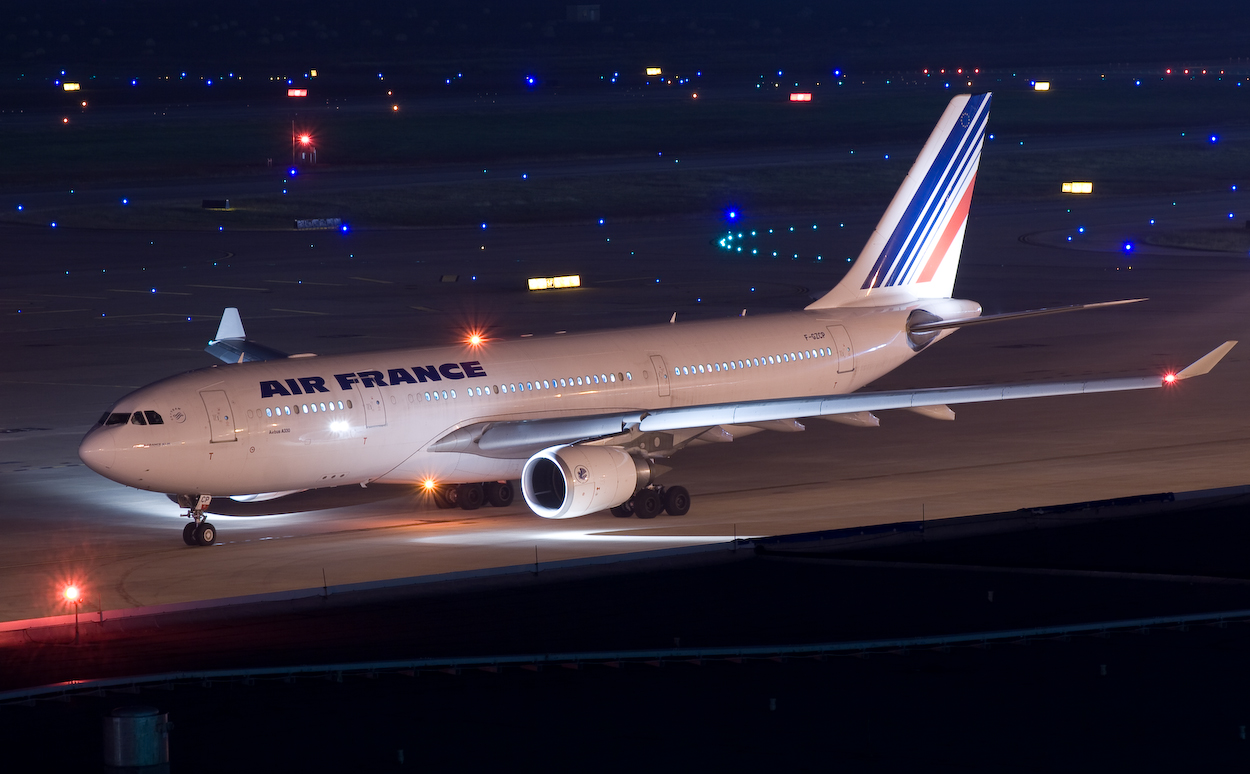
The ongoing search for wreckage of Air France flight 447, an A330-200 (F-GZCP) that crashed in the Atlantic Ocean in the early hours of 1 June 2009, has successfully located the flight data recorder (FDR), one of the two "black boxes" that may contain data that may reveal why the flight crashed almost two years ago. The search continues for the cockpit voice recorder (CVR).

The French Bureau d'Enquetes et Analyses (BEA), which is leading the accident investigation, announced earlier today that the FDR was retrieved by a remotely operated vehicle an brought up from the ocean floor (from about 4,000 meters, or 13,000 feet deep) and is now on board the ship Ile de Seinon. Earlier this month,(the search effort spotted several major portions of the aircraft as well as the remains of a number of passeners).

Photos of Flight Data Recorder Recovery


Related AirSafe.com and AirSafeNews.com articles

Initial AirSafe.com Reports on This Event (4:10)
Audio: MP3 | VideoiPod/MP4 | WMV | YouTube


Additional Resources
AirSafe.com Flight 447 page
Synopsis of second BEA interim report (English)
Complete second BEA interim report (English)
Complete second BEA interim report (French)
First BEA Interim Report (English)
First BEA interim report (French)
Other Air France Plane Crashes
Other Airbus A330 Plane Crashes
BEA Flight 447 page
Wikipedia Flight 447 page

Previous AirSafeNews.com Articles
AirSafeNews.com article from 4 April 2011 about first sightings of wreckage
Initial AirSafeNews.com article 3 June 2009
Air France Flight 447 Update 9 June 2009
Air France Flight 447 Update 10 June 2009
Air France Flight 447 Update 15 June 2009
Air France Flight 447 Update 19 June 2009
Air France Flight 447 Update 26 June 2009
Todd Curtis BBC Interview about Air France Flight 447 - 9 July 2009
FAA orders A330 pitot tube replacements - 3 September 2009
Article on Second Interim Report from the BEA - 18 December 2009

06 April 2011

A review of a very eventful week in airline safety

This has been a very eventful week in airline safety, which has been dominated by the fallout from the April 1st fuselage rupture involving a Southwest Airlines 737-300, and an announcement by the French government wreckage from Air France flight 447 had been located at the bottom of the Atlantic. The A330 crashed into the ocean in June 2009, While the Southwest event has dominated the media, two other dramatic events have been occurring in the world of airline safety, including a deadly crash of a United Nations aircraft in Africa and an emergency evacuation of a United Airlines A320 in New Orleans .

Southwest Airlines fuselage rupture
There have been a number of unexpected surprises and regulatory actions since the NTSB started its investigation into the Southwest Airlines fuselage rupture on April 1st. This is a fast moving story with many parts, but the quick summary of the status of the investigation and the actions taken to deal with early findings is as follows:

- The rupture happened because of undetected metal fatigue in the fuselage

- A visual inspection, the only type required at the time, would not have detected the problem

- A previous Southwest 737 fuselage rupture in 2009 was in a completely different area of the fuselage

- The manufacturer (Boeing) had redesigned that area of the 737 fuselage in the 1990s and did not expect fatigue problems in this area of the aircraft (The lap joints that run the length of the fuselage) before about 60,000 flight cycles

- The incident aircraft had 39,781 flight cycles

- Southwest airlines grounded 79 similar aircraft (737-300s) and found five with similar problems

- On April 4th, Boeing came out with a service bulletin that detailed a more advanced inspection procedure that could detect the problem on affected Boeing 737-300, -400, and -500 series airplanes

- The FAA came out with an Airworthiness Directive (AD 2011-08-51) that required these advanced inspections be performed on all the affected aircraft within 20 days, and within five days of the aircraft has more than 35,000 cycles

- Aircraft that have accumulated more than 30,000 flight cycles must have this inspection procedure repeated at intervals not to exceed 500 flight cycles

- If cracks are detected, they must be repaired by an approved method before the aircraft can fly again

- Southwest has already complied with this Airworthiness directive.

AirSafeNews.com will provide updates on this investigation as they become available. Dr. Todd Curtis of AirSafe.com was also interviewed by the BBC about this event.

United A320 has emergency landing in New Orleans
4 April 2011; United Airlines A320-200 (N409UA); flight 497: Shortly after departing New Orleans on a nonstop flight to San Francisco, while climbing through 4,000 feet, the crew received multiple automated warnings and detected smoke in the cockpit. The crew also reported a loss of primary instrumentation and turned back to New Orleans. Air traffic controllers had to provide navigational assistance. The aircraft lost of anti-skid braking and nose-wheel steering upon landing and exited the runway approximately 2000 feet from the departure end of the runway. There were no injuries among the 119 passengers and crew.


Crash of a UN plane in Africa kills all but one on board
4 April 2011; Georgian Airways Canadair CRJ-100; 4L-GAE; flight 834; Kinshasa, Democratic Republic of Congo (DNC): The aircraft was on a domestic unscheduled flight from Kisangani to N'Djili airport in Kinshasa, and was attempting an instrument approach to runway 24 around 14:00L during heavy rain and under low visibility conditions. The aircraft missed the runway, broke up, and caught fire. , and crashed into a forest while en route to its destination. There was one survivor among the four crew members and 29 passengers.

At the time of the crash, the airplane operated on behalf of the United Nations Organization Stabilization Mission in the Democratic Republic of the Congo (MONUSCO). Because this was not a regular airline flight, this crash was not counted as a fatal event as defined by AirSafe.com. This was also one of those rare airliner crashes with a sole survivor and the sixth fatal crash involving a CRJ.

05 April 2011

Wreckage found from 2009 Air France A330 Crash

Air France flight 447, an A330-200 (F-GZCP) on a scheduled international flight from Rio de Janeiro, Brazil to Paris, France, departed Rio late on 31 May 2009, and crashed in the Atlantic Ocean in the early hours of 1 June 2009. While some wreckage and the bodies of about 50 of the 228 passengers and crew were found floating on the surface of the ocean in the weeks after the crash, most of the aircraft and aircraft occupants remained lost.

On April 4th, the French Bureau d'Enquetes et Analyses (BEA), which is leading the accident investigation, announced that significant portions of the aircraft, including an engine, a landing gear assembly, and a large part of the fuselage, were found on the ocean floor about 4,000 meters (about 13,000 feet) below the surface. Some passenger remains were also spotted (BEA presentation).

This fourth search was concentrated in an area of about 10,000 sq km (about 3,900 sq mi) about 75 km (46.6 mi) from the last known position of the aircraft. So far, the black boxes (cockpit voice recorder and flight data recorder) have not been located, but the French government plans to continue searching for additional wreckage and to begin an effort to raise some of it to the surface.

Photos of wreckage on the sea floor


Related AirSafe.com and AirSafeNews.com articles

Initial AirSafe.com Reports on This Event (4:10)
Audio: MP3 | VideoiPod/MP4 | WMV | YouTube


Additional Resources
AirSafe.com Flight 447 page
Synopsis of second BEA interim report (English)
Complete second BEA interim report (English)
Complete second BEA interim report (French)
First BEA Interim Report (English)
First BEA interim report (French)
Other Air France Plane Crashes
Other Airbus A330 Plane Crashes
BEA Flight 447 page
Wikipedia Flight 447 page

Previous AirSafeNews.com Articles
Initial AirSafeNews.com article 3 June 2009
Air France Flight 447 Update 9 June 2009
Air France Flight 447 Update 10 June 2009
Air France Flight 447 Update 15 June 2009
Air France Flight 447 Update 19 June 2009
Air France Flight 447 Update 26 June 2009
Todd Curtis BBC Interview about Air France Flight 447 - 9 July 2009
FAA orders A330 pitot tube replacements - 3 September 2009
Article on Second Interim Report from the BEA - 18 December 2009

12 May 2010

Afriqiyah A330 Crashes in Libya and Has Sole Survivor

12 May 2010; Afriqiyah Airways; A330-200; Flight 771; near Tripoli, Libya: The aircraft (5A-ONG) was on a scheduled international flight from Johannesburg, South Africa (JNB) to Tripoli, Libya (TIP) with 93 passengers and 11 crew on board. Of the 93 passengers, 82 were traveling onwards to destinations in Europe. The aircraft was relatively new, having been delivered only last September. The aircraft has reportedly experienced fewer than 500 flights and 1600 flight hours prior to the crash.

Early reports indicate that the aircraft crashed short of runway 9, and that all 11 crew members and 92 of the 93 passengers were killed. The sole survivor was Ruben van Assouw, a young Dutch boy who is about 10 years old. This would make this event the 16th sole survivor event since 1970.

About sole survivor plane crashes
According to AirSafe.com,in eight of these 16 sole survivor cases, the sole survivor was a child or teenager. A crew member was the sole survivor five times, an adult passenger was the sole survivor in two cases, and there was one other case where the age of the surviving passenger could not be determined.

About Afriqiyah Airways
Afriqiyah Airwayss has been in operation since 2001 and has no previous fatal plane crashes or other serious safety events. The airline currently has about 10 aircraft in its fleet, including two remaining A330-200 aircraft.

With respect to meeting international standards, the two most prominent rating authorities are the FAA in the US and the European Commission. The FAA's International Aviation Safety Assessments (IASA) Program categorizes countries rather than airlines, but in their latest published summary from December 2008 did not rate Libya, where Afriqiyah Airways is based. Libya does not have any direct flights to or from the US. The European Commission restricts individual airlines or even individual aircraft, but their latest "blacklist" of airlines from March 2010 did not include Afriqiyah Airways.

About the A330
The aircraft has been in service since 1994 and has been involved in in two previous fatal plane crashes, one that occurred during a test flight and last June's crash of Air France flight 447 in the Atlantic Ocean near Brazil. The most recent serious event involving an A330 was a Christmas Day 2009 failed bombing attempt on Northwest Airlines flight 253 near Detroit. According to AirFleets.net, about 682 aircraft were produced, and about 660 remain in service.

AirSafe.com will provide updates to this investigation as they become available.


Two News reports from AlJazeeraEnglish


Additional Resources
Plane crashes with a sole survivor
Where is the safest place to sit on a plane
A330 plane crashes
Wikipedia page on Afriqiyah Airways
Wikipedia page on flight 771

Photos: Globespotter, Libya TV

14 April 2010

Cathay Pacific A330 Has Close Call and A300 Cargo Jet Crashes

Yesterday saw both a serious incident and a fatal crash involving two wide-bodied jets. While everyone escaped with their lives in the first event in Hong Kong, all on board plus at least one on the ground lost their lives in Mexico.

Cathay Pacific A330 almost loses both engines
In the first event, Cathay Pacific flight CX780, an A330, was approaching Hong Kong, China after a flight from Surabaya, Indonesia when the crew noted problems with the left engine. After shutting down the left engine, the right engine experienced several uncontrolled increases and decreases in thrust (Correction: FlightGlobal reports that the right engine was at idle thrust throughout the approach, and the left engine was stuck at 70% thrust, leading to a high speed landing at an incorrect flap setting).

The crew declared an emergency and landed about 25 minutes later. All four tires on the left landing gear and two of the four on the right main landing gear deflated after the landing, and the 309 passengers and 14 crew members evacuated. Eight passengers were injured, with one sent to a local hospital for at least an overnight stay. It is unclear if the injuries occurred before, during, or after the evacuation.

Flightglobal.com reports that as a result of this event, Cathay Pacific temporarily suspended refueling at Surabaya.

Typically, US airlines offer little if any compensation to passengers after an incident like this. Unlike most US airlines, Cathay Pacific offered full refunds to all the passengers on this flight.

Recent A330 historyThis is the fourth accident or serious incident involving the A330 in the last two years, including the only fatal A330 crash while in passenger service:
  • 7 October 2008; Qantas A330-300; Flight 72; near Learmonth, Australia: The aircraft was in cruise on a scheduled international flight from Singapore to Perth when the aircraft experienced several sudden and unexpected altitude changes. About 36 passengers and crew members were injured, with over a dozen severe injuries.

  • 1 June 2009; Air France A330-200; Flight 447; Atlantic Ocean: The aircraft was on a scheduled international flight from Rio de Janeiro, Brazil to Paris, France when it crashed in the Atlantic Ocean off the northeast coast of Brazil. All 216 passengers and 12 crew members were killed.

  • 25 December 2009; Northwest Airlines A330-300; Flight 253; near Detroit, MI: A passenger on a Northwest Airlines A330-300(N820NW) attempted to detonate an explosive device while the aircraft was approaching Detroit after a flight from Amsterdam. None of the other 277 passengers or 11 crew members were killed.


Cargo jet crashes in Mexico and kills at least six

Also on Tuesday, an A300 jet, operated by AeroUnion of Mexico, crashed during its approach to the Monterrey, Mexico airport. The A300 had departed earlier that evening from Mexico City and crashed just outside the airport in an area adjacent to a number of hotels. All five crew members, plus at least one person in a car hit by the aircraft, were killed.

18 December 2009

Second Interim Report on Air France Flight 447 Investigation Released - No Causes Found Yet

Report Summary
The organization responsible for investigating the 1 June 2009 crash of Air France Flight 447, the French Bureau d’Enquêtes et d’Analyses pour la sécurité de l’aviation civile (BEA), released their second interim report on the accident investigation. Although the BEA did not identify one or more causes of the crash, it did conclude that inconsistencies in airspeed measurement led to the disconnection of various flight control systems, the autopilot, and the autothrottle.

Similar airspeed inconsistencies had occurred on other A330 and A340 flights, and the BEA performed a detailed analysis of 13 significant events involving five airlines operating these aircraft models. These events had several similarities with the accident flight. They occurred when the aircraft was in an area of unstable air masses with deep convective phenomena, the autopilot disconnected, and invalid airspeeds were reported to the flight control system. However, unlike Flight 447, these five aircraft had altitude deviations less than 1000 feet, and all remained within their normal flight envelope.

The BEA concluded that inconsistency in the measurement of airspeeds was one of the elements in the chain of events that led to the accident, though these inconsistencies did not fully explain why the airplane crashed. The BEA has so far not been able to recover the flight data recorder or the cockpit voice recorder. The information from these black boxes, as well as an examination of additional wreckage, may help the BEA figure out the cause of the accident.

The second interim report went into quite a bit of detail about what has so far been uncovered in the investigation, and the highlights of that interim report are below.

Accident Overview
The aircraft aircraft, an Air France A330-200 (F-GZCP), operating and flight 447, was on a scheduled international flight from Rio de Janeiro, Brazil to Paris, France. The aircraft departed late on 31 May 2009 from Rio, and crashed in the Atlantic Ocean in the early hours of 1 June 2009. The crash occurred about three hours and 45 minutes after takeoff, in an area of the Atlantic Ocean about 435 nautical miles north-northeast of Fernando de Noronha island.

There were no emergency or distress messages sent by the crew, though there were numerous automatically generate maintenance messages that were sent by the aircraft back to Air France. The last contact between the airplane and Brazilian air traffic control happened around 35 minutes before the crash.

Debris from the aircraft was found near the estimated position of its last radio communication. There were 216 passengers and 12 crew members on board, representing 32 nationalities. A total of 5o bodies were recovered from the ocean, and the remaining passengers and crew are missing and presumed dead.
Automated Maintenance Messages
The automated maintenance messages sent by the aircraft back to Air France provided information on the state of the airplane's systems and on the position of the aircraft. Almost all of these messages were linked to faults in the system used to measure the speed of the aircraft. These airspeed measurement issues were discussed in more detail in an earlier AirSafeNews.com article and on AirSafe.com's Flight 447 page.

Condition of the Airplane When it Struck the Ocean
Based on an examination of the recovered debris the BEA reported that the airplane struck the surface of the sea violently, with a slight pitch-up attitude and with a slight bank. The airplane was largely intact at the moment of the impact since the debris found came from all over the airframe. The airplane was pressurized, the oxygen masks had not been released, all of the life jackets that were found were still in their containers, and the airplane’s flaps were retracted at the time of the impact with the water. All of the wreckage that has been located or collected, and bodies that have been recovered had been floating on the surface of the ocean.

The investigators also said that 43 of the 50 bodies, which based on their assigned seats were from all parts of the cabin, showed multiple fractures to their spinal columns, pelvises and chests. These injuries were consistent with an upward shock to passengers seated in an aircraft that struck the water belly first.

Planned Undersea Search Operations
The BEA, with the help of Airbus, Air France, and a host of organizations from the US, Europe, and Brazil, will conduct an undersea search operation scheduled to start in February 2010 and with a planned duration of 60 days.

Initial AirSafe.com Reports on This Event (4:10)
Audio: MP3 | VideoiPod/MP4 | WMV | YouTube


Additional Resources
AirSafe.com Flight 447 page
Synopsis of second BEA interim report (English)
Complete second BEA interim report (English)
Complete second BEA interim report (French)
First BEA Interim Report (English)
First BEA interim report (French)
Other Air France Plane Crashes
Other Airbus A330 Plane Crashes
BEA Flight 447 page
Wikipedia Flight 447 page

Previous AirSafeNews.com Articles
Initial AirSafeNews.com article 3 June 2009
Air France Flight 447 Update 9 June 2009
Air France Flight 447 Update 10 June 2009
Air France Flight 447 Update 15 June 2009
Air France Flight 447 Update 19 June 2009
Air France Flight 447 Update 26 June 2009
Todd Curtis BBC Interview about Air France Flight 447
FAA orders A330 pitot tube replacements

A330 Photo: Garret Lockhart

18 November 2009

Updates on Two Recent Qantas Accidents Involving an A330 and a 747

Second Interim Report on Qantas Accident of 7 October 2008
The Australian Transport Safety Bureau (ATSB) released its second interim report about a 7 October 2008 event when a Qantas A330-300 (VH-QPA, Flight 72) experienced an unexpected and rapid change in altitude while the aircraft was in cruise at 37,000 feet. The accident resulted in injuries to 110 passengers and nine crew members.

The first interim report identified two significant safety factors. First, one of the air data computers provided incorrect data that was not detected by the aircraft systems. Second, the aircraft's flight control computers did not process some of the aircraft's attitude data in a specific situation.

The second interim report did not identify the cause of the October 2008 event, but detailed the safety actions that have been taken that would prevent a recurrence of the event, including modifications to the A330's primary flight control computer and changes in flight crew operational procedures.


The ATSB addressed the possible relationship between the October 2008 Qantas A330 event and the June 2009 crash of an Air France A330-200 (F-GZCP, Flight 447). Although both investigations are ongoing, the ATSB pointed out several key differences between the two events:

• The air data computers on the two aircraft were different models, and constructed by different manufacturers.

• The cockpit messages and maintenance fault messages from both flights showed a significantly different sequence and pattern of events, with the maintenance messages that were transmitted by the Air France aircraft prior to the accident showing inconsistencies between the measured airspeeds and the associated consequences on other aircraft systems. No such messages were recorded by by the Qantas aircraft.

• The airspeed sensors (pitot probes), which were a issue of great concern in the Air France Accident, were not an issue in the Qantas accident because they were different airspeed sensor models made by different manufacturers.

Update on Qantas 747 Decompression Event
On 25 July 2008, a Qantas 747-400 (VH-OJK, Flight 30) experienced a rapid decompression while cruising at 29,000 feet after an oxygen cylinder that was part of the emergency oxygen system exploded and blew a hole in the fuselage. In their second interim report on the decompression event, the ATSB reported that there is no evidence of a safety problem with the oxygen bottles of the type involved in the accident.

ATSB reported that among the actions taken by Qantas were a fleet-wide safety inspections of oxygen system installations and a revision of flight crew emergency procedures, including the introduction of a new depressurisation checklist. Also, various tests have not been able to replicate the cylinder failure that initiated the accident.

Additional Information
You can find more details about these three accident investigations, including links to the interim reports from the investigating authorities, at the following pages:
Qantas 747 Depressurization Accident 25 July 2008
Qantas A330 In Flight Upset Accident 7 October 2008
Air France A330 Crash 1 June 2009

09 July 2009

Air France Flight 447 - the BBC Interviews

After more than a month, most of the wreckage and many of the victims of Air France Flight 447 remain lost at sea. The public's and the media's attention remain focused on the the causes of the crash and on the recovery of the black boxes.

This podcast features two interviews with Vincent Dowd from the BBC World Service. In the first interview on June 12th, 2009, we discussed several issues, including differences in flight control philosophy between Airbus and Boeing, and how aircraft manufacturers respond when one of their airplanes crash.

In the second interview, recorded on June 23rd 2009, we discussed the progress of the accident investigation. We also talked about how the circumstances of this accident showed how it may be possible to use advanced technologies to supplement or even replace the cockpit voice recorder and flight data recorder.

Please listen to the interviews, and feel free to send your comments or questions to AirSafe.com.

Resources
Listen to the Interviews (18:38)
Additional Accident Information
Other Air France Plane Crashes
Other Airbus A330 Plane Crashes
Earlier AirSafe.com Audio and Video Podcasts About the Accident

03 June 2009

Air France Flight 447 Debris Spotted


1 June 2009; Air France A330-200; Atlantic Ocean:: The aircraft was on a scheduled international flight from Rio de Janeiro, Brazil to Paris, France. The aircraft crashed in the Atlantic Ocean in an area roughly 390 miles (650 kilometers) northeast of Brazil's Fernando de Noronha islands, which are about 220 miles (354 kilometers) off the northeast coast of Brazil. Debris from the aircraft was found near the estimated position of its last radio communication. All 216 passengers and 12 crew members, together representing over 32 nationalities, are missing and presumed dead.


Recovery Efforts
Brazilian military aircraft have spotted several areas of suspected debris, and ships from Brazil and elsewhere are converging on these areas to recover any floating debris and the bodies of any crash victims. What isn't yet known is the location of any wreckage, including either of the black boxes (cockpit voice recorder and flight data recorder). Each recorder is equipped with an underwater locator beacon, also called a "pinger," which is activated when the recorder is immersed in water. It transmits an acoustical signal that can be detected with a special receiver at depths of up to 14,000 feet (over four kilometers).


Investigation and Possible Causes
The investigation is headed by the French Bureau d'Enquêtes et d'Analyses (BEA), the equivalent of the NTSB in the US or the AAIB in the UK, and the BEA will be assisted by a variety of other nations, including Brazil and the US. So far, the most direct evidence of the cause of the accident is the presence of aircraft debris on the ocean surface and a series of automatically generated maintenance messages that were transmitted from the plane shortly before the crash. According to Air France officials, these messages indicated that there were several problems with the aircraft, including some unspecified problems with the electrical system and cabin pressurization system.

While there were severe thunderstorms in the area of the crash, and some suspicion that the aircraft was hit by lightning or encountered severe turbulence, there is no direct indication that this occurred. The presence of the debris field on the ocean surface also does not imply that the aircraft broke up in flight.

AirSafe.com will update crash information as it becomes available.

Podcast About this Event (4:10)
Fatal Events for Airlines from Europe
Fatal Air France Plane Crashes
Other A330 Crash Events
Air France Wikipedia Page
Flight 447 Accident Wikipedia Page

Credits: A330 Accident photo by Garret Lockhart / Houstonspotters.net

22 October 2008

Complacency and the Qantas A330 Accident of 7 October 2008

The accident earlier this month involving a Qantas Airbus A330 on a flight from Singapore to Perth seriously injured several passengers, but didn't result in any fatalities. While the event drew substantial news media attention in Australia and Asia, there was very little mention of it by major US media. This is very likely another example of how when it comes to airline events, it's difficult to get the attention of the US public, or of the policy makers in the US, if no one is killed.

My belief was that there would have been more media attention in the US if there had been at least one recent fatal event involving a US airline. While researching recent fatal US events, I found that the most recent passenger fatality on a US airliner was in August 2006. Looking back further, I realized that the US airline industry had quietly passed a milestone. The 26-month period between the last fatal US event and the date of this recording on October 21st, 2008 is the longest period without a passenger fatality on a US airliner since airlines in the US first began using jet aircraft in 1958.

One could argue that there's a certain amount of public complacency about airline safety when there are no major accidents. Looking through my archives, I found that this wasn't the first time I'd dealt with this subject. In late May 2004, the US airline industry was in the midst of another fatality-free period. At the time, it had been nearly 17 months since the last fatal US airline event. That month, I was interviewed as part of a National Public Radio program on airline safety that discussed some of the reasons for that absence of fatal events.

In the following segment, you'll hear my interview with Mike Pesca of NPR about some of the reasons behind the reduction of accidents. Also interviewed was David Evans of the publication Air Safety Week, who talked about how accidents drive the regulatory process.

Five months after the show aired, a regional airliner crashed in Missouri, killing both crew members and 11 of the 13 passengers, bringing to an end a 21-month period with no US passenger fatalities. Currently, the US airline industry has gone 26 months without a passenger fatality. This current fatality-free period is a sign that in spite of all the problems faced the industry, that the risk faced by passengers continues to decline.

Although this record is a positive sign for the industry, the recent Qantas event demonstrated that no airline, even one with no passenger fatalities in its history, is immune from accidents.

I'd like to remind the AirSafe.com audience that however good the system may be, there's always room for improvement. One way to improve things is to learn from those rare events such as what happened with Qantas earlier this month. AirSafe.com will continue to follow the accident investigation, and any future podcasts about the event, or news from the investigation, will be available at qantas.airsafe.org.

You can hear the associated podcast, which includes my interview with NPR, at:
http://www.airsafe.com/podcasts/show73-npr.mp3

11 October 2008

Interview with a Passenger on the Qantas A330 Accident Flight of 7 October 2008

This show features an interview with Keesin Ng, a passengers on a Qantas A330 aircraft that experienced a violent in-flight upset during a flight from Singapore to Perth on 7 October 2008. About 75 passengers and crew members were injured during this event, with 14 hospitalized with serious injuries such as fractures and lacerations.

The Australian Transport Safety Bureau, or ATSB, is currently investigating this event, and because of the extent of the injuries on board, the ATSB has classified it as an accident. In a media briefing three days after the accident, the ATSB reported that the Qantas A330-300 aircraft was in level flight at 37,000 feet when the pilots received messages from their aircraft's monitoring system indicating some kind of control system problem.

The aircraft reportedly had a uncommanded climb of about 200 feet, followed by a return back to 37,000 feet. About a minute after returning to cruising altitude, the aircraft abruptly pitched nose-down, to a maximum angle of about 8.4 degrees, and descended about 650 feet in about 20 seconds, before returning to the cruising level.

About 70 seconds later, there was a further nose-down pitch, to a maximum pitch angle of about 3.5 degrees, and the aircraft descended about 400 feet in about 16 seconds. During the first pitch-down event, a number of passengers and crew members were thrown about the cabin, resulting in a range of injuries.

The crew declared an emergency and diverted to Learmonth, landing about 40 minutes after the start of the event.

The interview occurred three days after the event with passenger Keesin Ng, who provides additional details about the in-flight drama. You can hear that interview at the link below:

Interview with Keesin Ng (MP3)


For additional information, including AirSafe.com's initial video and audio podcast about the accident and updates to the ATSB's accident investigation, visit qantas.airsafe.org

08 October 2008

Serious Injuries on a Qantas A330 Flight on 7 October 2008

A Qantas Airbus A330-300, with 303 passengers and 10 crew members on board, was on a scheduled international flight from Singapore to Perth. While in cruise, the aircraft reportedly experienced some type of sudden and unexpected altitude change. The crew issued a mayday call before diverting the aircraft to the airport at Learmonth, near the town of Exmouth, about 1100 kilometers or 680 miles north of its intended destination of Perth.

Overview of the Event


Other Podcast Links
Audio: MP3
Video: iPod/MP4 | WMV | Google Video | YouTube

About 36 passengers and crew members were injured, with over a dozen severe injuries. Reportedly, several occupants were slammed into the ceiling during the event. Most of the injuries were to passengers and crew in the rear of the aircraft, and at least one person was carried off the plane in a stretcher. About 13 of the most seriously injured were flown to Perth by four aircraft from the Royal Flying Doctor Service. One flight attendant was hospitalized with suspected head and spinal injuries. Other serious injuries included fractures, lacerations, and a concussion.

The Australian Transport Safety Bureau has a team of seven investigators currently working on this incident, and it will likely be several days before a preliminary cause is announced, and several months before a final report is issued.

This is the first significant passenger safety event for the A330. Qantas currently has 15 A330 aircraft in its fleet, including 10 of the A330-300 model.

This is the second significant safety event for Qantas this year. On July 25, an exploding oxygen bottle blew a hole in the fuselage of a Qantas 747 en route from Hong Kong to Melbourne, causing a rapid decompression and forcing an emergency landing in Manila. No passengers were injured in that event.

Other significant safety events for Qantas in the last decade include a 2000 event in Rome involving the collapse of a 747 landing gear, and in 1999 a landing overrun in Bangkok severely damaged another Qantas 747.

In August 2008, the Civil Aviation Safety Authority of Australia conducted a review of Qantas safety and found no system-wide safety issues, but did recommend an audit of the airline's maintenance practices, including a full maintenance audit of one aircraft from three of the models flown by Qantas, the 737-400, 747-400, and 767-300. No maintenance audit was ordered for the airline's A330 fleet.

Additional information about this event, including updates or findings from the investigation or from the Qantas maintenance audit, will be available at qantas.airsafe.org.

More Details on this Event
Other AirSafe.com Videos