The AirSafe.com News

↑ Grab this Headline Animator

Showing posts with label easa. Show all posts

23 August 2013

Fire danger from Honeywell ELTs may exist on aircraft beyond the 787

After last month's fire involving the emergency locator transmitter (ELT) on a Ethiopian 787 in London, the FAA and other regulatory agencies around the world have ordered that these ELTs be deactivated, inspected, or removed. The ELT on that aircraft was manufactured by Honeywell, which has produced about 6,000 ELTs for use in aircraft around the world.

A recent airworthiness directive from Transport Canada airworthiness directive (AD), which takes effect on 26 August 2013, has gone a step further, requiring that Honeywell ELTs on a variety of aircraft be inspected by the end of 2013. Transport Canada stated that the AD was issued as a precautionary measure to address the possibility of a fire due to wiring installation discrepancies of the ELT system. Depending on the outcome of the AAIB investigation, Transport Canada may revise the AD or mandate additional corrective actions.


Affected aircraft
Previous directives from the UK and US authorities were limited to the 787. This latest Canadian AD covers a much wider range of aircraft, including the Boeing models 717, 727, 737, 747, 757, 767, 777, 787, MD11, MD80 and MD90; and the Airbus models A300, A310, A320, A321, A330, A340 and A380.

Other countries following Canada's lead
The European Aviation Safety Agency (EASA) has also adopted the Canadian AD. According to various media reports, the FAA also plans to issue a similar AD for US-registered aircraft.

Why ELT fires are potentially catastrophic
As was described in some detail in an earlier AirSafeNews.com article on the Ethiopian 787 event, fire caused by an ELT would be particularly worrisome because these devices, unlike other systems such as engines and auxiliary power units, do not come equipped with fire suppression systems, and they are typically located in parts of the aircraft that are inaccessible from the cabin. In the event of an in flight fire, it may not be possible to put out the fire, and it may spread to other parts of the aircraft.

In the event of an onboard fire, typical emergency procedures include landing at the closest suitable airport, but if the fire occurred if the aircraft were far from a a suitable airport, which would be the case for many transatlantic or transpacific flights, passengers and crew could be exposed to large amounts of smoke and fumes for a significant amount of time.

In such a situation, emergency oxygen systems may not have been useful for passengers since these systems are typically designed to supply passenger with a combination of oxygen from the emergency oxygen system and ambient air from the cabin, including any smoke or fumes that are present in the cabin.

08 December 2009

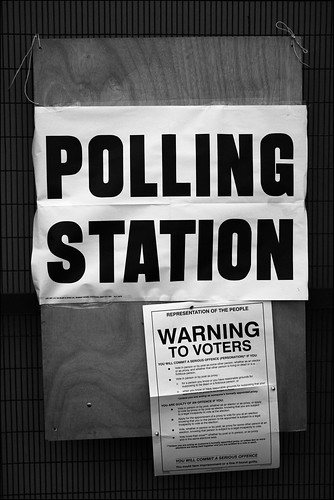
Airline Safety Survey Results

Last week, we put out a survey along with the article about the European Union's recently updated list of banned airlines. The article also included a comparison between the EU preference of banning airlines to the FAA preference of evaluating national civil aviation authorities. The survey in the article asked four questions, and 24 members of the AirSafe.com audience responded.

The first three questions had as response choices Yes, No, Not Sure, and Other. The fourth question asked for a general response. The questions and their responses were as follows:

1. Do the EU and FAA Go Far Enough?

These responses had the most agreement, with 16 of the 23 respondents agreeing that they don't go far enough, two agreeing that they do, and five who were not sure.

2. Are International Safety Standards Too Low?
Responses to this question were quite consistent, with 14 of the 22 agreeing that the standards were too low, four disagreeing with this statement, and two who were not sure. Of the 14 who thought that standards were too low, 12 also thought that the EU and FAA didn't go far enough.

3. Are US and EU Standards Too Low?
There was a variety of opinions here, with 11 of the 24 respondents agreeing that US and EU standards were too low, six believing that they were not too low, and four who were not sure. In addition, one thought that the EU standards were adequate but that the US standards were too low, another who only stated that EU standards were adequate.


4. What Are Today's Biggest Safety Issues?

This question had the most interesting and varied responses. They have been included below with only slight editing for spelling and grammar:

- Management forced cutbacks.

- Cost cutting on maintenance.

- In my view, safety hinges on two main items: pilot training and aircraft frame and engine maintenance. I also list pilot fatigue as a critical factor in airline safety. Get-home-itis is another issue that is not addressed often enough. That is, many air incidents have occurred because the command pilot was too anxious to get either home or to the next airport, often after lengthy delays.

- Hiring of security personnel is at too low a level of security, as is the out-of-public-view luggage inspection area. Once, fairly recently, upon arrival at a conference, I found a piece of someone else's junk jewelry at the bottom of my broken suitcase. While luggage inspection may not be on everyone's list of safety issues, I see it as emblematic of an airline's attention to detail. Which is crucial.

- FAA is too slow to issue EASA originated ADs (airworthiness directives) for Airbus airplanes. As always, economic pressures on both the airlines and authorities to endlessly cut personnel.

- Not enough consistency throughout the airport system (security and maintenance)

- Shortcuts on maintenance spending.

- Maintenance, crew training, and crew hours.

- The guys who work on the planes and the standards they have to uphold, in additional to pilot training and standards are the most important in my opinion.

- Boeing not inspecting planes before delivery.

- Security and too many flights with two engined jets. People feel safer with a four engined plane, especially on long haul flights.

- Extreme weather-due to climate chance.

- Air rage in flight

- Engine maintenance

Photo: gregoryjameswalsh

04 December 2009

Guidelines on the Use of Child Restraint Systems

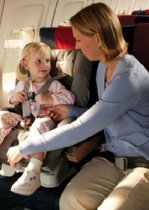
The use of child seats on aircraft has long been a concern of AirSafe.com. One area of concern are the variation in rules around the world. While seat belt use by adults is fairly standard, the use of child restraint systems (CRS) is not. In the US, the rule on child travel has been that children up to the age of two could ride either in a passenger's lap (without restraints), and children two and older must have their own seat. Child restraint systems are not required, and the FAA generally approves for flight any seat that is approved for use in automobiles.

An approved restraint device should have a tag, sticker, or other documentation that shows that it is approved for flight. Some devices, such as child restraint harnesses or booster seats, may be restricted from use during taxi, takeoff, and landing. Check the CRS documentation to be sure.

Child Restraint Systems in Europe
The EU requires that children under the age of two must be secured by an approved “child restraint device” on EU airlines. The most common method is the “loop belt” which is attached to the seat belt of adult holding the child on his or her lap (such belts are not used in the US or Canada). A number of airlines provide the option of using car child seats which are secured to an individual passenger seat.

The German Airline Association has published a list of child seats currently accepted by its member airlines (it helps if you can read German). The European Aviation Safety Agency has also certified a dedicated aircraft child seat for specific aircraft types.

Convenience Factors
In the US, child seats don't count against your carry on item or checked baggage limitations, and you can often get early boarding if you have small children. On the other hand, many of the approved child restraint systems were designed for car seats rather than airplane seats, and often the process of strapping and unstrapping the CRS in an airline seat can be inconvenient and somewhat difficult, especially on those flights where every seat is filled and everyone is trying to rush off the aircraft to make a connection.

Before You Fly with a Child
Wherever you fly, you may want to follow these suggestions when traveling with small children:
  • Check with the airline to find their busiest days and times. By avoiding these times you are more likely to be on a flight with an empty seat next to a parent. In many cases airlines will allow you to seat your child under two years of age in a child restraint in the empty seat at no extra charge. Ask your airline for its policy regarding an empty seat.

  • Ask the airline if they offer a discounted fare for a child traveling in a CRS. When you buy a ticket (discounted or full fare) for your child, you are guaranteed that they will have a seat and that you will be able to use the CRS.

  • If you purchase a ticket for your child, reserve adjoining seats. A CRS should be placed in a window seat so it will not block the escape path in an emergency. A CRS may not be placed an exit row.

  • Check the width of your CRS. While child seats vary in width, a CRS no wider than 16 inches (40.6 cm) should fit in most coach seats. A CRS wider than 16 inches (40.6 cm) is unlikely to fit. Even if the armrests are moved out of the way, a wide CRS will not fit properly into the frame of the aircraft seat.

  • If you need to change planes to make a connecting flight, request that the airline arrange for assistance in your connecting city.

Other Resources
Top 10 Safety Tips for Traveling with Children
FAA Brochure on Child Restraints