The AirSafe.com News

↑ Grab this Headline Animator

Showing posts with label eu. Show all posts

08 December 2009

Airline Safety Survey Results

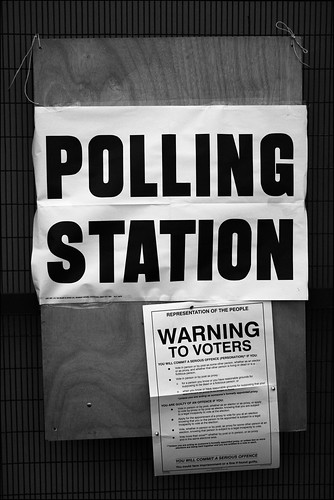
Last week, we put out a survey along with the article about the European Union's recently updated list of banned airlines. The article also included a comparison between the EU preference of banning airlines to the FAA preference of evaluating national civil aviation authorities. The survey in the article asked four questions, and 24 members of the AirSafe.com audience responded.

The first three questions had as response choices Yes, No, Not Sure, and Other. The fourth question asked for a general response. The questions and their responses were as follows:
1. Do the EU and FAA Go Far Enough?

These responses had the most agreement, with 16 of the 23 respondents agreeing that they don't go far enough, two agreeing that they do, and five who were not sure.

2. Are International Safety Standards Too Low?
Responses to this question were quite consistent, with 14 of the 22 agreeing that the standards were too low, four disagreeing with this statement, and two who were not sure. Of the 14 who thought that standards were too low, 12 also thought that the EU and FAA didn't go far enough.

3. Are US and EU Standards Too Low?
There was a variety of opinions here, with 11 of the 24 respondents agreeing that US and EU standards were too low, six believing that they were not too low, and four who were not sure. In addition, one thought that the EU standards were adequate but that the US standards were too low, another who only stated that EU standards were adequate.


4. What Are Today's Biggest Safety Issues?

This question had the most interesting and varied responses. They have been included below with only slight editing for spelling and grammar:

- Management forced cutbacks.

- Cost cutting on maintenance.

- In my view, safety hinges on two main items: pilot training and aircraft frame and engine maintenance. I also list pilot fatigue as a critical factor in airline safety. Get-home-itis is another issue that is not addressed often enough. That is, many air incidents have occurred because the command pilot was too anxious to get either home or to the next airport, often after lengthy delays.

- Hiring of security personnel is at too low a level of security, as is the out-of-public-view luggage inspection area. Once, fairly recently, upon arrival at a conference, I found a piece of someone else's junk jewelry at the bottom of my broken suitcase. While luggage inspection may not be on everyone's list of safety issues, I see it as emblematic of an airline's attention to detail. Which is crucial.

- FAA is too slow to issue EASA originated ADs (airworthiness directives) for Airbus airplanes. As always, economic pressures on both the airlines and authorities to endlessly cut personnel.

- Not enough consistency throughout the airport system (security and maintenance)

- Shortcuts on maintenance spending.

- Maintenance, crew training, and crew hours.

- The guys who work on the planes and the standards they have to uphold, in additional to pilot training and standards are the most important in my opinion.

- Boeing not inspecting planes before delivery.

- Security and too many flights with two engined jets. People feel safer with a four engined plane, especially on long haul flights.

- Extreme weather-due to climate chance.

- Air rage in flight

- Engine maintenance

Photo: gregoryjameswalsh

02 December 2009

European Union Releases Latest List of Banned Airlines - Is Your Airline One of Them?


The aviation safety authorities of the European Union recently updated their list of banned airlines (sometimes referred to as an airline blacklist). Their list includes airlines that are completely banned from operating in Europe, and others which are restricted to operating in Europe under specific conditions.

Keep in mind that not all aircraft are inspected by the member states of the European Union, and that means that just because an airline isn't on the list doesn't mean that it meets EU safety standards. The most recent list is available at AirSafe.com (see resources section).

What Airlines Are on the EU List?
Most of the banned airlines are small, based in Africa, Asia, or the middle east, and are hardly household names. These include airlines like Air Koryo of North Korea, and all airlines operating from Benin, Democratic Republic of Congo, Zambia, and 12 other countries. Other airlines, like Air Bangladesh, can operate in Europe, but only by leasing an aircraft from a certified air carrier.

FAA Approach to Banning Airlines
In contrast to the EU, the FAA's FAA's International Aviation Safety Assessments (IASA) Program does not ban individual airlines, but divides countries into two groups, those that have the ability to oversee airlines to ensure that they meet minimum international safety standards and those that do not. Airlines from countries that don't meet standards would not be allowed to start US service, and those that already have US service may not be able to change their level of service.

What Countries Are on the US List?
In the most recently available list from December 2008, a few of the countries identified as not meeting international standards included Bangladesh, Israel, Indonesia, and the Philippines. All of these countries had at least one airline that served the US. Most of the other countries in this second category had no airline serving the US at the time of the survey.

What These Lists Don't Cover
The short story is that these two programs only cover international flights. What happens within a country is under the control of that country's government. For some countries like the US, Japan, Australia, and the countries of the European Union, the standards are as high or higher than international standards. For other countries, the standards can be much lower.

Should You Avoid These Airlines or These Countries?
These lists from the EU and the FAA don't say that flying on an airliner from a particular country is unsafe or recommend particular airlines to avoid. The final decision to take any trip will be based on many factors, and these lists may be help an individual passenger decide.

AirSafe.com founder Todd Curtis has discussed decision making about risks extensively over the years, and the following is from an article he wrote in 1997:

(W)hen I make a decision on whether to take a particular flight or use a particular airline, I don't make my decision based solely on the fatal event rate or any other single measure. I do so by first taking into account a wide range of information and then by considering the following questions:
  1. Would I allow my minor child to fly unaccompanied?
  2. Would I allow my minor child to fly with an adult?
  3. Would I allow an adult family member to fly?
  4. Would I allow myself to fly?
  5. Would I allow myself to fly only under special circumstances?
  6. Would I allow someone I know on the flight?
  7. Would I allow someone I did not know on the flight?

My personal interpretation of the level of safety of a particular flight or airline would depend on how I answered the question. For example, if I answered the first question yes, then all the other questions below it would also be yes. This is neither a comprehensive set of questions or a set of questions which can deal with everyone's safety issues. This is merely my personal scale for rating the safety of an airline or an airline flight (I'll call it the Curtis Criteria). This method may not work for many people, but it works well for me.


Resources
European Commission List of Banned Airlines (updated 26 November 2009)
European Commission Press Release (27 November 2009)
IASA Program Results (updated 18 December 2008)

Airline Safety Survey
Please take the time to respond to this short survey.

The survey is now closed. The results of the survey are available here.

24 August 2009

Update: Loose Screws on a Jat Airways 737

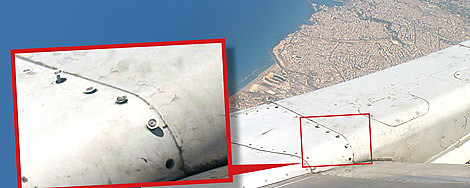
Late last week, AirSafe.com News relayed a story from the Blic newspaper of Serbia about Jat Airways Flight JU 5245, which flew from Greece to Serbia on 14 August 2009 with several visibly loose and missing screws in the area of the left engine.

Shortly after Blic published several stories about the loose screws, including detailed photographs, Jat Airways addressed the issue and did their best to address the public's concerns. The airline performed a special inspection of their fleet and reported that the problems were corrected.

It may be difficult to know all the details of the aircraft that got the most attention, a 737-300 with tail number YU-AON. According to Blic, the airline stated that the aircraft was last inspected on August 5th, and that the airline discovered the problem with the screws as a result of Blic's newspaper reports. Another passenger reported to the newspaper that another Jat Airways 737 flight, possibly involving the same aircraft, had a similar problem almost two weeks earlier on August 1st, and other passengers reported similar problems with other Jat Airways aircraft. The newspaper did not publish these other photos, but it did share with AirSafe.com News a picture of the repaired area of aircraft YU-AON. The previous AirSafe.com News article has several photos of the problem screws.

This incident, although it involved a rather small airline in Serbia, resulted in more comments than any other story previously posted by the AirSafe.com News. The general sentiment was that these loose and missing screws was not only an unsafe condition, but it may indicate that the airline may have other, more serious problems, both seen and unseen.

The two most important programs that evaluate the safety of airlines and national civil aviation authorities have different findings on the safety of Serbian civil aviation. The most recent European Commission list of airlines not allowed to fly in EU countries (dated 14 July 2009) does not include Jat Airways or any other airline from Serbia, but the FAA's International Aviation Safety Assessments (IASA) Program does not evaluate airlines, but rather the ability of a national civil aviation authority to provide safety oversight of airline operators in accordance with the minimum safety oversight standards established by the International Civil Aviation Organization (ICAO). In the FAA's most recent report from 18 December 2008, Serbia did not comply with ICAO standards, and as a result, Jat Airways would not be allowed to fly its aircraft to or from the US.

Given these mixed reviews, the average passenger may think twice before flying on this airline. AirSafe.com would be very interested in what you think about this situation, so please feel free to leave your comments about this article.

17 April 2008

Changes in Compensation for Involuntarily Bumped Passengers

As of May 2008, there will be major changes in compensation for passengers who are involuntarily bumped from an overbooked U.S. flight and who unable to reach their destination from one to two hours of the originally scheduled arrival time for domestic flights (or from one to four hours for international flights) will have maximum compensation increase from $200 to $400, and maximum compensation for delays of more than two hours (or more than for hours for an international flight) will go from $400 to $800. Also, bumping compensation will apply to flights on aircraft with 30 or more seats rather than the current restriction to aircraft with 60 or more seats.

In the U.S., the only passengers who must be compensated for flight delays are those who are delayed due to being involuntarily bumped. This is quite different from the European Community where passengers are also legally guaranteed compensation for many categories of delayed or cancelled flights. Passengers on EC flights are also compensated if they are downgraded in service to a lower flight class than that for which the ticked was purchased.

For details about the upcoming changes and about the differences in compensation in the U.S. and the European Community, visit AirSafe.com at http://www.airsafe.com/complain/bumping.htm.