The AirSafe.com News

↑ Grab this Headline Animator

Showing posts with label american. Show all posts

10 December 2012

Father of AirSafe.com Creator to Receive Congressional Gold Medal

Normally, the articles on this site have some kind of connection to aviation. This aricle will be a notable exception.

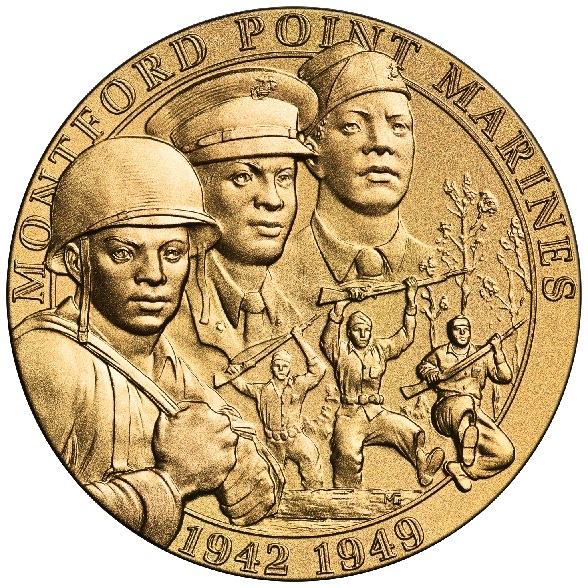
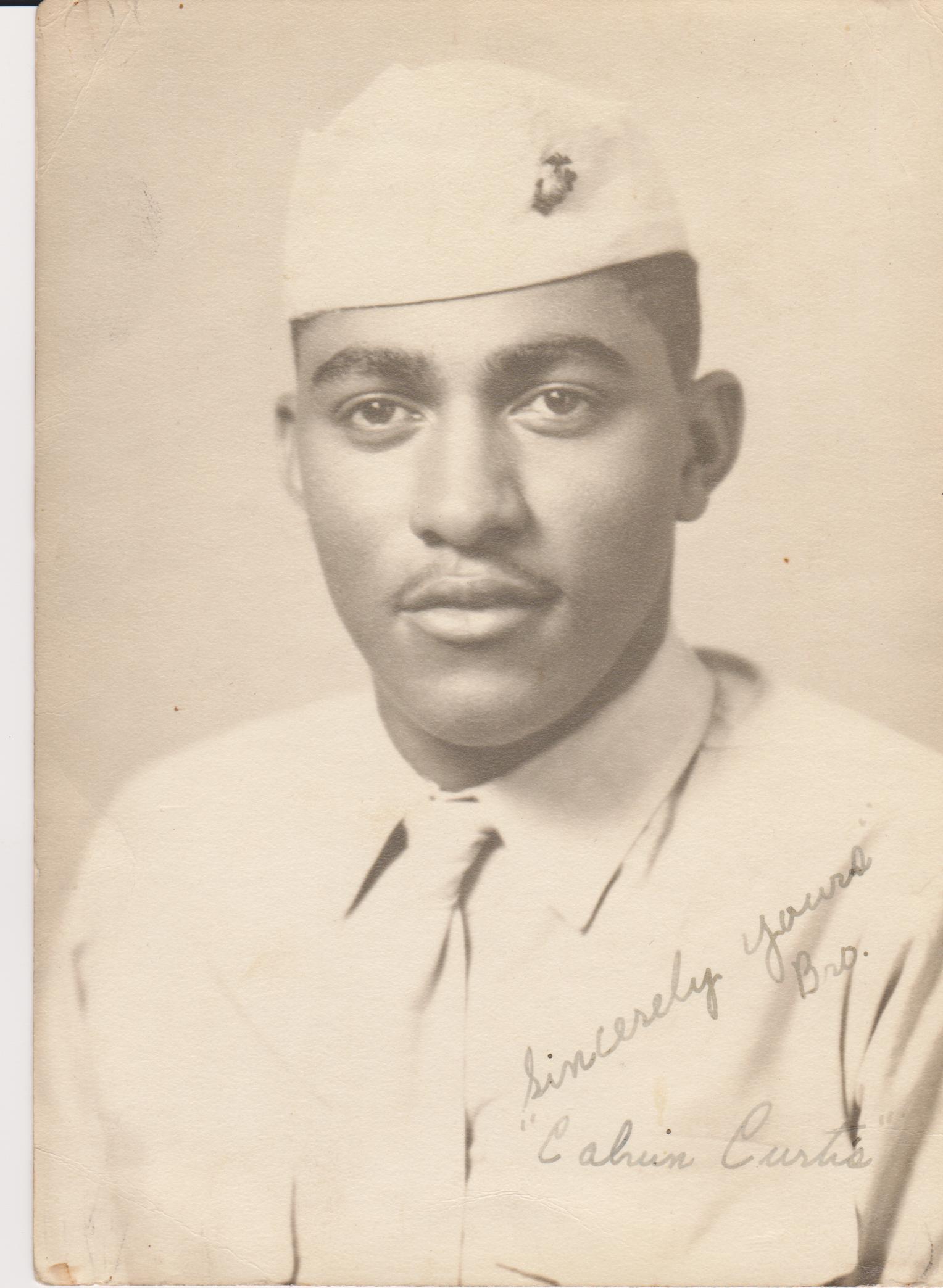
Montford Point Marines Congressional Gold Medal Calvin Curtis, father of AirSafe.com creator Dr. Todd Curtis, will be presented with a Congressional Gold Medal, which is the highest civilian honor bestowed by the US Congress for distinguished achievement.

The medal was awarded to the Montford Point Marines in recognition of "their personal sacrifice and service to their country" as the first African-American Marines. Past recipients of the Congressional Gold Medal have included the Tuskegee Airmen; Dr. Martin Luther King and Coretta Scott King; the Navaho Code Talkers, Rosa Parks, Nelson Mandela, and Gen. Colin Powell.

There were originally over 20,000 Montford Point Marines, and perhaps fewer than 500 remain alive today. Many of the surviving Montford Point Marines were honored in a group ceremony last summer in Washington, DC. Other Montford Point veterans have been honored by Marine units in local ceremonies around the country.

Marine Recruit CurtisThe ceremony for Calvin Curtis will be held at 11 am on December 11, 2012, at the Naval Operational Support Center, located at Ft. Sam Houston in San Antonio, Texas. The public is invited to attend, and AirSafe.com encourages anyone in the San Antonio area to do so. The links below provide directions to the event, as well as details about the ceremony.

Directions to the event and parking instructions

Program for the Ceremony

Additional Information
More on the life of Calvin Curtis
USMC History of the Montford Point Marines

Leave a Message for Calvin Curtis
If you are unable to attend, but would like to leave a message for Calvin Curtis, please feel free to leave your comments below:


House Speaker Boehner's Remarks at
Congressional Gold Medal Ceremony

Profile of Montford Point Marine William Washington
from KETC television in St. Louis
Make Us Proud: Documentary from
Marine Cpl. Kevin R. Wright
The Marines of Montford Point: Narrated by Louis Gossett, Jr.
Navy and Marine Corps Video News
Item from 15 February 2008

08 October 2012

Loose Seats Grounds Dozens of American 757s

Last week's temporary grounding of dozens of American Airlines 757s was due two three incidents where passenger seats came loose in flight. In all three cases, which involved two aircraft, no one was injured and the aircraft landed without incident.

The incidents, which occurred in late September and on 1 October 2012, eventually led to the cancellations of 95 flights on the 4th and 5th of October, and involved 48 of the 102 757s in American Airline's fleet. The temporary grounding led to roughly 1,000 cancelled flights and over 10,000 delayed passengers.

The grounded aircraft had their seats checked, and at least four other aircraft had improperly secured seats, though none of the passenger seats on these aircraft came loose in flight. All aircraft were returned to service by October 7th.

The 48 grounded aircraft all had recent modifications to some rows of passenger seats where the rows of seats were moved to provide greater legroom. The airline identified several factors which led to the seat problems, including installation issues, problems with a seat locking mechanism, and the effects that spilled soft drinks and other debris may have had on the locking mechanism.

 Other American Airlines issues
These seat incidents generated significant media attention last week, and caused the media and the flying public to scrutinize several recent American Airlines events that were unrelated to the 757 seat issues, including a flight delay due to problems with a pilot's seat, and unscheduled landings involving smoke in the cabin, a flap warning light, and landing gear issues.

Along with the recent incidents, American Airlines has been restructuring agreements with many of its unions after filing for bankruptcy last year. In the past couple of months, the company has announced announced that it will be closing down one majore maintenance facility and outsourcing some of its maintenance work that had previously been done by American Airlines employees.

No connection between seat issues and other events
While recent the recent 757 passenger issues and other safety-related incidents may be a cause for concern for some passengers, there is no obvious connection between those incidents and any changes in operational practices by American Airlines. It appears that only the loose passenger seat incidents were due to a related cause, and the airline took actions that addressed the problem.

As for the effect that going through bankruptcy and outsourcing maintenance may have on airline operations, no matter what organization performs the airline's maintenance, that organization will still have the same kind of regulatory oversight, and American Airline will still be responsible for ensuring that their aircraft meet or exceed all the appropriate requirements, regardless of their current financial condition.

17 June 2010

Flight Attendant Fills in for Sick Pilot

On Monday June 14, 2010, the first officer on American Airlines flight 1612, a Boeing 767 flying nonstop from San Francisco to Chicago with 225 passengers and a crew of seven, became ill about an hour into the flight and was unable to continue with his flying duties. After the captain, Jim Hunter, deemed the first officer too ill to fly, the flight's purser reviewed the passenger list for off-duty pilots, but none were on board. It turns out that two of the cabin crew members, the purser and flight attendant Patti Deluna, both had flying experience, the captain chose Deluna because she had more flying experience. She earned a commercial license in 1970 and has logged about 300 flight hours.

According to an American Airlines spokesperson, Deluna read checklist procedures to the captain as he configured the aircraft for landing, in addition to handling other tasks in the cockpit. She was in the cockpit for about the last 90 minutes of the flight.

The plane, carrying 225 passengers and seven crew members, landed safely at Chicago's O'Hare airport, at 4:24 p.m. Monday. After the aircraft landed, the first officer was taken to a local hospital where he was treated and released the next day.

Previous 767 Incapacitated Pilot Incident

This is not the first time that a flight attendant has taken over for an incapacitated pilot. In January 2008, the first officer on an Air Canada 767 on a flight from Toronto to London became incapacitated and had to be removed from the cockpit. The captain declared an emergency and completed the flight with the assistance of a flight attendant who was also a licensed pilot.

A copy of the Air Canada incident report from the Irish Air Accident Investigation Unit is available at http://www.airsafe.com/podcasts/air-canada-jan-2008.pdf.

You can hear the associated podcast at:
http://www.airsafe.com/podcasts/show75-air-canada-pilot.mp3

14 January 2010

Another Perspective on the Risk of Airline Bombings

Since 2001, terror events, including attempted bombings, have been a serious concern for passengers and governments around the world. While high profile terror events of all kinds have been a concern, the probability of a bombing event involving a US airliner or a flight departing or arriving from the US hasn't seen any major changes since 1960.

Terror Events in the Previous Decade
Nate Silver, better know as the person behind the political polling site FiveThirtyEight.com, ran an article that used data from the Bureau of Transportation Statistics (BTS) to evaluate the risk of a terrorist attack on airliners that either departed from the US or had a US destination.

Looking over the ten year period from 2000-2009, Silver identified six attempted terror-related events on board these airline flights, including the four planes hijacked on 9/11, the December 2001 attempted bombing of an American Airlines 767 by convicted shoe bomber Richard Reid, and the January 2009 attempted bombing of a Northwest Airlines A330 by alleged underwear bomber Umar Farouk Abdulmutallab.

Odds of Being a Terror Victim
Silver reviewed BTS records and estimated that there were 99.3 million commercial airline departures that either originated or landed within the United States, or one terrorist incident per 16.6 million departures.

He further estimated that excluding crew members, bombers and hijackers, there were 674 passengers on those six flights on which these incidents occurred, compared with seven million estimated passenger enplanements during that decade, giving the probability of being on a given departure which is the subject of a terrorist incident of about 1 in 10.4 million. He contrasts this risk with the 1 in 500,000 chance of being struck by lightning.

Odds of Being a Bombing Victim
If you only look at the bombing events in there previous decade, there were two, including last month's attempt on Northwest Airlines and the 2001 show bombing event. Using Nate Silver's numbers, the rate of bombing events on US airliners from 2000 to 2009 was 1 in 31.2 million departures.

Previous US Bombing Events
Nate Sliver only looked at events during the previous decade. AirSafe.com has tracked US bombing attempts going back to the 1950s, and found that in the four decades from 1960 to 1999, there were eight events on US airliners that involved a bombing attempt or a successful bombing, with seven involving passenger fatalities. This averaged two per decade, compared with the six in the decades of the 1990s. However, the average number of flights was lower during this 40-year period. According to BTS data, there were about 311.6 million flights during this four decade period, which means the rate of bombing attempts from 1960-1999 was 1 per 39 million flights, compared to 1 per 31.2 million flights for 2000-2009.

How These Two Periods Compare
One of the things that stand out with the events from 1960-1999 was that only six of the bombing events involved a deliberate attempt by individuals or groups that could be associated with terrorism. If only those six are counted, then the rate for the 1960-1999 period drops to 1 in 59.1 million flights, roughly half the risk of the 2000-2009 period.

Does this mean that the risk of bomb related terrorism has doubled in the previous decade? Maybe. However, if the alleged underwear bomber had waited another week and attempted a bombing on January 1st, the 2000-2009 rate would have been 1 in 64.4 million flights, even less than the terror-related bombing rate for 1960-1999.

08 January 2010

American Airlines Flight 331 Accident Investigation Update Released by Jamaican Authorities


As the investigation into the 22 December 2009 crash of American Airlines flight 331 enters its third week, the Jamaican authorities leading the investigation have provided extensive details about the circumstances of the accident.

Weather Conditions and Alternate Airports
The aircraft landed in Kingston, Jamaica in heavy rain about two hours after taking off from Miami, Florida. The crew chose to land with a tailwind, even after air traffic controllers advised them that the runway was wet and offered the crew an option that would have allowed the aircraft to land with a headwind.

The aircraft had sufficient fuel on board to reach its alternate airport at Grand Cayman Island.

Landing Speeds
The aircraft landed slightly below its permitted landing weight and with an airspeed of 148 knots (170 mph). However, because of the 14 knot tailwind, groundspeed was 162 knots (186 mph). The landing gear made contact with the runway about 4,000 feet down the 8,900 foot runway. The flight data recorder also showed that the aircraft bounced once before settling down on the runway, which further reduced the amount of remaining runway.

Aircraft Braking and Runway Overrun
Autobrakes deployed, and the crew was able to engage reverse thrust and spoilers, and also used maximum braking, but in spite of this, the aircraft veered to the left of the runway centerline and departed the end of the runway at a ground speed of about 63 knots (72 mph). The aircraft went through a fence and crossed a road before coming to rest on a beach about 175 feet (53 meters) beyond the end of the runway, and about 40 feet (12 meters) from the sea.


Aircraft and Airport Systems Normal Before Landing
The flight data recorder did not indicate any malfunctions or other anomalies with the brakes, spoilers, or thrust reversers, and that braking was normal given the wet runway and the autobrake setting. The fuselage was broken into three major pieces, and the right engine, right main landing gear, and parts of the right wing separated from the aircraft. Other than the crash related damage, no mechanical problems have been found with any part of the aircraft, and ground based navigation and landing aids were operating normally.

Other Accident Information
While the Jamaican authorities are running the investigation, the NTSB and other US organizations and companies are providing assistance. The aircraft wreckage will be shipped to the US and may be examined again later in the investigation.

The interim report did not provide any probable causes for the accident, and the runway has not yet been tested to see how slick it may be in rainy conditions. The interim report made no mention of crew issues, including whether the crew followed all relevant procedures, and whether the captain or first officer had any medical situation or physical condition that could have affected their performance.

AirSafeNews.com will continue to follow the progress of the investigation, and will publish additional information as it becomes available.

Additional Information
Previous AirSafeNews.com Article
Detailed information about this accident
Initial accident investigation press release

07 January 2010

FAA increases oversight of American Airlines after three landing mishaps

After three American Airlines landing mishaps in December 2009, including two MD80s that experienced wingtip strikes, and a 737 that overran a runway in Jamaica, the FAA announced that it was increasing its oversight of the airline. AirSafe.com's Dr. Todd Curtis was one of the airline safety experts interviewed by National Public Radio for the January 5, 2010 broadcast of the NPR show Morning Edition.
Listen to the interview
Details on 22 December 2009 American Airlines crash in Jamaica
American Airlines plane crashes

23 December 2009

Dozens Injured After American Airlines 737 Crashes in Jamaica

American Airlines flight 331, a Boeing 737-800 (N977AN) on a scheduled flight from Miami, Florida to Kingston, Jamaica, had a landing accident that resulting in the aircraft departing the runway. According to early reports, the aircraft was severely damaged after it overran the runway and about 40 of the 154 occupants (148 passengers and six crew members) were injured. The accident occurred about 10 pm local time, and it was raining at the time. The plane came to rest just short of the ocean, and had damage to the fuselage, as well as a separated engine and collapsed landing gear.

American Airlines Information
Anyone who believes they have family members or friends aboard Flight 331 may contact American Airlines at the following toll-free numbers: (800) 245-0999 for calls originating in the United States; (800) 872-2881 for calls originating in Jamaica. Family members from other locations outside the U.S. may contact American through the AT&T Direct Access system.

Callers should dial the local AT&T Access telephone number, which can be found at www.usa.att.com/traveler, for the country from which they are calling. Once in the AT&T system, callers can then dial American toll-free at (800) 245-0999. Family members in Canada, Puerto Rico, or the U.S. Virgin islands can call the (800) 245-0999 number directly. Non-family members are asked not to call those numbers so the lines can be kept available for those who truly need them.

Accident Investigation
The investigation is being led by the government of Jamaica Civil Aviation Authority, with help from a variety of organizations including the NTSB, FAA, American Airlines, Boeing, and General Electric Aircraft Engines. The Jamaican CAA phone number is 876- 960-3965, and the agency’s email address is jcivav@toj.com.

Additional Resources
Additional information on this event
American Airlines plane crashes
Boeing 737 plane crashes

Photos: Bryan Cummings, Naphtall Junior, Garfield Robinson


30 October 2009

AirSafe.com Survey Results Plus American Airlines 777 Turbulence Event near Tokyo

Survey Results for The Text to Speech Narrator
Since last week's debut of the Macbook's text to speech function as a podcast narrator, many of you responded to the survey about this narrator and have given AirSafe.com some valuable feedback. There were 78 responses, 63 of whome listened to the entire podcast. Of these 63, 10 said would not listen to this narrator again and 12 others were not sure if they would do so again. Most of those who would listen to this narrator again agreed that it would be appropriate for shorter podcasts.

Based on these results, this narrator will likely be used again, mostly for shorter episodes, or to supplement other audio content.

AirSafe.com Visitor Survey
In an earlier survey about what resources visitors use at AirSafe.com, most of the 35 who responded said that they visited multiple AirSafe.com related sites or services, with AirSafeNews.com, Plane-Crash-Videos.net, and the AirSafe.com podcast being the most popular choices.

Roughly half of the respondents have not listened to or viewed one of the podcasts. If you haven't done so yet, I invite you to check out one of the podcast videos that are hosted on YouTube. You can find all of audio and video podcasts are at podcast.airsafe.org

Only a few of the 35 admitted to using any social media resources. Also, when asked what they wanted changed AirSafe.com, the most popular response was adding more photos. A BirdStrikeNews.com article from last month addresses both points to some extent. In Ten Free Social Media Things You Can Do, AirSafe.com provided suggestions for free and easy to use social media tools you can use, as well as an example of tools that are actively used at AirSafe.com. Based on your feedback, some of them will be used on a more regular basis throughout AirSafe.com's network of sites.

By the way, some social media resources are in the right hand column. You can join the email notification list so you can get an email whenever this site is updated. You can also click on the Twitter logo and subscribe to AirSafe.com's Twitter account. If you don't have a Twitter account, you can easily sign up. Also, if you use Google Reader or another kind of RSS reader, you can click on the appropriate link or icon and subscribe that way as well. If you have no idea what RSS is all about, that will be covered in a future article.

American Airline Turbulence Event near Tokyo
Earlier this week, AirSafe.com came across several small article news articles about a turbulence event involving an American Airlines 777 (N777AN), Flight 61, near Tokyo on Monday (26 October 2009). Reportedly, nine passengers were injured and five, including three children, were treated at a local hospital after the aircraft landed. The plane encountered turbulence over the Pacific Ocean, about 70 kilometers (43 miles) southeast of Tokyo's Narita airport. The aircraft landed without further incident about 14 minutes later.

Passengers reported that the airplane had already experienced strong turbulence for about 20 minutes. Also, the 'fasten seatbelt' signs had been on for about 45 minutes before the event. There were 228 passengers and crew members aboard the Boeing 777.

Since this was an event that happened in Japan, and because it did not cause substantial aircraft damage or fatal injuries, it is unlikely that information from this incident will be in the accident and incident databases of the FAA or the NTSB. If you find any additional sources of news about this incident, please leave a comment and a link to that information.

Related Resources
Turbulence Risks
Selected Fatal Turbulence Events
Air Canada Turbulence Event from 2009
Child Restraint Advice from the FAA
TurbulenceForecast.com


Report About Air Canada Turbulence Event from January 2008


11 September 2009

Reflections on Aviation Security Eight Years after 9/11

Since the 9/11 attacks eight years ago, every anniversary brings an increase in interest by the media and by the general public. Last month, Dr. Todd Curtis of AirSafe.com was interviewed by a researcher from Lancaster University in the UK about security post 9/11. Below are some of the questions and their responses. We would be interested in what you think about both the questions and answers, and welcome your feedback.

1. Would you say 9/11 changed our perception of aviation safety? That now the prevalence of terrorism has made many people think they have more chance of being involved in an air disaster than being killed in a car crash?

The biggest change is that security concerns became very prominent. At the governmental level, both before and after 9/11, airline security and airline issues were dealt with by different philosophies. Safety and reliability issues were usually dealt with through a regulatory and administrative process that was deliberate, open, and sometimes stretching over a series of months or years. Multiple points of view were often encouraged, and given the opportunity to become part of the debate. In contrast, security issues were often political in nature,
where quick and decisive action was demanded by governments and by the industry. As a result, many things were done quickly, but often without an open and objective process guiding policy.

As for the public's perception of risks in the air compared to more common risks like cars, there had been very clear differences in the public's opinion and the media's coverage well before 9/11. One example was a study I conducted on media coverage by the New York Times during a 17-year, pre-9/11 period of 1978 to 1994. Among other things, I found that fatal airline events that involved jet aircraft that were hijacked, sabotaged, or destroyed by military action, which represented about 8% of the fatal airline accidents reported by the Times during that period, accounted for about 48% of all the airline accident articles in that period. I have not looked at the post 9/11 era, but I suspect that if the same study were conducted for the years 1995-2009, the percentage would be even more skewed.

2. Would you say the creation of the TSA and the federalising of airport safety has made us safer or is it an illusion?

I would say that it has made part of the security process more consistent, and has given the government the ability to implement changes more quickly. On the other hand, some parts of the security process appear to remain in place because of habit or appearances rather than because of effectiveness. One example is the policy of screening shoes. The reason is because one person tried, luckily without success, to explode a bomb hidden within a shoe. While it makes sense to be concerned about a future event, it doesn't make sense to focus on shoes (every size shoe, even the thinnest sandal) while ignoring dozens of other devices that could hide as much or even more explosive than the average shoe. Anyone intending to do harm with a similarly sized explosive would simply use a device that is not closely screened.

3. Do you think in the post 9/11 climate there is a dilemma between preventing another attack vs. allowing passengers to travel freely?

I don't think so. Even before 9/11, security procedures used by organizations from airport screeners to national intelligence agencies worked to identify, deter, and prevent hijackings, bombings, and other acts of deliberate mayhem. That dilemma, or more precisely the need to balance security and freedom of movement, existed before and after 9/11. The difference is that in the current environment, the threats are considered to be much more organized and potentially much more lethal than in the past. The ongoing debate is whether the measures that are being taken now are too much, too little, or just right.

Unfortunately, it is hard to say if most of the measures that have been taken have been effective. Because of the nature of the threat, the general public will have little or no insight into the threats that did not lead to a bad outcome. In contrast, there are plenty of ways to measure how effective current and proposed safety measures are. When accidents happen, they are thoroughly investigated and the
results published for the entire world to see, and information from the thousands of incidents that don't result in accidents are available for study and analysis. Unlike the open databases of the NTSB, FAA, and AAIB, the files of the FBI, CIA, NSA, MI6, and GCHQ are closed to the public.

4. Would you say that the Lockerbie disaster that saw the release of Abdelbaset al-Megrahi on the 20th August and the September 11th attacks in 2001 illustrates the changing nature of aviation terrorism? That the Al Qaeda use of aeroplanes as controlled weapons, in the hands of terrorists makes dealing with the threat of terrorism harder?

I believe it does for several reasons. The biggest is that a nation can't afford to be seen as backing a large terror event such as 9/11. The consequences to Afghanistan's government for harboring Al Qaeda was that it was attacked and driven from power. Any country that attacks the US or a US ally could also expect a response that is swift, certain, and severe.

Al Qaeda used relatively few resources to carry out their attacks. They were apparently not funded by a government, but were certainly harbored by one. There are many organizations, including corporations, that also have the resources to carry out even more devastating attacks without the direct involvement of a government. In my opinion, any group intending to do similar harm in the future will likely learn from Al Qaeda and not associate with any particular leader, government, or physical location. By being a group that is not associated with a particular nation, it would make it much more difficult for the victimized nation to deal with the attack through traditional means such as economic sanctions backed by fleets of B-52s and Predators.

On the subject of aircraft as controlled weapons, Al Qaeda was not the first entity to successfully crash a plane into a Washington, DC area building. Seven years before the attacks on the Pentagon and the World Trade Center, the White House was struck by a small Cessna, but the aircraft only minor damage and no injuries. Coincidentally, the aircraft took off on 9/11/1994. Like on 9/11 seven years later, the aircraft was also tracked on radar before the crash. This 1994 event was not due to a politically motivated hijacker, but due to a disturbed individual.

AirSafe.com would welcome any comments you may have about this article.
.

01 April 2008

A Discussion of Concerns After a String of Airline Safety Events

The recent safety FAA safety audit that was triggered by the actions of the FAA and of Southwest airlines has so far led to two safety-related groundings by American and Delta, and an upcoming hearing in the U.S. House of Representatives. This podcast episode was a roundtable discussion, broadcast on the Kojo Nnamdi Show on WAMU radio on 1 April 2008, that featured Dr. Todd Curtis of AirSafe.com, as well as the Editor-in-Chief of Aviation Daily Jim Matthews, and the vice president for operations and safety of the Air Transport Association Basil Barimo.

You can download the episode directly at http://www.airsafe.com/podcasts/show43_wamu.mp3.
You can also find other AirSafe.com podcasts at podcast.airsafe.org

Related Resources
Notes page from the interview and related links