The AirSafe.com News

↑ Grab this Headline Animator

Showing posts with label safety. Show all posts

30 June 2015

Airline safety and security review for the first half of 2015

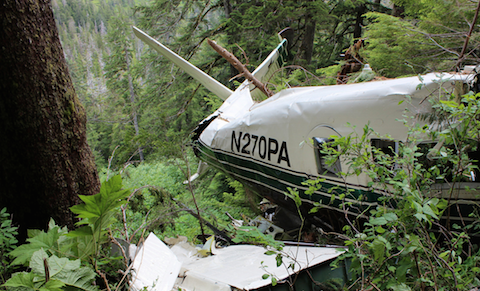
Promech Air crash siteIn the first six months of 2015, AirSafe.com identified eight noteworthy events, but only the two involving passenger deaths on aircraft models commonly used by airlines in the US and the EU. Those two events would be used to compute fatal event rates for particular aircraft models .

The event which has attracted by far the most media attention, as well as the most traffic at AirSafe.com, is the Germanwings crash in March that was apparently due to deliberate actions taken by the first officer. The first officer apparently locked the captain out of the cockpit, and no one was able the get through the armored cockpit door before the aircraft crashed. This was actually the second time in the past two years were one flight crew member locked out the other flight crew member and then crashed the aircraft. The Germanwings event also represented the seventh time since 1980 where a flight crew member deliberately crashed an airliner.

The eight total events consisted of two airliner crashes with passenger fatalities, two airliner landing accidents without fatalities, two crashes involving Hollywood celebrities, one fatal sightseeing flight, and military aircraft that crashed while carrying over 100 civilian family members of military personnel.

The eight total events for the first six months of 2015 were above the average seen in the previous decade, and two the numbered events were below the average. For the 10 years from 2005-2014, there were an average of 6.4 noteworthy events, of which an average of 3.4 were numbered events. In the past decade, the fewest events in the first six months happened in 2006, with one event, which was also a numbered event. The most total events, 12 occurred in 2008, and the most numbered events, five, occurred in 2007, 2009, and 2011.


  1. 4 February 2015; TransAsia Airways ATR 72-600; B-22816; flight GE235; near Magong, Taiwan: The aircraft was on a scheduled domestic flight between Taipei and Kinmen Island, Taiwan. The airplane crashed into a river shortly after takeoff from Songshan Airport in Taipei. The aircraft hit a bridge, as well as a vehicle on that bridge, before plunging into the Keelung River. Shortly before hitting the bridge, the aircraft rolled sharply to the left. Four of the five crew members, including both pilots, and 39 of 53 passengers were killed. The two people who were in the vehicle were both injured.

    This was the second fatal plane crash in less than a year for TransAsia Airways. Having two or more plane crashes in less than a year has happened over 35 times since 1970.
    ATR 72 plane crashes
    Flight GE235 Wikipedia entry
    Other TransAsia Airways plane crashes

    5 March 2015; Delta Air Lines MD88; N909DL; flight DL1086; New York, NY: The aircraft was on a scheduled domestic flight between Atlanta and New York's La Guardia Airport, and had a landing excursion that led to an emergency evacuation. The aircraft landed on runway 13 and departed to the left side of the runway, coming to rest on a dike that separated the runway area from the waters of Flushing Bay. At the time of the event, it had been snowing, with freezing fog conditions and below freezing temperatures. The aircraft was also affected by both a crosswind and a tailwind during the landing. An A319 that had preceded the Delta jet had reported good braking action on runway 13. None of the 125 passengers or five crew members were seriously injured.
    MD80 plane crashes
    Other Delta plane crashes

    5 March 2015; Ryan ST3KR Recruit; N53178; Santa Monica, CA: Actor Harrison Ford was the pilot and sole occupant of a Ryan ST3KR Recruit, a two-seat, open cockpit aircraft that was used extensively as a training aircraft by the US military in WWII. According to a preliminary report from the NTSB, Ford reported a loss of engine power shortly after taking off from the Santa Monica airport, and was attempting to return to runway 3 at Santa Monica.

    Ford chose to land on a nearby golf course, clipping the top of a tree before landing. The aircraft was seriously damage, and Ford was hospitalized with serious injuries. This was Harrison Ford's third crash involving an airplane or a helicopter.
    Plane crashes involving Harrison Ford

  2. 24 March 2015; Germanwings A320-200; D-AIPX; flight 4U9525; near Barcelonnette, France: The aircraft was on a scheduled international flight from Barcelona, Spain to Düsseldorf, Germany. About a half hour after takeoff, while at a cruising altitude of 38,000 feet, the aircraft began losing altitude, and crashed about ten minutes later. The investigative authorities suspect that the first officer deliberately crashed the aircraft. All six crew members and 144 passengers were killed.
    More details on the Germanwings crash
    Lufthansa plane crashes
    A320 plane crashes
    Flight 9525 Wikipedia entry
    Airliners deliberately crashed by a flight crew member

    Early stage of the accident investigation


    29 March 2015; Air Canada A320-200; C-FTJP; flight AC624; near Halifax, Canada: The aircraft was on a scheduled domestic flight from Toronto to Halifax, Canada. At the time the aircraft entered the Halifax area, visibility was limited due to both darkness and snowfall, and the aircraft entered a holding pattern before attempting a landing. During final approach, the aircraft touched down about 300 meters short of the runway, apparently hitting a combination of power lines and a localizer array before sliding onto the runway. The aircraft slid down the runway about 1000 meters, coming to rest just off the left side of the runway.

    Damage to the aircraft included collapsed main and nose landing gear, both engines severely damaged, with the left engine sheared off, separated radome, and damage to the wings, stabilizers, and underside of the fuselage. While there was a fuel leak, there was no post crash fire. There were no severe injuries among the five crew members and 133 passengers.
    Air Canada plane crashes
    A320 plane crashes

    22 June 2015; Short S312 Tucano T; N206PZ; near Ojai, CA: Composer James Horner, who created music for over 150 movies, including "Star Trek II: The Wrath of Khan," "48 Hrs.," and "Aliens," and who won two Oscars for his work in "Titanic," was killed in the crash of his Short Tucano in southern California. Horner was the only person on the aircraft.
    More on this event
    Celebrity plane crashes

    25 June 2015; Promech Air; DeHavilland DHC-3T Turbine Otter; N270PA; near Near Ketchikan, AK: The aircraft was on an unscheduled excursion flight in the area of the Misty Fjords National Monument, and crashed into an area of steep, mountainous terrain. The pilot and all eight passengers were killed. The passengers were from a cruise ship, and were on a sightseeing flight.

    30 June 2015; Indonesia Air Force C130B; A-1310; Medan, Indonesia, AK: The aircraft was on a nonscheduled domestic flight from Medan to Tanjung Pinang and crashed into a residential neighborhood shortly after takeoff. The aircraft had a crew of 12 and 101 civilian passengers. The crew had reportedly requested a return to the departure airport. The passengers were military family members and the aircraft who were headed to Tanjung Pinang for Ramadan related activities.


    Other Years
    1996, 1997, 1998, 1999

    2000, 2001, 2002, 2003, 2004
    2005, 2006, 2007, 2008, 2009

    2010, 2011, 2012, , 2013, 2014

    Most recent crashes

01 January 2015

2014 airline safety review

This is the 19th annual review since AirSafe.com was launched in 1996. From 1996 to 2013, the number of fatal events in a year have ranged from a low of five in 2013 to a high of 19 in 1997

This review includes all plane crashes that resulted in a fatal event, specifically events involving passenger fatalities in aircraft which have the capacity to seat at least 10 passengers where those models are used in regular airline service in North America, western Europe, Australia, or Japan. Also included are plane crashes and other significant events that did not qualify as a fatal event, but that either had high media interest or that had noteworthy aviation safety or security implications.

Only the numbered plane crashes listed below qualified as a fatal event. Details on how events are categorized are available at the AirSafe.com definitions page.

Quick summary of 2014
While this past year saw massive amounts of media attention for the two events involving Malaysia Airlines, and the crash of an AirAsia A320 in the last week of December, 2014 saw seven numbered fatal events on AirSafe.com, which is on the low end for the number of annual fatal events. Six of those events involved Asian airlines, and the seventh involved an airline in Africa. Of the four significant events, only one involved an airliner.

  1. 16 February 2014; Nepal Airlines DHC-6 Twin Otter 300; 9N-ABB; flight 183; en route between Pokhara and Jumla, Nepal: The aircraft was on a scheduled domestic flight from Pokhara to Jumla, Nepal. Radio contact was lost about 30 minutes after takeoff. The crashed aircraft was found the next day, and all three crew members and 15 passengers had been killed.
    Flight 183 Wikipedia entry

  2. 8 March 2014; Malaysia Airlines 777-200; 9M-MRO; flight MH370; unknown location: The aircraft was on a scheduled international flight between Kuala Lumpur, Malaysia and Beijing, China and went missing while en route. The current status and location of the aircraft, along with that of the 227 passengers and 12 crew members on board, is currently unknown. While it is believed that one or more military radar systems in Malaysia detected the aircraft heading back in the direction of Malaysia, there was no corroborating information such as communications from the pilot or information from the aircraft's transponder associated with that radar data.

    Visit the Malaysia Airlines flight MH370 page for additional information, including links to articles and interviews of Dr. Todd Curtis of AirSafe.com

  3. 24 June 2014; Pakistan International Airlines (PIA); A310-300; AP-BGN; flight PK756; Peshawar, Pakistan The aircraft was on a scheduled international flight from Riyadh, Saudi Arabia to Peshawar, Pakistan, when it was struck by several bullets shortly before landing. Two cabin crew members and one passenger were hit, and the passenger died of her injuries. There were no other injuries among the 10 other crew members or 177 other passengers.
    Fatal PIA Events

  4. 17 July 2014; Malaysia Airlines 777-200ER; 9M-MRD; flight MH17; near Grabovo, Ukraine: The aircraft was on a scheduled international flight between Amsterdam, the Netherlands and Kuala Lumpur, Malaysia. The aircraft in cruise at about 33,000 feet when it experienced a catastrophic in flight breakup. All 283 passengers and 15 crew members were killed.

    Visit the Malaysia Airlines flight MH17 page for additional information, including links to articles and interviews of Dr. Todd Curtis of AirSafe.com

  5. 23 July 2014; TransAsia Airways ATR 72-500; B-22810; flight GE222; near Magong, Taiwan: The aircraft was on a scheduled domestic flight between Kaohsiung and Magong, Taiwan. The airplane crashed into a residential area near the airport during a go around following an attempted landing at Magong, Taiwan, which is on Penghu island. Of the four crew members and 54 passengers, at least 48 occupants were killed. At least five people on the ground were also injured. There was heavy rain in the area at the time of the crash.
    ATR 72 plane crashes
    Flight GE222 Wikipedia entry

  6. 24 July 2014; Air Algerie MD83; EC-LTV; flight AH5017; near Gossi, Mali: The aircraft was on a scheduled international flight from Ouagadougou, Burkina Faso and Algiers, Algeria. The airplane contacted air traffic control about 50 minutes after takeoff, requesting a course change due to weather conditions. The aircraft crashed in the area of Gossi, Mali. All six crew members and 110 passengers were killed.
    MD80 series plane crashes
    Flight AH5017 Wikipedia entry

    10 August 2014; Sepahan Airlines HESA IrAn 140; EP-GPA; flight 217; near Nardaran, Azerbaijan: The aircraft was on a scheduled domestic flight from Tehran to Tabas, Iran. The aircraft crashed shortly after takeoff, resulting in 39 fatalities among the eight crew members and 40 passengers. All five crew members and18 passengers were killed.
    This is a not a numbered event as defined by AirSafe.com because of the aircraft type used.
    Flight 217 Wikipedia entry

    13 August 2014; AF Andrade Empreendimentos e Participações Cessna 560XLS+ Citation Excel; PR-AFA; Guarujá, Brazil: The aircraft was approaching Guarujá Airport after a charter flight from Santos Dumont Airport in Rio de Janeiro, and crashed into a residential area about 4.3 km fro the runway. Both pilot and all five passengers were killed. Among the passengers were a candidate for president of Brazil, Eduardo Campos, his wife, and one of their five children. This event also raises policy issues for democracies.


    7 October 2014; California Dept of Forestry and Fire Protection; Marsh S-2F3AT Turbo Tracker; N449DF; near Foresta, CA: The fire-fighting aircraft, which was based at Hollister Air Attack Base, CA impacted a forested hillside during a fire suppression operation near the Yosemite National Forest, California. The pilot, and sole crew member, was killed.


    31 October 2014; Scaled Composites; Model 339 (SpaceShipTwo); N339SS; near Cantil, CA: The vehicle, which is designed to fly into the lower reaches of space (above 100 km above Earth) was on its first powered test flight with a new engine fuel and oxidizer combination (nylon and nitrous oxide). SpaceShipTwo was dropped from its carrier vehicle at about 45,000 feet, and ignited its engine.

    Roughly two minutes after release, the vehicle experienced an inflight breakup. One of the two crew members was killed, and the other was able to bail out of the vehicle and was injured.

    Prior to the accident flight, there had been the 54 test flights of SpaceShipTwo, of which 34 involved a release from the carrier aircraft, including three powered flights.

    Scaled Composites, which conducted the flight test, is a partner of Virgin Galactic, which had planned on using SpaceShipTwo to take passengers on suborbital trips into space in the near future.
    Review of NTSB accident investigation findings
    Space flight related deaths
    Fatal events involving NASA astronauts


  7. 28 December 2014; AirAsia A320-216; PK-AXC; flight QZ8501; Java Sea: The aircraft was on a scheduled international flight between Surabaya, Indonesia and Singapore, and contact was lost while the airliner was en route. Shortly before contact was lost, the crew requested an altitude change and a deviation from their planned route in order to avoid weather. There were no survivors from among the 155 passengers and seven crew members.
    Other A320 crashes
    AirAsia crashes

15 August 2014

When political leaders deserve special care and attention

13 August 2014; AF Andrade Empreendimentos e Participações Cessna 560XLS+ Citation Excel; PR-AFA; Guarujá, Brazil: The aircraft was approaching Guarujá Airport after a charter flight from Santos Dumont Airport in Rio de Janeiro, and crashed into a residential area about 4.3 km fro the runway. Both pilot and all five passengers were killed. Among the passengers were a candidate for president of Brazil, Eduardo Campos, his wife, and one of their five children.

This particular crash is of interest to AirSafe.com because of the status of one of the passengers. Candidates for the highest political offices in Brazil, the United States, and other democracies have to travel extensively around the country, and if they have not already been elected to those offices, they don't have access to the kinds of military or airliner aircraft used by those who are currently in those offices.

In January 2008, after the private plane carrying presidential candidate Senator Barack Obama was damaged in an incident on the ground at Chicago's Midway Airport, AirSafe.com pointed out US policy may expose presidential and vice presidential candidates to excessive air transportation risks. While the US currently provides Secret Service protection for the presidential and vice presidential nominees of major political parties, there are no special provisions or legal requirements for air transportation.

In short, US laws and regulations provide world-class protection from assassins for candidates seeking to be elected to the offices of president and vice president, but takes no special precautions to protect candidates from the risk of air travel. In the US, these candidates spend several months flying around the country, in everything from helicopters and smaller private planes to executive jets and airliners.

This kind of intense flying may also be done by presidents and vice presidents seeking reelection, but they are typically flown on specialized aircraft that are maintained and operated at a level at or above that of a typical airline aircraft. Also, in the US the sitting president and vice president don't fly on the same aircraft. The same is not true for candidates seeking these offices.

Taking extraordinary steps to protect a world leader does not prevent them from falling victim to a plane crash. Since WWII, at least eight national leaders or heads of international organizations have been killed in plane crashes. However, not taking at least reasonable steps to protect candidates seeking high office may be financially sound in the short run, but increases the chance that an accident will have potentially devastating effects to a nation's electoral process.

The potential policy question for Brazil, the US, and other countries that choose their leaders by popular vote is whether exposure to air travel risks faced by presidential candidates should be limited by requiring that flights taken by candidates meet some minimum set of standards. A realistic limitation could take many forms, such as requiring candidates to fly with aircraft operators or airlines that meet relatively high operational standards, or perhaps requiring that candidates use government or military air transportation.

The reasons for even considering such a a policy are the potentially negative political and social impacts of having a candidate seriously injured or killed during a campaign, especially from manageable risks such as those associated with air travel.

One can only speculate the effect that the Campos campaign may have had on the election, but there is no doubt that had he been elected, he would have had a profound effect on the direction of Brazil's political, social, and economic future. Given the potential impact that potential presidential candidates may have, it seems reasonable for Brazil, the US, and other countries to consider some kind of risk reduction policy for candidate air travel that may make it less likely that an accident will lead to a catastrophic disruption in the presidential election process.

Resources
Eduardo Campos Wikipedia entry

24 July 2014

Do plane crashes happen in threes? - yes, and sometimes in fours and fives

Note:This an updated version of an article first published in February 2009

Since AirSafe.com was launched in 1996, the site has tracked fatal events and other significant events involving airline passengers. When these events occur, especially if two occur a just a few days apart, I sometimes get the "Do bad things like plane crashes always happen in threes?" question asked by visitors to the site, by members of the media, and by others.

I used to just dismiss the question out of hand because events like plane crashes, especially those involving passenger airliners, are very rare, and the circumstances are usually very different for each crash, often involving different airlines, different aircraft types, and even different countries.

Although it's easy to reject the original question, it is quite legitimate to ask a related question about how frequently groups of rare events occur over a relatively short period of time.

One day, just for fun, I turned the "things happening in threes" question into something that could be analyzed systematically using the information within AirSafe.com. I changed the general question into the following specific question: "How frequent are sequences of three or more fatal or significant aviation safety and security events where the time between events is ten days or less?"

For example, a sequence of three events could happen on the same day, or it could be over a period as long as 20 days, with a 10-day gap between the first and second event, and another 10-day gap between the second and third event.

The most recent sequence of three events took place over the course of seven days beginning with the crash of Malaysia Airlines flight MH17 on July 17th, followed by the crash of an TransAsia ATR airliner in Taiwan on July 23th, and ending with the crash of an Air Algerie MD83 in Mali on July 24th.

For the purposes of answering this question, I limited the data to those events that are regularly tracked by AirSafe.com. These would be plane crashes or other airline events that kill at least one passenger, or other events that AirSafe.com considers to be significant with respect to aviation safety or aviation security.

Multiple events due to the same cause (for example, the four crashes associated with 9/11) were treated as one event. Significant events that don't kill anyone sometimes attract more media attention than the average plane crash. The January 2008 ditching of a US Airways A320 in the Hudson River in New York was one example. It was very dramatic, it got a huge amount of media exposure, and no one was killed.

A review of the AirSafe.com records from 1996, the year AirSafe.com was launched, to July 2014 revealed some interesting facts:

  • With the exception of 2007, 2009, and 2013, every year since 1996 included at least one sequence of three fatal or significant events that were separated by no more than ten days. There was a sequence of five significant, but nonfatal, events in January 2008 (one of which involved Senator Barack Obama), and a sequence of eight events in 2010, seven of which involved fatalities.

  • There were 25 sequences of three or more events that were separated no more than ten days. One was a sequence of eight events, three were sequences of five events, five sequences had four events, and the other sixteen consisted of three events each.

  • Most of the fatal and significant events tracked from 1996 to the present were not part of any sequence of three or more events.

  • Well known fatal events that were a part of one of these sequences include the Swissair MD-11 crash in 1998, the Concorde crash in 2000, the August 2006 crash of a Comair jet, in Lexington, KY, the August 2008 crash of a Spanair MD83 in Madrid, and the July 2014 crash of Malaysia Airlines flight MH17.

  • Well known events that were not a part of one of these sequences include the ValuJet and TWA Flight 800 crashes in 1996, the Alaska Airlines crash in 2000, the four crashes associated with 9/11, and the March 2014 loss of Malaysia Airlines flight MH370.

  • For 16 of the past 19 calendar years (1996 to 2014), there has been at least one grouping of three or more fatal or significant events that occurred over a relatively short period.

  • No information has come about in the investigations of any of those events that indicates that there was any sort of connection among the crashes that were part of a sequence of three or more events, or that suggested that earlier events in a sequence made a later event more likely.

After reviewing the facts, I no longer say that plane crashes don't happen in threes. Since 1996, they have happened in sequences of three, four, five, and eight.

- Todd Curtis


Fatal and serious events by year
1996, 1997, 1998, 1999, 2000
2001, 2002,2003, 2004, 2005
2006, 2007, 2008, 2009, 2010
2011, 2012, 2013, 2014

Related information
26 July 2014 - Todd Curtis discusses his findings on the Rudy Maxa Show (6:44)
Related article from Patrick Smith of AskThePilot.com
Losing three airliners in one week is not that rare


AirSafe.com Bonuses
All subscribers to the AirSafe.com mailing list at subscribe.airsafe.com will be able to download free copies of all of the recent AirSafe.com books, including the latest, AirSafe.com Family Air Travel Guide.

Also available is the AirSafe.com Fear of Flying Resource Guide, with an overview of the symptoms of fear of flying, as well as recommended resources for managing or eliminating these fears.

01 January 2014

AirSafe.com Airline Safety Review for 2013

This 18th annual review discusses five fatal airline crashes and two other significant events from 2013. The five fatal airline crashes from 2013 represents the fewest fatal passenger events since AirSafe.com was launched in 1996. The two significant events both involved cargo jet crashes that killed all of the crew members. This past year was also unusual in that the majority of these events either occurred in the US or involved a US airline.


Crashes Killing Airline Passengers

  1. 29 January 2013; SCAT Airlines Canadair CRJ-200ER; UP-CJ006; flight 760; Almaty, Kazakhstan: The aircraft was on a domestic scheduled flight from Kokshetau to Almaty, Kazakhstan, crashed during approach about five kilometers (3.1 mi) from the destination airport, near the village of Kyzyltu. All five crew members and 16 passengers were killed.
    Wikipedia entry for this crash.

  2. 6 July 2013; Asiana Airlines; 777-200ER; HL7742; flight 214; San Francisco, CA: The aircraft was on a scheduled international flight from Seoul, South Korea to San Francisco, and the rear of the aircraft struck a seawall just short of the runway while landing. The tail section broke apart, and both horizontal stabilizers and the vertical fin separated from the aircraft. Both engines and the main landing gear also separated from the aircraft. The aircraft caught fire after it came to rest, but not before all of the crew and most of the passengers were able to escape. All 16 crew members survived, but thee of the 291 passengers, all teenage girls from China, were killed.
    - AirSafeNews.com article from 13 July 2013
    - AirSafeNews.com article from 10 July 2013 on the role of the autothrottle
    - AirSafeNews.com on early findings of the crash investigation
    - Dr. Todd Curtis and former airline pilot Capt. Tom Bunn on the role of the media
    - Other 777 plane crashes
    - Wikipedia page on this accident
    - Other Asiana plane crashes

  3. 7 July 2013; Rediske Air DHC-3 Otter; N93PC; Soldotna, AK: The aircraft was on a nonscheduled domestic flight from Soldotna, Alaska to Bear Mountain Lodge, alsoo in Alaska. The aircraft crashed during takeoff, killing the pilot and all nine passengers.

  4. 16 October 2013; Lao Airlines ATR 72-600; RDPL-34233; flight QV301; near Pakxe, Laos: The aircraft was on a scheduled domestic flight from Vientiane, the capitol of Laos, to Pakxe in southern part of the country. It crashed into the Mekong river during its approach and sank. The crash occurred about eight kilometers (five miles) from the airport. All five crew members and 44 passengers were killed.
    Fatal ATR 72 crashes

  5. 17 November 2013; Tartarstan Aircompany 737-500; VQ-BBN; flight 383; Kazan, Russia: The aircraft was on a scheduled domestic flight from Moscow to Kazan, Russia, and crashed during a landing attempt. Early reports indicated that it was at least the second landing attempt. All 44 passengers and six crew members were killed in the crash and subsequent fire.
    Fatal events involving airlines of the former Soviet Union


Other Significant Events
  1. 29 April 2013; National Airlines 747-400; N949CA; Bagram Air Base, Afghanistan: The aircraft had just departed on a cargo flight to Dubai, UAE when the aircraft entered a stall and crashed near the end of the runway. At one point, the aircraft had rolled to the right in excess of 45 degrees. Although the crew was able to put the wings more or less level, the aircraft impacted the ground at a high vertical speed, causing an explosion and fire. All seven crew members were killed.
    Fatal 747 crashes

  2. 14 August 2013; UPS A300F4-622R; N155UP; flight 1354; Birmingham, AL: The aircraft was on a domestic cargo flight from Louisville, KY (SDF) to Birmingham, AL (BHM), crashed and burned during a landing attempt. The aircraft was destroyed in the crash and subsequent fire, and both pilots were killed. There were no other occupants, and no one was killed or injured on the ground.
    Additional details on the crash
    Other A300 plane crashes


Fatal and serious events by year
1996, 1997, 1998, 1999, 2000, 2001
2002,2003, 2004, 2005, 2006, 2007
2008, 2009, 2010, 2011, 2012, 2013


AirSafe.com Bonuses
All subscribers to the AirSafe.com mailing list at subscribe.airsafe.com will be able to download free copies of all of the recent AirSafe.com books, including the latest, AirSafe.com Family Air Travel Guide.

Also available is the AirSafe.com Fear of Flying Resource Guide, with an overview of the symptoms of fear of flying, as well as recommended resources for managing or eliminating these fears.

13 September 2013

Boeing releases annual airline safety summary

The main goal of AirSafe.com is to provide the public with useful and reliable information about airline safety and security. One of the best sources for information about accident rates for specific airline models is Boeing's Statistical Summary of Commercial Airplane Accidents. The newest edition, covering the period from 1959 to 2012, was released in August 2013, and includes a variety of resources, including a summary of selected airliner crashes from 2012, as well as comparative data on the accident rates of various aircraft models.

This publication is very useful in part because it provides a snapshot of accident trends for different aircraft models and for different areas of the world. It is also useful for the AirSafe.com audience because it provides a different point of view. These differences are most noticeable if you compare AirSafe.com's safety review for 2012 with the list in the Boeing publication.

While there is some overlap between the two annual lists, particularly the crashes that resulted in passenger deaths, there are some key differences. Boeing, like much of the airline industry, has a focus on events that cause significant and unrepairable damage to aircraft, and their accident statistics reflect that focus. While AirSafe.com does make note of a number of nonfatal events, only those events that result in passenger deaths are used in any statistical comparisons on the site. Also, Boeing does not list events, even ones involving passenger fatalities, if it involved aircraft designed in the former Soviet Union, or events involving turboprop driven airliners.

In spite of those differences, Boeing's Statistical Summary is one of the industry publications that has very high quality data, and should be consulted by anyone who has an interest in airline safety, especially to answer specific questions about airliner accident rates and how they have changed over the last several decades.

Related resources
2012 Boeing Statistical Summary
2011 Boeing Statistical Summary
2010 Boeing Statistical Summary
2009 Boeing Statistical Summary
2008 Boeing Statistical Summary
2007 Boeing Statistical Summary
AirSafe.com's fatal events by aircraft model

04 September 2013

The role of unidentified aerial phenomena in airline safety

Ongoing technological advances and other developments in the airline industry continue to lead to a greater understanding of the causes of accidents and incidents, one area that has not received much attention is unidentified aerial phenomena, also known as UAP. These are visual phenomena that occur in the sky that don't have a logical or rational explanation, even after a close review of the evidence by relevant experts.

Why UAP events are a safety issue
Unexplained aerial phenomena are important to aviation safety because some of these events are associated with effects to an aircraft's navigational or flight control systems, and also because sightings may cause flight crews to take abrupt, unplanned, and potentially hazardous maneuvers because the UAP is perceived as a threat to the aircraft.

NARCAP dedicated to studying UAP

NARCAP, the National Aviation Reporting Center on Anomalous Phenomena, is a private, non-profit organization dedicated to studying unexplained aerial phenomena (UAP) and their role in aviation safety. They regularly accept confidential submissions from pilots, air traffic controllers, and other aviation professionals who have witnessed UAP events, and have published a number of studies about UAP. You can find out more about NARCAP at uap.airsafe.com.

Interview with Dr. Richard Haines of NARCAP
Last month, Dr. Todd Curtis interviewed Dr. Richard Haines, the chief scientist of NARCAP, where they discussed his organization's efforts to reduce threats to aviation caused by unidentified aerial phenomena (UAP).

Dr. Haines, who founded the organization in 1999, provided several examples of why unidentified aerial events may have put aircraft and their occupants at risk in the past, and also explained that such events happen to a significant fraction of active airline pilots. Dr. Haines also encouraged crew members who have observed such events to contact his organization at narcap.org and file a report on any past sightings.
Listen to the interview (1:01:28)

NARCAP resources and research studies
NARCAP advice to pilots
Report unidentified aerial phenomena (UAP)
NARCAP technical reports

12 August 2013

Why TSA may be searching you well outside of airports

A New York Times story on 5 August 2013 described an ongoing program that has allowed the TSA to expand their activities well beyond airports, to places like sporting events, music festivals, rodeos, highways, and train terminals. The story pointed out how some groups hold that what the TSA is doing in this program is well beyond their original mandate and that their behavior may violate the constitutional rights of people in the US.

The TSA currently has a legal right to act outside of airports, even though many in the US don't like what they are doing. To understand why this situation exists, it is important to understand a several key realities about the TSA

  • TSA is not a law enforcement organization.
  • Law enforcement organizations have significant limits when it comes to conducting a search.
  • TSA has an exemption from these limits when it comes to searches at an airport.
  • There is an ongoing program that allows the TSA to operate outside of airports under law enforcement supervision.

TSA is not a law enforcement organization
The TSA employees that you see at airport screening locations typically wear the uniform that you see in the photo below. While TSA employees wear an outfit that looks like a police uniform, have badges that looks like the type used by police officers, and sometimes have titles like Transportation Security Officer, TSA is not a law enforcement agency and its employees do not have typical police powers.

Typical law enforcement officers include the power to arrest someone, and the power to use force in order to execute their duties.

One similarity between police officers and TSA personnel is their ability to legally search individuals or their property. However, police officers in the US have significant limitations of when such searches can be conducted, and TSA, at least at an airport, do not have these limitations.

Typical law enforcement limitations on searches
In general, law enforcement officials in the US can search an individual or that individual's property without a warrant only if that law enforcement officer has probable cause to believe that someone has committed a crime, or has a reasonable suspicion that the person has committed a crime.

Why TSA can operate outside of common law enforcement limitations
The TSA's ability to search passengers and their belongings at airports is based in part on a US federal court decision from 1973 which ruled that airport screenings are considered to be administrative searches because they are conducted as part of a general regulatory scheme that had the purpose of preventing the carrying of weapons or explosives aboard aircraft.

The TSA outside of the airport
The TSA VIPR (http://www.tsa.gov/about-tsa/visible-intermodal-prevention-and-response-vipr) program uses TSA assets and personnel to augment law enforcemement (including Federal Air Marshals) resources to ensure security in all modes of transportation, as well as at special high profile events. The program, which began in 2005, allows TSA to extend its ability to conduct searches beyond the airport.

Past misconduct and legal limits on searches
The New York Times article pointed out that there had been some cases in the past where the VIPR teams have conducted searches that were ineffective, for example searching passengers after they had left a train, and the Inspector General's office of the Department of Homeland Security issued a report in August 2012 that discussed numerous concerns about how these teams stay within their legal limits when it comes to searches outside of the airport.

General public concerns
One of the fundamental concerns expressed both by the New York Times article and by some in the AirSafe.com community is that the TSA should not have the same kind of wide-ranging ability to search individuals and their belongings outside of the airport environment. This extension of TSA's authority outside of the airport parallels the New York City's "stop and frisk" program where police officers were allowed to stop, question, and search individuals without having the meet the basis law enforcement standards of reasonable suspicion or probable cause.

The program, which has been in place for about a decade, has often led to arrests and confiscation of illegal weapons. However, on 12 August 2013, a US federal judge ruled that the New York City policy was unconstitutional and must be changed to adhere to constitutional limits.

It is too early to tell if this decision will outlaw similar practices across the US, of it will have any effect on the TSA's VIPR program. No doubt, many who oppose the VIPR program will welcome this latest decision and will hope that it will lead to changes in how the TSA operates outside of the airport.

09 August 2013

Passengers are not required to see or understand preflight safety briefings

While passengers, especially those who fly frequently, often ignore the preflight safety briefing, they do serve a vital purpose, and over the last few decades these briefings have no doubt allowed passengers and crews to avoid serious injuries and deaths during emergencies. However, the experience of one passenger, who is also a career aviation safety professional, highlights the fact that airlines may not be required to ensure that passengers can hear or understand these safety briefings.

On 20 July 2013 I flew on a SAS MD82 from FCO (Rome) to CPH (Copenhagen), and I was in seat 33A. A panel was just in front of my seat and I could not see the safety demonstration carried out by the flight attendant standing many rows ahead (see photo below). In the same time, listening by the loudspeaker (in English and probably Danish) was difficult and irregular. No other safety information was given before takeoff.


The view from seat 33A on an SAS MD82

I don’t need to receive a safety demonstration as I have been working in the Italian Civil Aviation Authority for more than 30 years, but the handler and the airline did not know this when they assigned that seat to me. The aircraft was also full of Italians who probably weren’t able to fully understand the message without a visual demonstration. If the demonstration had been different from the usual I would not have been able to understand it at all.

Now I am pretty sure that everything has been done according to the rules, only I would like to know which rules. Is that seat certificated for all kind of passengers? For example many airlines require that emergency exit seats are available only for English speaking people (for example Air Canada). As I think that many MD82s are still in service in the USA, what is your opinion about this topic? - Valter

Dr. Todd Curtis of AirSafe.com responds
You raise an interesting set of questions. I'm not aware of the rules around the world for passenger safety briefings, but in the US, airlines that fly aircraft that are of size of the MD82 have very clear guidance on the visibility of flight attendants during the safety briefing. FAA Advisory Circular AC121-24C describes what is required to be, or should be, covered in oral passenger briefings. In the section that discusses passenger briefing requirements for operations that include flight attendants, it states the following:

The pretakeoff oral briefing should be given so that each passenger can clearly hear it and easily see required demonstrations.

By that standard, it appears that your flight, if it had been a US airline, would not have been in compliance with the requirements of this FAA Advisory Circular.

This advisory circular also requires that an airline provide passenger briefing information in the languages used by the airline. However, there are no requirements that every passenger should be given an oral safety briefing in a language that is understood by that passenger, and there are also no requirements that accommodations be made for passengers who may have limited sight or hearing.

When it comes to exit row seating, in the Advisory Circular the FAA strongly encourages, but does not mandate, that air carriers require crewmembers to provide a preflight personal briefing to each passenger seated in an exit seat. The FAA did not mention whether an exit row passenger should also understand English.

In summary, it appears that the FAA gives US airlines wide latitude when it comes to passengers safety briefings, and from your description of your SAS experience, only the fact that you were not able to see the flight attendant give the briefing would have fallen short of FAA requirements. On your particular flight, the relevant requirements would have been the appropriate European regulations that would have been in effect for SAS.

One of those regulations appears to be European Regulation (Reg CE 8/2008), which unlike the FAA regulation does not specifically require that the safety demonstration be visible to every passenger. Like the FAA Advisory Circular, this European regulation does not specify that the briefing be given in language that a passenger can understand.

25 July 2013

Key safety and technology trends affecting airline passengers

The last few weeks has seen the world media pay a tremendous amount of attention airline safety issues, especially in the wake of the fatal crash landing of Asiana flight 214 in San Francisco on 6 July 2013 and the landing incident on 22 July 2013 involving a Southwest Airlines 737 in New York. These two events have actually highlighted several of the key safety trends in aviation that will likely affect passengers not only in the US, but around the world.

How the crash of an Asiana 777 demonstrated improvements in aircraft
This accident represented not only the first fatal accident involving the 777, but the first fatal accident involving a large jet airliner in the US in almost 12 years. Perhaps more significant was that an accident that resulted in significant damage to the aircraft and a post-crash fire resulted in only three fatalities.


777 accident in San Francisco

While luck plays a part in any fatal accident with survivors, perhaps a more significant role was played by improvements in aircraft design and crew procedures that have occurred over the last few decades, including the following:

  • Aircraft designs that minimize the risk of rupturing fuel tanks when landing gear are sheared away,
  • Cabin materials that are designed to be both more fire resistant and less prone to give off dangerous fumes if they do catch fire,
  • Passenger seats that are designed to withstand greater crash forces,
  • Crew training that emphasizes coordination of cabin crew and flight crew actions during emergencies, and
  • Stricter requirements for passenger evacuation to allow the evacuation of a full aircraft in 90 seconds or less, even if half of the exits are not useable.

How safe is flying?
Since the beginning of large scale airline operations, and especially in the last 30 years, the risks of flying, specifically the risk of a fatal event that kills passengers, has steadily decreased, and the likelihood of survival increasing, in part through innovations in technology and procedures. These improvements are happening because of deliberate efforts by the aviation community and the governments that regulate aviation to identify risks and find ways to eliminate them, make them less likely to occur, or lessen the effects of unwanted outcomes like plane crashes.

Working on the important risks
Aircraft manufacturers, international aviation organizations, and government regulators regularly share information on where the major problems are and what steps have to be taken to address them. The two recent accidents in the US, both of which are being investigated by the NTSB, will be part of this sharing process. They were both landing related accidents, which happens to be a area of high interest among airline manufacturers, airlines, and regulatory authorities.

The findings of the investigation, as well as any recommended changes to technology or procedures, will be provided not only to the organizations involved in the accidents, but to the general public, and will likely contribute to future changes to airline industry, changes that will make these kinds of accidents less likely.

How technology puts power in the hands of the people
The recent accidents in San Francisco and New York were also examples of how technology in the hands of passengers and the public has radically changed the relationship the public has with the airlines. In both cases, news of the accidents, including photos and videos, went out not only through traditional news media, but also through Twitter, YouTube, Vine, and other social media applications. In the case of the crash in San Francisco, the NTSB used Twitter and YouTube to put photos, press conferences, and other information from the investigation online, allowing any interested person to get the information direct from the source, without waiting for traditional media to filter the content.


737 landing accident at LaGuardia

Other key technology trends
The growth in the availability of affordable and portable online access continues to be a reality in virtually all areas of the globe. While it is impossible to say where that technology is going, it is clear that there are several areas where this technology has made a huge difference to airline passengers compared to ten or even five years ago:

  • Allow for easy ticket price comparisons and ticket purchases online,
  • Provide personalized in-flight entertainment,
  • Provide passengers with the means to document accidents, incidents, and poor airline customer service, and to share it with the world, and
  • Allow passengers to access a full range of information about an airline 24 hours a day.

Perhaps the greatest change for passengers is that the existence of the Internet makes the entire aviation system much more transparent to everyone. When accidents occur, the news flashes around the world in seconds. It has become very difficult for an airline, aircraft manufacturer, or government agency to hide the truth about their activities from the public, either because someone publishes a photo or other information that reveals the truth, or because information such as accident and incident data that used to be very difficult for the public to find is now much easier to find.

This last point may not be important to airline passengers who live in countries with a free and open press where critical reporting on the activities of governments and corporations in the norm. In many parts of the world, especially countries where there has been a rapid increase in the standard of living and much greater access to air travel services, having the ability to find information from sources that are not controlled by their government, especially information about airlines that are often partly or completely controlled by their government, would be next to impossible without access to the Internet.

22 June 2013

Why studying unexplained aerial phenomena will improve aviation

The recent AirSafe.com interview featuring investigative journalist Leslie Kean has led at least one member of the audience to express concerns that the interview may attract unwanted attention from individuals who may seek to hurt my professional reputation, or the reputation of AirSafe.com, simply because my interview was in part about reports of UFOs and other unidentified aerial phenomena from pilots and high level military and government officials.

I thanked that person for his feedback, and assured him that those kinds of critics would likely have no effect on the work of AirSafe.com. My reasons were simple. My aviation work, both online and offline, has been focused on airline safety and security, with an emphasis on approaching issues from an analytical and engineering perspective. I sought out Leslie Kean because of the approach that she has taken, focusing on reliable witnesses and cases that were backed by official documentation.

I don't have an opinion as to what is behind reports of UFOs and unidentified aerial phenomena, but I do know that not everything is known about flying, particularly the subtleties of the behavior of the increasingly complex technologies used in aviation, or the behavior of the natural environment. I'm convinced that at least some of these eyewitness accounts are of natural phenomena that are either not well understood or completely novel.

The history of aviation is full of examples of phenomena that have the potential to affect safety, and where a thorough examination of the evidence may lead to changes.

Volcanic ash and upper atmospheric lightning are two examples that come to mind. Ash encounters can often have a rather massively negative effect on aircraft. It took several serious ash encounters and a general recognition of the potential for ash to cause havoc before the airline industry came up with a variety of approaches, including changes in operational procedures, that have had the effect of reducing the likelihood of a serious encounter.

Pilots reported observations of upper-atmospheric electrical activity decades before scientists began to gain a much better understanding of their occurrences starting in the 1990s. While these events have so far not directly affected aircraft, they may be a factor to consider in the future in the design and operation of aircraft.

In the interview with Leslie Kean, I discussed the 2006 O'Hare incident (where an unidentified craft was flying in close proximity to several passenger terminals) because of the security implications. In my view, any vehicle operating, or appearing to operate, in congested airspace around a major airport must be taken seriously. The fact that appeared to be a UFO should not matter to those responsible for controlling or securing the skies around airports.

More arguments for studying these events
As for any skeptics who may want to go on the attack, I think they would likely have a hard time putting up an effective argument with my point of view, which boils down to the following:

  • Scientists, engineers, and aviators don't know everything about the natural environment or about aviation,
  • No engineered system is perfect and can be improved,
  • No security system or protocol is perfect and can be improved,
  • Studying unusual events that are observed or experience in or near aircraft may enhance our knowledge of nature and technology, and reveal weaknesses in security systems or procedures, and
  • Applying insights gained from studying these reports of unusual phenomena can reduce aviation risks through enhancements in technology, changes in operational procedures, and changes in security protocols.

These are basic ideas that have shaped my work throughout my career, and I see no reason to abandon them now.

My goal is to encourage my audience to consider having an open mind to all reports of events that appear to be either highly unusual or extremely improbable. Either such reports represent real but misunderstood phenomena, or they represent serious misinterpretations of well understood phenomena by aviation professionals. Either way, ignoring or discouraging such reports won't get the industry closer to understanding what is happening and what steps, if any, need to be taken to improve how aviation professionals are trained, how aircraft are built and operated, and how the airspace system is managed and regulated.

Resources from Leslie Kean
Research studies and links to reporting organizations
Leslie Kean's site ufosontherecord.com
Book - UFOs: Generals, Pilots, and Government Officials Go on the Record

19 June 2013

Interview with author and investigative reporter Leslie Kean

Dr. Todd Curtis recently interviewed Leslie Kean, New York Times best selling author of the 2010 book UFOs: Generals, Pilots, and Government Officials Go on the Record. They discussed polices and traditions in the US government and the aviation community that keeps flying professionals from being fully informed about potential safety and security threats.

Kean discussed how attitudes within the aviation community toward UFOs and unexplained aerial phenomena keep pilots and other aviation professionals from reporting events that may represent a legitimate threat to aviation safety and security. Dr. Curtis and Ms. Kean highlighted two widely reported encounters, the Phoenix Lights event of 1996 and the O'Hare incident in Chicago in 2006, where many competent observers reported an unidentified aerial vehicle in close proximity to large airports and major population centers, but where the sightings were not officially acknowledged by the FAA, the Department of Homeland Security, or the US military.

Both Curtis and Kean argued that reporting such events is necessary and important because some of these unexplained events or unidentified objects may represent rare or not well understood natural phenomena, unauthorized or illegal flights by conventional aircraft, or some kind of threat to the safety of aircrew or passengers. You can watch or listen to the interview below:


Interview with Leslie Kean
Listen to the interview (49:43)

The interview provided numerous suggestions for steps that crew members, other aviation professionals, or passengers can take to document any unexplained events. In addition, AirSafe.com has provided links to a number of resources for reporting events, as well as links to a number of research reports on the subject of UFOs and unexplained aerial phenomena.

Resources from Leslie Kean
Research studies and links to reporting organizations
Leslie Kean's site ufosontherecord.com
Book - UFOs: Generals, Pilots, and Government Officials Go on the Record

18 May 2013

Review of Cockpit Confidential, the latest book from Partrick Smith

Cockpit Confidential, the latest book from Patrick Smith, is very much an insider's guide to the airline business in general and the life of an airline pilot in particular. This book is about the airline business and about airline careers, but perhaps more importantly it is a story about a love affair. Not the kind that is short, passionate, and comes to a dramatic end at the first sign of trouble, but a love that runs deep, the kind that evolves and matures over decades, and that is strong enough to survive more than a few trials and tribulations.

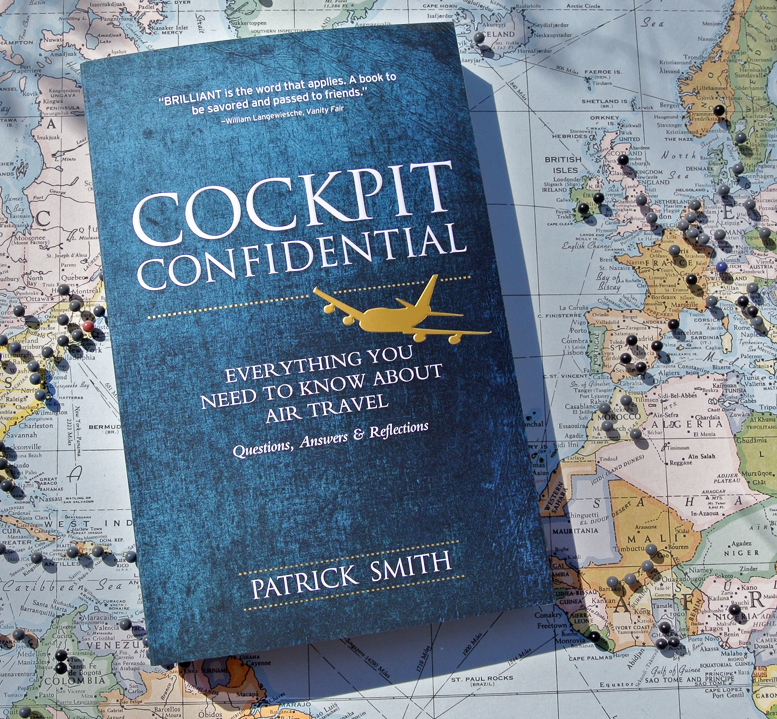
Patrick shares his lifelong love affair in ways that can be appreciated by current and aspiring aviation professionals, as well as by the average passenger. He addresses a variety of questions about aviation, including questions about how airplanes work, how pilots work their way up the ranks, and why airlines behave in they way they do toward customers and employees. Will it answer every question a passenger or future pilot would have? Certainly not. However, for anyone who has a deep interest in the world of airlines, this book is a real treat.


Do you have questions about how airliners can fly? You'll have some of your basic questions answered. want to know about the funny noises your plane makes? Patrick can give you a heads up. How about all those questions you have about the mysterious and glamourous life of an airline pilot. Surprisingly, Patrick does have tales of pleasant five star luxury suites, but also not so romantic stories of cooking ramen in the hotel coffee pot.

Are you ticked off about the state of airlines today? So is Patrick. Any reader who has spent a significant amount of time in an airplane, either in the cockpit or the cabin, will certainly recognize some of the situations that Patrick has seen or experienced.

Want to be an airline pilot? If so, definitely read this book. Patrick's career as a professional pilot has spanned several decades, several airlines, several setbacks, and several radical changes in the airline business. His descriptions of the high and low points of his career, as well as the positive and negative aspects of the typical airline pilot's career, aren't sugar-coated at all, and in my opinion should be required reading for anyone considering a flying career.

As Patrick explains, becoming a pilot takes years of sacrifice and determination, and different challenges will have to be overcome once a pilot puts on that uniform for the first time.

Ask Patrick Smith a question
This week, Todd Curtis of AirSafe.com will interview Patrick Smith about his book and about the airline business. Do you have a question for Patrick? If so, send your question to feedback.airsafe.com.

Resources
Buy the book today!

11 May 2013

FAA report raises questions about the oversight of maintenance repair stations

On 1 May 2013, the FAA Office of Inspector General office released a report (AV-2013-073) that detailed ongoing difficulties that the FAA has in overseeing the repair stations that provide airline maintenance services in the US and overseas. Like the airlines, organizations that provide FAA-approved repairs to airliner aircraft have to meet FAA regulatory standards.

While these organizations can be owned and controlled by an airline, increasingly these kinds of services, which could range from basic maintenance checks to complete aircraft overhauls, are being performed by contractors hired by the airliner rather than by an airline's own employees.

Based on a detailed study of a sample of certified repair stations in the US and elsewhere, Some of the key findings of the report was that while the FAA has invested significant efforts to create risk-based inspection procedures, those procedures are often ineffective, and in many cases inspectors don't even use the procedures when evaluating repair stations.

Aircraft maintenance responsibilities
Airlines are responsible for making sure that aircraft are maintained and repaired to the regulatory standards set forth by the FAA. Whether this work is done by the airline or an airline contractor, the organization doing the repairs has to do so according to FAA regulations. The FAA is responsible for making sure that the repair organizations meet FAA standards, and if they don't, the FAA is supposed to provide those organizations with guidance on how to stay in compliance.

Key issues raised by the report
According to the report, the ability of the FAA to fulfill their responsibilities has been hampered by the organization's lack of standardized processes, including missing or inadequate training of inspectors and not providing adequate guidance to repair stations.

What is a repair station?
The term 'repair station' refers to a maintenance facility that is certified by the FAA to perform maintenance, repair, inspection, overhaul, and alteration of aircraft and aircraft products. Not all repair stations are created equal, with only a small fraction of these stations authorized to maintain the kinds of large airliners used by most passengers.

Where the problems are
The report gives the impression that there is a serious problem with a wide range of reapir stations, and in fact that may be the case. However, the study looked at a very small sample of the repairs conducted by these repair stations.

As of September 2012, there were 4,788 total repair stations, of which 726 were outside the US. Of all of these repair stations, only 68 performed repairs on the kinds of aircraft that most US airline passengers may use.

The study covered the period from September 2008 to August 2011, and looked at documentation associated with work orders at 27 repair stations, of which 13 were outside the US. From these 27 stations, the FAA looked at a sample of 119 work orders from a population of 49,859 work orders.

How big is the problem?
The FAA found 57 errors within the 119 work orders studied. Further, after reviewing the tools and equipment at each facility and the 119 work orders, the FAA also found 92 of what they called "systemic deficiencies" at these 27 sampled repair stations. Based on their sample findings, the FAA estimated that from September 2008 to August 2011 there were deficiencies in about 37% of the estimated 589,573 work orders completed by the stations that the FAA inspects.

How does all this affect safety?
The answer is not clear for two reasons. First, because the definition of safety varies greatly depending on who you ask, and second, because the problems uncovered by the FAA do not necessarily imply that aircraft that are currently flying are being improperly repaired or that aircraft or their occupants are exposed to excessive risk or danger. The FAA study looked at documentation related to aircraft maintenance actions, and did not directly inspect the aircraft that were subject to the work orders that were reviewed.

One of the more popular safety measures used by the public is the number of airliner crashes that kill passenges. Using that measure, US airlines (specifically airlines offering passenger flights on aircraft operating under FAA Part 121 regulations) are experiencing the lowest ever number and rate of events causing airline passenger deaths, though maintenance-related issues still play a role in some crashes.

During the last ten years, there have been four events that have resulted in passenger deaths. One of those events was the December 2005 crash of a Chalk's Ocean Airways Grumman Turbo Mallard flying boat, where the NTSB cited FAA's failure to detect and correct deficiencies in the company's maintenance program as one of the probable causes. That maintenance would have taken place prior to the period covered by the latest FAA IG report.

Key definitions of risk and safety
While safety is a word that is often used to describe aviation situations involving potential harm, safety is not a concept that has a consistent definition. On the other hand, the concept of risk is much more well defined, and that concept can be used to help describe the situations uncovered by the FAA report. The FAA in its 2009 document FAA Risk Management Handbook (FAA-H-8083-2) has three key definitions that may help to clarify the key issues around the FAA Inspector General's report:

  • Risk - The future impact of a hazard that is not eliminated or controlled.
  • Risk Assessment - An approach to managing uncertainty. Risk assessment is a quantitative value assigned to a task, action, or event.
  • Risk Management - The part of the decision-making process which relies on situational awareness, problem recognition, and good judgment to reduce risks associated with each flight.

In short, in the eyes of the FAA, risk is something that can be objectively defined, measured, and managed. In contrast, safety may seem like a related concept, and in fact some key FAA documents like FAA Order 8040.4A (effective 30 April 2012) explicitly state that the terms safety and risk are used interchangeably. The findings of the FAA IG report clearly imply that the FAA maintenance oversight process allows a significant fraction of work orders to be improperly completed. Because of that, it increases the amount of maintenance-related risks in the system.

Is safety different from risk?
Safety and risk may be the same in the context of some FAA documents, but that is not the case for the average passenger or even the average aviation professional. In general, safety doesn't represent something objective and measurable like the FAA's definition of risk, but rather something subjective like the acceptance or tolerance of risk or uncertainty.

Risk can be defined differently for different situations, but it typically uses two key elements, a specific hazard and some kind of frequency or probability of occurrence. Safety on the other hand could be described as a level of acceptability of a hazard, or the frequency of that hazard occurring.

To use a crude example, since 1960, the risk of a fatality of one or more occupants during an intended space flight is about one per 100 flights. In contrast, the likelihood of a fatality on airline passenger flight on a large transport aircraft has far smaller than one per million flights. In spite of the reality of fatal accidents for both kinds of flights, anyone who decides to fly in the air or in space would not do so unless he or she first decided that it was safe to do so (that the risk is acceptable) before strapping in.

Different points of view on the FAA report
Several prominent aviation safety professionals have had a number of comments about the report, and when reading these comments, keep in mind that they were likely talking about both risk and safety, though not making the kind of distinction made by AirSafe.com.

  • John Goglia - This former NTSB board member with over 50 years of experience as a maintenance professional was quoted by USA Today on 6 May 2013 as saying that the discrepancies are a "major concern" because they mean that airlines aren't catching maintenance problems and the FAA isn't catching the airlines. Further, he said "That doesn't mean an airplane is going to fall out of the sky tomorrow, it means the system is broken."
  • Christian Klein - Vice president of the Aeronautical Repair Station Association, an organization representing aircraft maintenance stations, said in the same article that "Shortcomings at the FAA don't translate into safety deficiencies in the industry."
  • Rudy Quevedo - Director of global programs for the Flight Safety Foundation, was quoted in the same article as saying that "It's a perfectly safe system," but elsewhere he has also said that the problems identified need to be addressed as soon as possible to mitigate latent risk. Quevedo has also said that based on a standard risk management methodology of assessing probability and severity of what could happen because of the known deficiencies, that the problems, while serious, do not pose a "high level of danger" to air travel.

Quevedo's comments speak most directly to the way that the aviation industry may look at this situation. In the FAA Risk Management Handbook, there would be a high level of danger if the severity of the hazard were critical or catastrophic, combined with a likelihood that was occasional or probable. Based on the FAA IG report, it would appear that problems with work orders would be in the probable range of likelihood, but that the severity of the hazard is less than critical.

19 January 2013

Dr. Todd Curtis discusses the 787 grounding on Fox Business Network

On Thursday 17 January 2013, Dr. Todd Curtis of AirSafe.com was interviewed on the Fox Business Network show 'Money with Melissa Francis' where he discussed the recent grounding of the 787 and the things that would have to happen for the public to regain confidence in this aircraft.


Issues included potential problems with the new battery technology used in the 787, the aircraft certification process, reducing aircraft risks, and how passenger fears can be reduced.


Interview links
Hear the Fox Business Network interview (also available at podcast.airsafe.com)

Watch the Fox Business Network interview

Previous AirSafeNews.com articles
8 January 2013
What's wrong with the 787?


11 January 2013
FAA orders comprehensive review of the 787


18 January 2013
Should passengers fear the 787?


Photo credits: Fox Business News

11 January 2013

FAA orders comprehensive review of the 787

The 787 is a new aircraft model that is noteworthy for technological advancements and design features that set it apart from other airliner models. This week, the 787 has been noteworthy for all the wrong reasons.

On Monday, an onboard fire at Boston's Logan airport led to a formal NTSB incient investigation. Later in the week, there were three other incidents, including an incident with a second 787 at Boston. The week ended with the FAA ordering a comprehensive safety review of the 787.

  • On January 7th, a Japan Airlines 787 at Boston’s Logan Airport had a fire in a battery associated with the auxiliary power unit (APU), causing some damage to the area in the aft electronics bay close to the battery, and an injury to a firefighter. There was only a maintenance and cleaning crew on board, no passengers were injured.

  • On January 8th, another Japan Airlines 787, also at Boston, had a minor fuel problem that delayed a flight. This leak was from a vent designed to release fuel and was apparently caused by a fuel valve that was left open. The plane departed for Japan later that day.

  • On January 9th, the crew of an ANA 787 in Japan received an error message about the aircraft’s braking system, and the flight was cancelled. It was a false message and there were no problems with the brakes.

  • On January 11th, ANA reported that cracks appeared in a787 cockpit windshields, the third time this kind of event has occurred in their fleet of 17 aircraft.

NTSB investigation
The first incident was the most serious, and resulted in a formal investigation by the NTSB, an ongoing process that also involves Japan Airlines, Boeing, FAA, and Japan’s equivalent of the NTSB, the Japan Transport Safety Board. Normally this kind of investigation is launched when there is an accident. This fire was certainly not an accident as defined by the NTSB, but the NTSB’s reaction implies that this is being considered to be a serious event, very likely for at least a few reasons:

  • The 787 had a number of prior incidents since entering passenger service last year.

  • The aircraft also had a number of development issues that delayed commercial flights for several years.

In addition to the incidents this week, prior incidents and issues include the following:

  • A November 2010 fire during a test flight that forced an emergency landing in Laredo, TX. The problem was traced to an electrical power distribution panel, and flight testing was halted for two months while the panel was redesigned.
  • A July 2012 engine failure during a taxi test of newly manufactured 787.

  • An electrical problem led to a December 2012 emergency landing of a United 787, and United later found a related electrical problem on another 787.

  • A grounding of a Qatar 787, also in December 2012, after finding a similar electrical problem.

  • A December 2012 FAA Airworthiness Directive (AD 2012-24-07) requiring 787 operators to inspect part of the engine fuel system for possible improper installations.

FAA comprehensive system review
On Friday January 11th, the FAA announced that it would undertake a comprehensive review of critical 787 systems, including how those systems were designed, manufactured, and assembled. This goes well beyond the electrical system that was involved in the fire at Boson's Logan Airport, and is separate from the NTSB investigation.

What does this mean for passengers?
Taken together, these incidents and issues don’t add up to a safety concern for passengers because there is so far no consistent pattern to these problems, and none of these past problems have led to any serious aircraft damage or to any injury to passengers or crew.

The recent NTSB investigation may have been launched in part because it is a new model and because there may be useful insights gained from thoroughly investigating incidents such as the Boston APU fire. There are currently fewer than 50 787s in commercial service, with over a third of the aircraft being delivered only in the past three months, and with six of the eight operators having fewer than six months experience flying this model.

As operators around the world gain more operational experience with the 787, there will certainly be more incidents. However, unless several of these incidents have one or more causes that are unique to the 787, there would be no real reason to suspect that the aircraft has some sort of issue exposes passengers to excessive safety risks.

Is it safe to fly on the Boeing 787? If you define safety as an acceptable risk, then the 787 is safe to fly because there is nothing that currently indicates that the 787 has a much greater likelihood of experiencing safety-related problems compared to other large jet airliners. However, that answer may change as a result of the current NTSB investigation or if problems are discovered as airlines gain more operational experience.