The AirSafe.com News

↑ Grab this Headline Animator

Showing posts with label germanwings. Show all posts

30 June 2015

Airline safety and security review for the first half of 2015

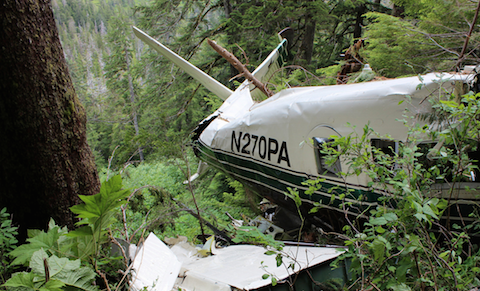
Promech Air crash siteIn the first six months of 2015, AirSafe.com identified eight noteworthy events, but only the two involving passenger deaths on aircraft models commonly used by airlines in the US and the EU. Those two events would be used to compute fatal event rates for particular aircraft models .

The event which has attracted by far the most media attention, as well as the most traffic at AirSafe.com, is the Germanwings crash in March that was apparently due to deliberate actions taken by the first officer. The first officer apparently locked the captain out of the cockpit, and no one was able the get through the armored cockpit door before the aircraft crashed. This was actually the second time in the past two years were one flight crew member locked out the other flight crew member and then crashed the aircraft. The Germanwings event also represented the seventh time since 1980 where a flight crew member deliberately crashed an airliner.

The eight total events consisted of two airliner crashes with passenger fatalities, two airliner landing accidents without fatalities, two crashes involving Hollywood celebrities, one fatal sightseeing flight, and military aircraft that crashed while carrying over 100 civilian family members of military personnel.

The eight total events for the first six months of 2015 were above the average seen in the previous decade, and two the numbered events were below the average. For the 10 years from 2005-2014, there were an average of 6.4 noteworthy events, of which an average of 3.4 were numbered events. In the past decade, the fewest events in the first six months happened in 2006, with one event, which was also a numbered event. The most total events, 12 occurred in 2008, and the most numbered events, five, occurred in 2007, 2009, and 2011.


  1. 4 February 2015; TransAsia Airways ATR 72-600; B-22816; flight GE235; near Magong, Taiwan: The aircraft was on a scheduled domestic flight between Taipei and Kinmen Island, Taiwan. The airplane crashed into a river shortly after takeoff from Songshan Airport in Taipei. The aircraft hit a bridge, as well as a vehicle on that bridge, before plunging into the Keelung River. Shortly before hitting the bridge, the aircraft rolled sharply to the left. Four of the five crew members, including both pilots, and 39 of 53 passengers were killed. The two people who were in the vehicle were both injured.

    This was the second fatal plane crash in less than a year for TransAsia Airways. Having two or more plane crashes in less than a year has happened over 35 times since 1970.
    ATR 72 plane crashes
    Flight GE235 Wikipedia entry
    Other TransAsia Airways plane crashes

    5 March 2015; Delta Air Lines MD88; N909DL; flight DL1086; New York, NY: The aircraft was on a scheduled domestic flight between Atlanta and New York's La Guardia Airport, and had a landing excursion that led to an emergency evacuation. The aircraft landed on runway 13 and departed to the left side of the runway, coming to rest on a dike that separated the runway area from the waters of Flushing Bay. At the time of the event, it had been snowing, with freezing fog conditions and below freezing temperatures. The aircraft was also affected by both a crosswind and a tailwind during the landing. An A319 that had preceded the Delta jet had reported good braking action on runway 13. None of the 125 passengers or five crew members were seriously injured.
    MD80 plane crashes
    Other Delta plane crashes

    5 March 2015; Ryan ST3KR Recruit; N53178; Santa Monica, CA: Actor Harrison Ford was the pilot and sole occupant of a Ryan ST3KR Recruit, a two-seat, open cockpit aircraft that was used extensively as a training aircraft by the US military in WWII. According to a preliminary report from the NTSB, Ford reported a loss of engine power shortly after taking off from the Santa Monica airport, and was attempting to return to runway 3 at Santa Monica.

    Ford chose to land on a nearby golf course, clipping the top of a tree before landing. The aircraft was seriously damage, and Ford was hospitalized with serious injuries. This was Harrison Ford's third crash involving an airplane or a helicopter.
    Plane crashes involving Harrison Ford

  2. 24 March 2015; Germanwings A320-200; D-AIPX; flight 4U9525; near Barcelonnette, France: The aircraft was on a scheduled international flight from Barcelona, Spain to Düsseldorf, Germany. About a half hour after takeoff, while at a cruising altitude of 38,000 feet, the aircraft began losing altitude, and crashed about ten minutes later. The investigative authorities suspect that the first officer deliberately crashed the aircraft. All six crew members and 144 passengers were killed.
    More details on the Germanwings crash
    Lufthansa plane crashes
    A320 plane crashes
    Flight 9525 Wikipedia entry
    Airliners deliberately crashed by a flight crew member

    Early stage of the accident investigation


    29 March 2015; Air Canada A320-200; C-FTJP; flight AC624; near Halifax, Canada: The aircraft was on a scheduled domestic flight from Toronto to Halifax, Canada. At the time the aircraft entered the Halifax area, visibility was limited due to both darkness and snowfall, and the aircraft entered a holding pattern before attempting a landing. During final approach, the aircraft touched down about 300 meters short of the runway, apparently hitting a combination of power lines and a localizer array before sliding onto the runway. The aircraft slid down the runway about 1000 meters, coming to rest just off the left side of the runway.

    Damage to the aircraft included collapsed main and nose landing gear, both engines severely damaged, with the left engine sheared off, separated radome, and damage to the wings, stabilizers, and underside of the fuselage. While there was a fuel leak, there was no post crash fire. There were no severe injuries among the five crew members and 133 passengers.
    Air Canada plane crashes
    A320 plane crashes

    22 June 2015; Short S312 Tucano T; N206PZ; near Ojai, CA: Composer James Horner, who created music for over 150 movies, including "Star Trek II: The Wrath of Khan," "48 Hrs.," and "Aliens," and who won two Oscars for his work in "Titanic," was killed in the crash of his Short Tucano in southern California. Horner was the only person on the aircraft.
    More on this event
    Celebrity plane crashes

    25 June 2015; Promech Air; DeHavilland DHC-3T Turbine Otter; N270PA; near Near Ketchikan, AK: The aircraft was on an unscheduled excursion flight in the area of the Misty Fjords National Monument, and crashed into an area of steep, mountainous terrain. The pilot and all eight passengers were killed. The passengers were from a cruise ship, and were on a sightseeing flight.

    30 June 2015; Indonesia Air Force C130B; A-1310; Medan, Indonesia, AK: The aircraft was on a nonscheduled domestic flight from Medan to Tanjung Pinang and crashed into a residential neighborhood shortly after takeoff. The aircraft had a crew of 12 and 101 civilian passengers. The crew had reportedly requested a return to the departure airport. The passengers were military family members and the aircraft who were headed to Tanjung Pinang for Ramadan related activities.


    Other Years
    1996, 1997, 1998, 1999

    2000, 2001, 2002, 2003, 2004
    2005, 2006, 2007, 2008, 2009

    2010, 2011, 2012, , 2013, 2014

    Most recent crashes

06 May 2015

French authorities release preliminary report on the Germanwings crash investigation

On 6 May 2015, the BEA (Bureau d'Enquêtes et d'Analyses pour la Sécurité de l'Aviation Civile) released a preliminary report on the crash of Germanwings flight 4U9525 which highlighted the following findings:

  • At about three minutes after the aircraft reached its cruising altitude of 38,000 feet, the captain left the cockpit.

  • Within 30 seconds of the captain leaving the cockpit, the first officer commanded the aircraft to descend to 100 feet, which is well below ground level.

  • Within five minutes of the commanded altitude change, the airspeed was changed at least ten times, reaching a maximum of 350 knots (402 mph, 648 kph).

  • The descent rate reached a maximum of 5,000 feet per minute, and averaged about 3,500 feet per minute.

  • The descent was continuous, and controlled by the autopilot.

  • Air traffic controllers and the French military attempted to contact the aircraft several times, but received no response.

  • Before the collision with the terrain, there were multiple aural warnings heard on the CVR.

  • The aircraft impacted the ground about 10 minutes and 13 seconds after the aircraft started its descent.

  • Autopilot and autothrust remained engaged until impact.

  • On the previous flight, while the captain was out of the cockpit, the first officer twice commanded the aircraft to descend to 100 feet for short periods of time.

The role of the first officer in the crash
The preliminary report did not state a definitive cause of the crash, but it did state that during the cruise phase, the first officer was alone in the cockpit and intentionally modified the autopilot instructions to order the aircraft to descend until it collided with the ground. The report also stated that the first officer did not open the cockpit door during the descent, despite requests for access made via the keypad, with cabin interphone, and by knocking on the door.

Aircraft trajectory

(click to enlarge)

First officer training history
The preliminary report provided an outline of the first officer's training history, including the fact that he started his flight training at the Lufthansa Flight Training Pilot School in Germany on 1 September 2008, but that his training was suspended for medical reasons for over eight months, from 5 November 2008 to 26 August 2009. It was during this period, specifically from April to July 2009, that the first officer did not have a valid medical certificate due to depression and his medical treatment for his condition.

From October 2010 to March 2011, he continued his flight training in the US, but was under contract as a flight attendant with Lufthansa for over two years before beginning his training to become an A320 first officer. He was appointed as an A320 copilot in June 2014.

Related information
Germanwings crash details from AirSafe.com
Lufthansa plane crashes
Other A320 crashes
Germanwings Wikipedia page
Flight 9525 Wikipedia entry

03 April 2015

Are people with a history of depression or suicide attempts allowed to fly? - Yes they are!

The unfolding investigation of March 2015 crash of Germanwings flight 9525 has revealed that it is very likely that the first officer locked the captain out of the cockpit, and proceeded to deliberately crash the aircraft into the French Alps. Reports by French and German authorities, as well as by Lufthansa, the parent organization of Germanwings, suggest that not only did the first officer have a history of depression, but that Lufthansa was aware of the first officer's condition. Reportedly, German investigators stated that the first officer had been recently treated for suicidal tendencies, but it was not clear if Lufthansa or Germanwings were aware of those recent treatments.

One basic question that many air travelers have is how can anyone with a documented mental illness have become a pilot for a major airline. While the answer in the case of the Germanwings crash may not be revealed until the investigation is complete, it is possible to address that question for US airlines.

The role of medical certificates
In the US, in order to fly, a person holding an airline transport pilot (ATP) certificate, which is the type of certification that any US airline pilot must have, must possess an FAA medical certificate. The specific regulatory requirements regarding mental conditions for those holding an ATP certificate holder are spelled out in the US Code of Federal Regulations (Title 14, Part 67.107). The FAA allows physicians with specialized training to be an Aviation Medical Examiner (AME), who is responsible for evaluating a pilots medical fitness. If a pilot does not pass the examination, that pilot is not legally allowed to fly.

FAA Guide for Aviation Medical Examiners
The FAA provides AMEs with detailed guidance in a number of ways, including publications like the 2015 Guide for Aviation Medical Examiners, which had an update on 19 March 2015, just five days before the Germanwings crash. The document clearly states that a pilot has to respond to a detailed medical questionnaire, and must reveal a history of mental disorders, including depression or suicide attempts. While such a revelation would lead to further investigation, it would not automatically lead to a denial of a medical certificate.

The pilot who is suspected to have deliberately crashed Germanwings flight 9525 conducted part of his airline flight training in the United States several years ago, and would have been subject to FAA regulations during that period.

What do the airlines do?
While it is clear that the FAA allows people with a history of depression or suicide attempts to fly, it is unclear what the policy of individual airlines may be with regards to a pilot with this kind of medical history. What and airline knows about a pilot's medical history will depend on what that pilot would voluntarily reveal, as well as what the airline may legally be allowed to know. Because this would largely depend on where that airline is located, it is possible that what an airline in one country can know about their pilot's medical history may be radically different from what an airline in another country may know.

Resources FAA medical certificate questions and answers
Germanwings flight 9525 crash information
Lufthansa plane crashes
Other A320 crashes
Germanwings Wikipedia page
Flight 9525 Wikipedia entry

27 March 2015

At least seven deliberate crashes by airline pilots since 1980

24 March 2015; Germanwings A320-200; D-AIPX; flight 4U9525; near Barcelonnette, France: The aircraft was on a scheduled international flight from Barcelona, Spain to Düsseldorf, Germany. About a half hour after takeoff, while at a cruising altitude of 38,000 feet, the aircraft began losing altitude, and crashed about ten minutes later. The investigative authorities suspect that the first officer deliberately crashed the aircraft. All six crew members and 144 passengers were killed.

A review of the cockpit voice recorder made the authorities suspect that the first officer locked the cockpit door while the captain was outside of the cockpit. The online flight tracking service FlightRadar24 reported than an analysis of their data showed that the autopilot was set to the minimum altitude of 100 feet, which is well below the ground level where the crash took place.

These recent revelations of the suspected cause of the Germanwings crash highlight the reality that despite all of the changes that the airline industry has made since 9/11 to prevent passengers or other outsiders from threatening aircraft, there is still a risk that crew members have the opportunity and the ability to deliberately crash airliners.

At least seven events since 1980
Since 1980, there have been at least seven occasions where an airline pilot is suspected to have deliberately crashed an airliner. One one occasion in 1994, a FedEx DC10 crew had to fight off an off duty pilot who had intended to crash the aircraft, and were barely able to survive the attack. For more details on these eight events, please visit http://t.co/XbqXIThVjB

Related information
Lufthansa plane crashes
A320 plane crashes
Airliners deliberately crashed by a flight crew member

24 March 2015

Germanwings A320 crashes in France with the loss of all on board

24 March 2015; Germanwings A320-200; D-AIPX; flight 4U9525; near Barcelonnette, France: The aircraft was on a scheduled international flight from Barcelona, Spain to Düsseldorf, Germany. About a half hour after takeoff, while at a cruising altitude of 38,000 feet, the aircraft began losing altitude, and crashed about ten minutes later. All six crew members and 142 passengers were killed.

Germanwings is owned by Lufthansa, and this crash was the fourth Lufthansa or Lufthansa-related crash since 1970

Related information
A320 plane crashes
Flight 4U9525 Wikipedia entry

Below is the flight track of flight 4U9525 showing the flight track ending in southeastern France


Source: FlightAware.com