The AirSafe.com News

↑ Grab this Headline Animator

Showing posts with label security. Show all posts

30 June 2015

Airline safety and security review for the first half of 2015

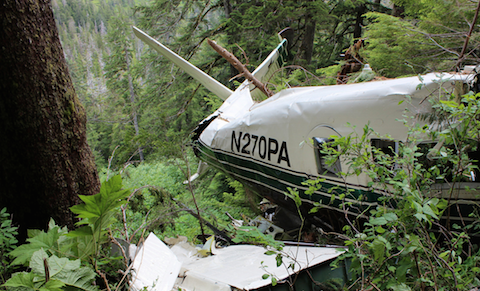
Promech Air crash siteIn the first six months of 2015, AirSafe.com identified eight noteworthy events, but only the two involving passenger deaths on aircraft models commonly used by airlines in the US and the EU. Those two events would be used to compute fatal event rates for particular aircraft models .

The event which has attracted by far the most media attention, as well as the most traffic at AirSafe.com, is the Germanwings crash in March that was apparently due to deliberate actions taken by the first officer. The first officer apparently locked the captain out of the cockpit, and no one was able the get through the armored cockpit door before the aircraft crashed. This was actually the second time in the past two years were one flight crew member locked out the other flight crew member and then crashed the aircraft. The Germanwings event also represented the seventh time since 1980 where a flight crew member deliberately crashed an airliner.

The eight total events consisted of two airliner crashes with passenger fatalities, two airliner landing accidents without fatalities, two crashes involving Hollywood celebrities, one fatal sightseeing flight, and military aircraft that crashed while carrying over 100 civilian family members of military personnel.

The eight total events for the first six months of 2015 were above the average seen in the previous decade, and two the numbered events were below the average. For the 10 years from 2005-2014, there were an average of 6.4 noteworthy events, of which an average of 3.4 were numbered events. In the past decade, the fewest events in the first six months happened in 2006, with one event, which was also a numbered event. The most total events, 12 occurred in 2008, and the most numbered events, five, occurred in 2007, 2009, and 2011.


  1. 4 February 2015; TransAsia Airways ATR 72-600; B-22816; flight GE235; near Magong, Taiwan: The aircraft was on a scheduled domestic flight between Taipei and Kinmen Island, Taiwan. The airplane crashed into a river shortly after takeoff from Songshan Airport in Taipei. The aircraft hit a bridge, as well as a vehicle on that bridge, before plunging into the Keelung River. Shortly before hitting the bridge, the aircraft rolled sharply to the left. Four of the five crew members, including both pilots, and 39 of 53 passengers were killed. The two people who were in the vehicle were both injured.

    This was the second fatal plane crash in less than a year for TransAsia Airways. Having two or more plane crashes in less than a year has happened over 35 times since 1970.
    ATR 72 plane crashes
    Flight GE235 Wikipedia entry
    Other TransAsia Airways plane crashes

    5 March 2015; Delta Air Lines MD88; N909DL; flight DL1086; New York, NY: The aircraft was on a scheduled domestic flight between Atlanta and New York's La Guardia Airport, and had a landing excursion that led to an emergency evacuation. The aircraft landed on runway 13 and departed to the left side of the runway, coming to rest on a dike that separated the runway area from the waters of Flushing Bay. At the time of the event, it had been snowing, with freezing fog conditions and below freezing temperatures. The aircraft was also affected by both a crosswind and a tailwind during the landing. An A319 that had preceded the Delta jet had reported good braking action on runway 13. None of the 125 passengers or five crew members were seriously injured.
    MD80 plane crashes
    Other Delta plane crashes

    5 March 2015; Ryan ST3KR Recruit; N53178; Santa Monica, CA: Actor Harrison Ford was the pilot and sole occupant of a Ryan ST3KR Recruit, a two-seat, open cockpit aircraft that was used extensively as a training aircraft by the US military in WWII. According to a preliminary report from the NTSB, Ford reported a loss of engine power shortly after taking off from the Santa Monica airport, and was attempting to return to runway 3 at Santa Monica.

    Ford chose to land on a nearby golf course, clipping the top of a tree before landing. The aircraft was seriously damage, and Ford was hospitalized with serious injuries. This was Harrison Ford's third crash involving an airplane or a helicopter.
    Plane crashes involving Harrison Ford

  2. 24 March 2015; Germanwings A320-200; D-AIPX; flight 4U9525; near Barcelonnette, France: The aircraft was on a scheduled international flight from Barcelona, Spain to Düsseldorf, Germany. About a half hour after takeoff, while at a cruising altitude of 38,000 feet, the aircraft began losing altitude, and crashed about ten minutes later. The investigative authorities suspect that the first officer deliberately crashed the aircraft. All six crew members and 144 passengers were killed.
    More details on the Germanwings crash
    Lufthansa plane crashes
    A320 plane crashes
    Flight 9525 Wikipedia entry
    Airliners deliberately crashed by a flight crew member

    Early stage of the accident investigation


    29 March 2015; Air Canada A320-200; C-FTJP; flight AC624; near Halifax, Canada: The aircraft was on a scheduled domestic flight from Toronto to Halifax, Canada. At the time the aircraft entered the Halifax area, visibility was limited due to both darkness and snowfall, and the aircraft entered a holding pattern before attempting a landing. During final approach, the aircraft touched down about 300 meters short of the runway, apparently hitting a combination of power lines and a localizer array before sliding onto the runway. The aircraft slid down the runway about 1000 meters, coming to rest just off the left side of the runway.

    Damage to the aircraft included collapsed main and nose landing gear, both engines severely damaged, with the left engine sheared off, separated radome, and damage to the wings, stabilizers, and underside of the fuselage. While there was a fuel leak, there was no post crash fire. There were no severe injuries among the five crew members and 133 passengers.
    Air Canada plane crashes
    A320 plane crashes

    22 June 2015; Short S312 Tucano T; N206PZ; near Ojai, CA: Composer James Horner, who created music for over 150 movies, including "Star Trek II: The Wrath of Khan," "48 Hrs.," and "Aliens," and who won two Oscars for his work in "Titanic," was killed in the crash of his Short Tucano in southern California. Horner was the only person on the aircraft.
    More on this event
    Celebrity plane crashes

    25 June 2015; Promech Air; DeHavilland DHC-3T Turbine Otter; N270PA; near Near Ketchikan, AK: The aircraft was on an unscheduled excursion flight in the area of the Misty Fjords National Monument, and crashed into an area of steep, mountainous terrain. The pilot and all eight passengers were killed. The passengers were from a cruise ship, and were on a sightseeing flight.

    30 June 2015; Indonesia Air Force C130B; A-1310; Medan, Indonesia, AK: The aircraft was on a nonscheduled domestic flight from Medan to Tanjung Pinang and crashed into a residential neighborhood shortly after takeoff. The aircraft had a crew of 12 and 101 civilian passengers. The crew had reportedly requested a return to the departure airport. The passengers were military family members and the aircraft who were headed to Tanjung Pinang for Ramadan related activities.


    Other Years
    1996, 1997, 1998, 1999

    2000, 2001, 2002, 2003, 2004
    2005, 2006, 2007, 2008, 2009

    2010, 2011, 2012, , 2013, 2014

    Most recent crashes

04 July 2014

Three BBC interviews about DHS security enhancements for selected flights from Europe to the US

On July 2, 2014, the Department of Homeland security directed the TSA to implement enhanced security measures at certain overseas airports with direct flights to the United States. These changes were in response to intelligence information that suggested that one or more groups were attempting to detonate explosive devices on one or more aircraft traveling from the US from Europe. These measures were being implemented in the UK, and in other countries, though TSA and Homeland Security did not go into further details.

The Standard newspaper in the UK reported that the threat may be from “stealth” bombs that can't be detected using the screening technologies commonly used by airports. Other media outlets speculate that the devices may be built into specific mobile phone models, or that the people carrying these devices may be passport holders from the US and other western countries. However, this is speculation that has not been either confirmed or denied by official sources in the US and elsewhere.

On July 2nd and 3rd, Todd Curtis of AirSafe.com was interviewed several times by the BBC about several issues that were raised by this latest security situation.


Interview on Rudy Maxa's World
Todd Curtis was also interviewed on this issue on July 5, 2014 on Rudy Maxa's World.


Interview on July 7, 2014 with the Wall Srteet Journal


You can also find additional airline security information at http://security.airsafe.com, or at the following links:


12 August 2013

Why TSA may be searching you well outside of airports

A New York Times story on 5 August 2013 described an ongoing program that has allowed the TSA to expand their activities well beyond airports, to places like sporting events, music festivals, rodeos, highways, and train terminals. The story pointed out how some groups hold that what the TSA is doing in this program is well beyond their original mandate and that their behavior may violate the constitutional rights of people in the US.

The TSA currently has a legal right to act outside of airports, even though many in the US don't like what they are doing. To understand why this situation exists, it is important to understand a several key realities about the TSA

  • TSA is not a law enforcement organization.
  • Law enforcement organizations have significant limits when it comes to conducting a search.
  • TSA has an exemption from these limits when it comes to searches at an airport.
  • There is an ongoing program that allows the TSA to operate outside of airports under law enforcement supervision.

TSA is not a law enforcement organization
The TSA employees that you see at airport screening locations typically wear the uniform that you see in the photo below. While TSA employees wear an outfit that looks like a police uniform, have badges that looks like the type used by police officers, and sometimes have titles like Transportation Security Officer, TSA is not a law enforcement agency and its employees do not have typical police powers.

Typical law enforcement officers include the power to arrest someone, and the power to use force in order to execute their duties.

One similarity between police officers and TSA personnel is their ability to legally search individuals or their property. However, police officers in the US have significant limitations of when such searches can be conducted, and TSA, at least at an airport, do not have these limitations.

Typical law enforcement limitations on searches
In general, law enforcement officials in the US can search an individual or that individual's property without a warrant only if that law enforcement officer has probable cause to believe that someone has committed a crime, or has a reasonable suspicion that the person has committed a crime.

Why TSA can operate outside of common law enforcement limitations
The TSA's ability to search passengers and their belongings at airports is based in part on a US federal court decision from 1973 which ruled that airport screenings are considered to be administrative searches because they are conducted as part of a general regulatory scheme that had the purpose of preventing the carrying of weapons or explosives aboard aircraft.

The TSA outside of the airport
The TSA VIPR (http://www.tsa.gov/about-tsa/visible-intermodal-prevention-and-response-vipr) program uses TSA assets and personnel to augment law enforcemement (including Federal Air Marshals) resources to ensure security in all modes of transportation, as well as at special high profile events. The program, which began in 2005, allows TSA to extend its ability to conduct searches beyond the airport.

Past misconduct and legal limits on searches
The New York Times article pointed out that there had been some cases in the past where the VIPR teams have conducted searches that were ineffective, for example searching passengers after they had left a train, and the Inspector General's office of the Department of Homeland Security issued a report in August 2012 that discussed numerous concerns about how these teams stay within their legal limits when it comes to searches outside of the airport.

General public concerns
One of the fundamental concerns expressed both by the New York Times article and by some in the AirSafe.com community is that the TSA should not have the same kind of wide-ranging ability to search individuals and their belongings outside of the airport environment. This extension of TSA's authority outside of the airport parallels the New York City's "stop and frisk" program where police officers were allowed to stop, question, and search individuals without having the meet the basis law enforcement standards of reasonable suspicion or probable cause.

The program, which has been in place for about a decade, has often led to arrests and confiscation of illegal weapons. However, on 12 August 2013, a US federal judge ruled that the New York City policy was unconstitutional and must be changed to adhere to constitutional limits.

It is too early to tell if this decision will outlaw similar practices across the US, of it will have any effect on the TSA's VIPR program. No doubt, many who oppose the VIPR program will welcome this latest decision and will hope that it will lead to changes in how the TSA operates outside of the airport.

02 August 2013

Surprising exceptions to hazardous materials restrictions

While the TSA has a number of restrictions on hazardous and dangerous items, the FAA allows passengers to travel with several categories of hazardous items on commercial airliners. These exceptions are for small amounts of hazardous materials, typically included in items that are for personal use.

The FAA has provided a rather detailed table listing these exceptions, and they explain in that document that the TSA may on occasion prohibit these items, and that airlines may have additional limitations on these items. Some of the hazardous materials exceptions mentioned in the FAA document are listed below:

  • Toilet or medicinal articles that are hazardous materials such as rubbing alcohol, flammable perfume and colognes, nail polish and remover, and aerosols (hairspray, shaving cream, etc.).
  • One book of safety matches (book matches) allowed in carry-on bags only.
  • One lighter (gas or absorbed liquid) in carry-on baggage only.
  • Up to 5 liters of alcoholic beverages with an alcohol content of more than 24% but not more than 70% in unopened retail package, in carry-on or checked bags depending on the situation (Note: for tips on how to travel with liquor, which is typically a duty-free item, visit AirSafe.com for advice.
  • A cordless curling iron with a flammable gas cartridge installed.
  • Small personal mercury thermometer in a protective case.
  • Small arms ammunition (up to 19.1 mm for rifle and pistol cartridges, any size bshotgun shells) for personal use, when securely boxed (checked baggage only). Also, check out this 2010 AirSafeNews.com article on how to travel with firearms.
  • One small (4-ounce or less) self-defense spray (checked baggage only).
  • Diving lamps and other battery-operated extreme heat producing equipment, with power disconnected and in carry-on bags only.
  • Small lithium and lithium-ion batteries in consumer electronic devices. Spare batteries must be protected from damage and short circuit and placed in carryon baggage.

For questions or comments regarding these hazardous materials regulations, please contact the Hazardous Materials Information Center at: 800.467.4922 or infocntr@dot.gov

For questions about TSA prohibited items or other air travel security measures please visit tsa.airsafe.com, which has a detailed overview of what is allowed in either carry-on or checked baggage, what is completely prohibited, and what kinds of exceptions are allowed by the TSA.

For details on typical airport security procedures please visit security.airsafe.com. You can also visit the TSA web site at www.tsa.gov, or contact the TSA for questions about security procedures or prohibited items at 1.866.289.9673 or tsa-contactcenter@dhs.gov.

22 June 2013

Why studying unexplained aerial phenomena will improve aviation

The recent AirSafe.com interview featuring investigative journalist Leslie Kean has led at least one member of the audience to express concerns that the interview may attract unwanted attention from individuals who may seek to hurt my professional reputation, or the reputation of AirSafe.com, simply because my interview was in part about reports of UFOs and other unidentified aerial phenomena from pilots and high level military and government officials.

I thanked that person for his feedback, and assured him that those kinds of critics would likely have no effect on the work of AirSafe.com. My reasons were simple. My aviation work, both online and offline, has been focused on airline safety and security, with an emphasis on approaching issues from an analytical and engineering perspective. I sought out Leslie Kean because of the approach that she has taken, focusing on reliable witnesses and cases that were backed by official documentation.

I don't have an opinion as to what is behind reports of UFOs and unidentified aerial phenomena, but I do know that not everything is known about flying, particularly the subtleties of the behavior of the increasingly complex technologies used in aviation, or the behavior of the natural environment. I'm convinced that at least some of these eyewitness accounts are of natural phenomena that are either not well understood or completely novel.

The history of aviation is full of examples of phenomena that have the potential to affect safety, and where a thorough examination of the evidence may lead to changes.

Volcanic ash and upper atmospheric lightning are two examples that come to mind. Ash encounters can often have a rather massively negative effect on aircraft. It took several serious ash encounters and a general recognition of the potential for ash to cause havoc before the airline industry came up with a variety of approaches, including changes in operational procedures, that have had the effect of reducing the likelihood of a serious encounter.

Pilots reported observations of upper-atmospheric electrical activity decades before scientists began to gain a much better understanding of their occurrences starting in the 1990s. While these events have so far not directly affected aircraft, they may be a factor to consider in the future in the design and operation of aircraft.

In the interview with Leslie Kean, I discussed the 2006 O'Hare incident (where an unidentified craft was flying in close proximity to several passenger terminals) because of the security implications. In my view, any vehicle operating, or appearing to operate, in congested airspace around a major airport must be taken seriously. The fact that appeared to be a UFO should not matter to those responsible for controlling or securing the skies around airports.

More arguments for studying these events
As for any skeptics who may want to go on the attack, I think they would likely have a hard time putting up an effective argument with my point of view, which boils down to the following:

  • Scientists, engineers, and aviators don't know everything about the natural environment or about aviation,
  • No engineered system is perfect and can be improved,
  • No security system or protocol is perfect and can be improved,
  • Studying unusual events that are observed or experience in or near aircraft may enhance our knowledge of nature and technology, and reveal weaknesses in security systems or procedures, and
  • Applying insights gained from studying these reports of unusual phenomena can reduce aviation risks through enhancements in technology, changes in operational procedures, and changes in security protocols.

These are basic ideas that have shaped my work throughout my career, and I see no reason to abandon them now.

My goal is to encourage my audience to consider having an open mind to all reports of events that appear to be either highly unusual or extremely improbable. Either such reports represent real but misunderstood phenomena, or they represent serious misinterpretations of well understood phenomena by aviation professionals. Either way, ignoring or discouraging such reports won't get the industry closer to understanding what is happening and what steps, if any, need to be taken to improve how aviation professionals are trained, how aircraft are built and operated, and how the airspace system is managed and regulated.

Resources from Leslie Kean
Research studies and links to reporting organizations
Leslie Kean's site ufosontherecord.com
Book - UFOs: Generals, Pilots, and Government Officials Go on the Record

19 June 2013

Interview with author and investigative reporter Leslie Kean

Dr. Todd Curtis recently interviewed Leslie Kean, New York Times best selling author of the 2010 book UFOs: Generals, Pilots, and Government Officials Go on the Record. They discussed polices and traditions in the US government and the aviation community that keeps flying professionals from being fully informed about potential safety and security threats.

Kean discussed how attitudes within the aviation community toward UFOs and unexplained aerial phenomena keep pilots and other aviation professionals from reporting events that may represent a legitimate threat to aviation safety and security. Dr. Curtis and Ms. Kean highlighted two widely reported encounters, the Phoenix Lights event of 1996 and the O'Hare incident in Chicago in 2006, where many competent observers reported an unidentified aerial vehicle in close proximity to large airports and major population centers, but where the sightings were not officially acknowledged by the FAA, the Department of Homeland Security, or the US military.

Both Curtis and Kean argued that reporting such events is necessary and important because some of these unexplained events or unidentified objects may represent rare or not well understood natural phenomena, unauthorized or illegal flights by conventional aircraft, or some kind of threat to the safety of aircrew or passengers. You can watch or listen to the interview below:


Interview with Leslie Kean
Listen to the interview (49:43)

The interview provided numerous suggestions for steps that crew members, other aviation professionals, or passengers can take to document any unexplained events. In addition, AirSafe.com has provided links to a number of resources for reporting events, as well as links to a number of research reports on the subject of UFOs and unexplained aerial phenomena.

Resources from Leslie Kean
Research studies and links to reporting organizations
Leslie Kean's site ufosontherecord.com
Book - UFOs: Generals, Pilots, and Government Officials Go on the Record

26 March 2013

Rescheduled webinar on sex toys and the TSA in two days

AirSafe.com WebinarsOn Thursday March 28, AirSafe.com will host a live webinar on how TSA rules affect passengers who fly with one or more sex toys.

While the TSA for the most part does an outstanding job of protecting the flying public, sometimes they compromise a passenger's privacy and dignity while doing so.

There have been a number of cases where TSA representatives exposed passengers to unnecessary embarrassment and humiliation because the passenger was traveling with a sex toy. In at least one case from 2011, a TSA screener was fired for leaving an inappropriate message in a checked bag containing a sex toy.

This webinar will discuss TSA rules with respect to what is allowed in checked and carry-on bags, with an emphasis on what sex toys and sex toy accessories are allowed in flight.

The webinar will also provide advice on what passengers can do to minimize or eliminate problems with TSA security screening, and suggest specific steps to take if the TSA fails to act in a professional manner. In addition, the webinar will discuss how rules and customs concerning sex toys may differ when traveling outside of the US.

Note: This webinar was orginally scheduled for February 28, 2013. If you registered for the original webinar, please re-register using the above link


Previous webinar
Last week's webinar discussed the upcoming changes to the TSA's rules on traveling with knives and other potential weapons items in carry-on baggage. If you missed last week's webinar, check out the following resources:
Video of previous TSA webinar
List of upcoming changes to TSA prohibited items list

25 February 2013

Webinar: How to Fly with a Sex Toy under TSA Rules

AirSafe.com WebinarsOn Thursday March 28, AirSafe.com will host a live webinar on how TSA rules affect passengers who fly with one or more sex toys. While the TSA for the most part does an outstanding job of protecting the flying public, sometimes they compromise a passenger's privacy and dignity while doing so.
There have been a number of cases where TSA representatives exposed passengers to unnecessary embarrassment and humiliation because the passenger was traveling with a sex toy. In at least one case from 2011, a TSA screener was fired for leaving an inappropriate message in a checked bag containing a sex toy.

This webinar will discuss TSA rules with respect to what is allowed in checked and carry-on bags, with an emphasis on what sex toys and sex toy accessories are allowed in flight.

The webinar will also provide advice on what passengers can do to minimize or eliminate problems with TSA security screening, and suggest specific steps to take if the TSA fails to act in a professional manner. In addition, the webinar will discuss how rules and customs concerning sex toys may differ when traveling outside of the US.

Note: This webinar was orginally scheduled for February 28, 2013. If you registered for the original webinar, please re-register using the previous link

18 December 2012

Holiday Travel Tips from the TSA

Every year, the TSA provides a number of holiday tips for travelers, and this year there are a number of recent changes that will be of particular interest to families traveling with either young children or older relatives.

Shoe removal for younger and older passengers
Children who are 12 or younger, and adults who are 75 or older are no longer required to routinely remove their shoes. However, shoe removal may be required if a passenger is selected for additional screening.

Revised screening procedures for younger and older passengers
The TSA has made unspecified modifications to screening procedures for children who are 12 or younger, and adults who are 75 or older. These changes will reduce, but not eliminate, the pat-downs that happen after a passenger causes an alarm with the metal detectors or full-body scanners used by the TSA.

Some snow globes are now allowed
For quite some time, all snow globes were banned from the passenger cabin and from carry-on baggage. The TSA has relaxed those rules, allowing snow globes containing less than 3.4 ounces (100 ml) of liquid in your carry-on bags. Snow globes typically don't come with volume indicators, and the TSA suggests that globes up to about the size of a tennis ball will be acceptable.

TSA number for passengers with special needs
Travelers with questions about screening policies can call TSA Cares at 1-855-787-2227 to have their questions answered about what to expect at the security checkpoint. If you or someone who is traveling with you has a disability or medical condition that may cause a problem during screening, a TSA Cares a representative will answer your questions and can also provide assistance that is relevant to the passenger’s specific disability or medical condition.

How to fly with gifts
Some TSA regulations have not changed. The TSA has to be able to inspect any gift or package, whether in checked or carry-on bags, so if you have any gifts in your luggage, you should either wrap them after your arrival, or wrap them in such a way that they can be easily opened and inspected.

Additional Resources
AirSafe.com provides extensive travel advice resources, with information that is useful at any time of the year. Some of those resources are on the following pages:
Baggage.AirSafe.com - Checked and carry-on baggage advice
Security.AirSafe.com - Airport security basics
TSA holiday travel checklist

AirSafe.com Travel Books
AirSafe.com has published a number of guides filled with air travel advice, including a guide on baggage and security, and another on how to make complaints. If you subscribe to the AirSafe.com mailing list at subscribe.airsafe.com, you can download free PDF versions of these books, as well as buy ebook versions of the guides. If you sign up today, you will be notified when the newest guide for traveling with families comes out later this month.

15 October 2012

Todd Curtis Interviewed about his new airline complaint book

subscribe.airsafe.comCover of AirSafe.com Airline Complaint GuideDr. Todd Curtis of AirSafe.com was recently interviewed on the nationally syndicated radio talk show Rudy Maxa's World about his latest book, AirSafe.com Airline Complaint Guide. Rudy and Todd talked about a number of subjects, including the most common kinds of complaints seen by AirSafe.com and when a passenger should not complain.

This latest book is the first of a series of books that will be published by the end of 2012, with the next book covering child travel issues.

Todd Curtis interview on 13 October 2012
Listen to the interview

How to get this book
To get this newest AirSafe.com title, simply join the AirSafe.com mailing list at subscribe.airsafe.com. If you are a mailing list member, look for the book link in your latest email, or contact AirSafe.com for a copy.

28 July 2012

New Ideas for the Ebook Project

The AirSafe.com Ebook project is still in its early stages, and will continue to accept contributions until the end of next month. To read more about the project, please visit books.airsafe.com.

While the ebooks will be based on current information in the web sites, new ideas are welcome, so please feel free to send any ideas you have to AirSafe.com at feedback.airsafe.com. In my own recent trips, I've had several situations that will probably end up in one of the ebooks.

The Stowaway Dog
My flight flight from Boston to London was crowded but uneventful, until about a half hour before landing when it became clear that a young woman in the row behind me had a dog, and that the dog had just had a bowel movement.

Fortunately, this happened at the end of a six hour flight, and not at the beginning. From a conversation the passenger had with the flight attendant on the way out of the aircraft, it was clear that the passenger had been trying to hide the fact that she had a dog, and that she owed the airline some kind of fee or fine.

What this passenger did was against airline regulations, and more important may have put the dog through unnecessary stress. It is legal to travel with pets on most flights, but it is important to follow the relevant rules or regulations to ensure that your pet arrives safely. This usually includes an additional fee paid to the airline, and in the case of international travel, a passenger would have to follow the appropriate rules of the destination country. If this were not done, and my belief is that the passenger on my flight probably didn't do this, then the dog may be put into quarantine, or even worse denied entry into the country.

After thinking about this incident for a few days, I decided that in the future, if I thought that a passenger were trying to sneak an animal on board, and I found this out while the aircraft were still at the gate, I would inform a flight attendant about the situation.

International connections and airport security
Having made several international flights recently, I've had a chance to see how security for international transit passengers is handled in several countries. While the general rules and restrictions are similar, how they are enforced is a bit different depending on where you are.

We've written extensively about the TSA, and nothing I saw recently represents a major change in policy. However, some things that are now normal in the US are not done in the same way overseas. For example, when making a connection through London's Heathrow Airport, I had to pass through a screening checkpoint before boarding my connecting flight. While the checkpoint had the standard x-ray machines for baggage and the walk-through metal detectors for passengers, passengers could keep their shoes on and there were no full-body scanners like the types that are becoming more common in the US.

Another difference was the treatment of electronic devices. While the TSA allows passengers to keep iPads and notebook computers in their carry-on bags, the UK authorities required all electronics to be taken out and screened separately.

While making a connection in Bahrain, I observed a very different approach to security. It was clear that the security personnel put a high priority on processing passengers quickly. There were a shortage of plastic bins for items like laptops, and I only saw a few passengers taking anything out of their carry on luggage for screening. It didn't seem to matter. I didn't see anyone slowing down the conveyor belts to give any bag a more thorough review, and although the walk-through metal detectors were beeping regularly, I saw no secondary screening of passengers.

Lessons to take away
The observations I made on these flights led to a few insights. First, I'm continued to be surprised by passengers who take shortcuts to save a few dollars, and in the process put others (including small animals) at risk. My advice is that when you travel, plan ahead of time if you are going to do something that is out of the ordinary, because the consequences of not planning may spoil your trip.

Also, in this post Osama bin Laden era, security is still a concern, but there appears to be less consistency in how different countries deal with security issues. Passengers should continue to follow all the common rules and guidelines about security, but be prepared to deal with differences you may see during your travels.

Tell Us Your Story
If you have an idea about what should be added to the upcoming ebooks, please contact us at feedback.airsafe.com. If you want to pass on an airline complaint, visit the AirSafe.com complaint system at complain.airsafe.com.

Finally, please support the Ebook Project at books.airsafe.com.


11 December 2011

TSA officer in alleged sexual assault while in uniform

On November 20, 2011, Harold Glenn Rodman, a 52-year-old TSA employee who lives in Manassas, Virginia, was arrested and later charged with several felonies, including three sexual assault related charges (aggravated sexual battery, object sexual penetration, and forcible sodomy) and one kidnapping related charge (abduction with intent to defile). Details on these charges, which are based on a number of records from the Prince William County (Virginia) General District Court and the Prince William County (Virginia) Police Department, are available at http://www.airsafe.com/issues/security/tsa-rodman-charges.pdf

According to the Prince William County Police Department and several media reports, On November 20, 2011, at 3:25 am, police responded to a reported sexual assault of a 37-year-old woman in Manassas, Virginia. The victim and a friend were in a vehicle when they were allegedly approached by an unknown man, later identified as Rodman. The victim was allegedly assaulted after she stepped out of the car to talk with the suspect. The man was allegedly wearing a TSA uniform and displayed a badge before sexually assaulting the victim. Rodman allegedly fled the scene on foot, but was later arrested while coming out of his residence.

News report of the assault


These were serious charges, especially disturbing because it involves an alleged abuse of authority by an off-duty TSA security officer. The immediate TSA response indicated that the organization was addressing this recent situation appropriately. According to a TSA official, “This individual was immediately removed from security operations pending an investigation. The Privacy Act precludes the agency from disclosing additional information regarding personnel actions.” The official said that “TSA holds its personnel to the highest professional and ethical standards, and investigates all allegations of misconduct. TSA is working closely with local law enforcement on this matter...the disturbing allegations against this individual in no way reflect the work of the more than 50,000 security officers who every day ensure the security of the traveling public.”

This TSA response deals with the immediate situation with the one accused employee, but it does not address several key questions about what processes the TSA may have in place to prevent people with previous criminal convictions from entering the TSA workforce. In the case of the accused TSA employee Harold Rodman, his name did not come up in a search (conducted December 11, 2011) of either the Virginia State Police database of convicted sex offenders, or the US Department of Justice national database of sex offenders. However, for the other 50,000 TSA security officers, the Rodman situation brings up an issue previously discussed in a November 2010 AirSafeNews article, which asked whether the TSA was allowing convicted rapists to perform pat-down searches of airline passengers.

The Department of Homeland Security (DHS), the parent organization of the TSA, hinted that potential employees with serious criminal convictions may have made it through TSA's employee screening process. In 2004, the DHS released a report that specified 28 kinds of felony convictions that would have disqualified an applicant for a TSA screener position, including rapes or crimes involving aggravated sexual abuse, but only if those convictions had occurred in the previous 10 years. The report implied that a person convicted of rape, attempted rape, child molestation, or similar crimes may not be required to report such convictions during their background check if those convictions were more than 10 years old, or if the convictions were less serious than a felony.

Are there sexual predators at the TSA?
The key issue, then and now, was whether the current TSA screening process would prevent the hiring of anyone who has been found guilty of any crime that involves rape or some similar criminal act, or if already an employee, if that employee would be kept away from direct contact with passengers. Most passengers may want to know if the TSA officer who could be conducting an intimate pat-down search or who may have access to images from advanced screening devices has a record of inappropriate, abusive, or illegal sexual conduct. The TSA's public statements on the screening process for TSA's employees don't indicate if this is something that is done for all employees. Also, the TSA doesn't make it clear what kind of conduct or convictions would either keep someone from being hired or would prevent them from having personal contact with passengers after they have been hired.

Is the TSA protecting the public from predators?
If the TSA could answer the following questions, questions taken directly from the November 2010 article, it would go a long way toward reducing the risk the public would face from sexual assault by TSA employees:
  • Are there any current TSA employees who are convicted sex offenders (either for a felony or lesser crime, either as an adult or juvenile), even if the conviction occurred more than 10 years before joining TSA?

  • If the answer to the first question is yes, are any of these employees acting as security screeners who have direct physical contact with the flying public?

  • If the answer to the first question is no, have all TSA employees, as part of their background check, been asked if they have been convicted of rape or some other sexually based crime, whether it were a felony or lesser crime, either as an adult or as a juvenile, even if the conviction occurred more than 10 years before joining TSA?

  • If the first question can't be answered for a TSA employee because of inadequate information, would this employee be restricted from working in a position that involves direct physical contact with the flying public?

  • Are TSA security screeners who are convicted of rape or another sexually based crime, no matter how minor, immediately removed from any position where they may have physical contact with the traveling public?
Share your ideas on making TSA better
Any screening process, no matter how rigorous, is perfect. Any organization as large as the TSA will have a few people who do not measure up to a reasonable standard of competence or excellence. However, that is no excuse for the current situation where the average passenger is unsure if the person wearing the uniform can be trusted. While the questions listed above are a good start, there is room for improvement. Please feel free to add your suggestions as to how this current TSA situation should be addressed.

Early responses
  • Full Federal & State record searches back to when the applicant reached majority. No 'sealed records' applicants need apply. Zero tolerance for any type of assault. I want to be safe, not assaulted. Slightly off-topic-yet-related... Perhaps the TSA should begin their focus on passengers as they arrive for booking / enter the terminal very similar to El-Al's approach. Look for someone acting suspicious instead of reacting to an out-of-date threat.

  • (Do) The same thing they do for convicted drug dealers.

  • (Do) Nothing, it's never been a problem.

  • What keeps someone from committing the first sexual assault ever as a TSA employee, just because someone does not have a record doesn't mean that some day they wont be arrested for sexual assault, it is tough if not impossible to screne.

  • The TSA should be closed and the security should be turned back over to the airlines.

  • Disband. If having naked pictures taken of you and/or being groped by a stranger aren't violations of the "unreasonable search and seizure" ban in the U.S. Constitution, then what is?!?!?!?!


21 November 2011

Revised AirSafe.com Baggage and Security Guide Published

A revised and greatly expanded version of one of AirSafe.com's most popular downloads, the AirSafe.com Baggage and Security Guide, has just been released. Bringing together some of the most popular content from the AirSafe.com network of web sites, podcasts, and published articles, this book provides airline passengers with advice on how to deal with many common problems they may face when it comes to dealing with baggage problems, airport security issues, fear of flying, and travel with children.

Multiple versions available
The original download was available only as a PDF file. The revised version is available as a PDF as well, but also in MOBI format (used on Kindles), and EPUB format (used with iPad, iPhone, iPod touch, and Nook). If you want to use different formats on different devices, please feel to download different versions of this book at http://www.airsafenews.com/p/downloads.html. You can put different formats on different devices so you can try them out to find out what works best for you.

Download MOBI
Download EPUB
Download PDF

Since 1996, AirSafe.com has provided the public with insights and advice about a wide range of airline topics on its web sites, blogs, podcasts, and downloadable documents, and many of the most popular topics are included in this ebook.
This ebook puts a lot of useful information in one convenient place. Combining information from the AirSafe.com network of web sites, this book covers the following areas:
  • Things you should not bring on board
  • Advice for checked and carry-on baggage
  • Dealing with lost or delayed luggage
  • Travel with children or pets
  • Security and identification requirements
  • Advice for special travel situations
  • How to complain about your treatment
  • Fear of flying information and solutions

Getting the ebook version of this Guide

Get a Kindle reader for your computer or smartphone
If you don’t have a Kindle, but want to download and use the Kindle version of the AirSafe.com Baggage and Security Guide, please visit AirSafe-Media.com to find out that describes how to read Kindle books without buying a Kindle.

09 November 2011

How to Fly with a Sex Toy

Last month, writer and attorney Jill Filipovic was on an international flight from Newark, NJ to Dublin, Ireland, and upon arrival found in her checked bag a printed advisory from the TSA stating that her bag had been opened and inspected by the TSA. In the margin of the note, a TSA screener added an extra message saying "Get your freak on girl." The checked bag had contained a sex toy, and presumably the message was related to the presence of that device.


The extra inspection of a checked bag was a normal TSA procedure. The additional comments were not part of a normal procedure, and TSA representative Kawika Riley later apologized for that screener's behavior and described it as "highly inappropriate and unprofessional." That TSA screener was later fired.

Issues brought up by this incident
This incident brings up two important issues for passengers. First, the legal rights passengers have when it comes to traveling with sex toys, and second, how passengers can travel safely travel with these items.

What is a sex toy?
A sex toy is an object or device that is primarily used to enhance or facilitate sexual pleasure. Sex toys include things like dildos and vibrators, and can be made from a variety of materials, including glass, wood, plastic, silicone, or latex. While some sex toys are designed to resemble male or female human genitals, many are not. Also, while many other common items may have a secondary use as a sex toy, this article is focused on those items that have been designed to be used primarily as a sex toy.

What are the laws or rules concerning air travel with sex toys?
The laws, rules, and regulations concerning travel with sex toys depend on where you travel. In general, when you travel domestically within a country, you should observe the appropriate laws and regulations of that country. When you travel between countries, you have to consider the laws of the country you are traveling from, the country you are traveling to, and any country you may be passing through on the way to your destination.

In the US, when it comes to flying on airliners or going through TSA security, the only limits that matter are the normal limits on hazardous or banned items. While there may be local or state laws restricting the possession of sex toys, there are no federal restrictions on ownership. If you review AirSafe.com's page on prohibited and restricted items, you will see that the TSA would likely not have a reason to ban most sex toys.

Tips for traveling with sex toys
There are a number of common sense things that you can do to protect your sex toys and to limit the likelihood that the TSA will cause you any embarrassment or excessive delays:
  • Tell the truth: If a TSA screener asks you what is in your baggage just say what it is.
  • Remove batteries: This suggestion applies to any battery-powered item in your baggage that won't be used in flight.

  • Put your items in separate clear plastic bags: Keeping items in Ziploc type bags keeps them from being contaminated by handling by TSA screeners.

  • Don't pack banned items: Most sharp items, and liquid filled or gel filled items are typically banned from carry on baggage, but can be packed in checked luggage.
Complaining about your treatment
Although traveling with sex toys is completely legal in the US, you may still encounter TSA officials whose conduct toward you may be rude or unprofessional. If this happens at a security screening area, you should immediately request to see a supervisor to discuss the matter. You also have several options for submitting a formal complaint. You could email the TSA’s Contact Center at: TSA-ContactCenter@dhs.gov, or if you believe you have been the target of discriminatory conduct you contact the TSA Office of Civil Rights and Liberties.

For detailed advice on how to complain about your treatment, you may want to review AirSafe.com's complaint resources at http://www.airsafe.com/complain/complain.htm

Resources
Listen to the podcast episode
Get the AirSafe.com Baggage and Security Guide

11 March 2011

FAA orders the removal of lavatory oxygen generators

The FAA recently ordered all US airlines to remove or disable any chemical oxygen generator installed in an airliner lavatory. According to the FAA, this action was done to deal with a potential security threat, but the action also leaves passengers vulnerable to injury if there are in a lavatory during a loss of cabin pressure. Below are some additional details on what this change means to the average passenger.

What did the FAA order?
According to an FAA press release from 10 March 2011, the FAA ordered all airlines to disable or remove chemical oxygen generators from airliner lavatories. These actions were completed on March 4th. Further details are available in Airworthiness Directive (AD)
2011–04–09
.

Why did the FAA do this?
Because this is a security related decision, it is unlikely that the general public will be told the reasons why. It is unlikely that this order came because of a newly discovered plot to use these generators to threaten an aircraft. The order was given to the airlines last month, and only became known to the public this week.

Chemical oxygen generators provide emergency oxygen to a passenger through a chemical reaction. This reaction produces both oxygen and heat, and one or both of these products of the chemical reaction may have been related to the risks identified by the FAA and the other US federal agencies involved in this decision. This is the kind of technology that was implicated in the 1996 fatal crash of a ValuJet DC9 aircraft. In that event, portable oxygen generators being carried in a cargo compartment likely caused a fire that caused serious damage to multiple aircraft systems and led to the crash that killed all on board.

What's the worst that could happen to me?
In the unlikely event of a loss of cabin pressure that requires the use of supplemental oxygen, passengers in the lavatory could be deprived oxygen to the point of experiencing hypoxia, which is a condition where the body has an inadequate supply of oxygen. If the loss of cabin pressure is gradual and noticed by the crew, it is likely that you would have enough time to make it back to your seat. If there is a rapid loss of cabin pressure, symptoms could be severe, including loss of consciousness, seizures, coma, or death occur. The most well known hypoxia related fatal crash from the past few years involved the 1999 crash of an executive jet carrying professional golfer Payne Stewart.

Does this prevent someone from using oxygen generators as a weapon?
Not at all. The FAA order does not removed portable oxygen generators from other parts of the cabin. Because replacing all portable oxygen generators would require retrofitting aircraft with oxygen systems that don't use oxygen generators would be expensive and time consuming, it is unlikely that the FAA would require to replacement of all chemical oxygen generators from all airliners. Note that some airliner models may use chemical oxygen generators to deliver emergency oxygen, and others may use bottled oxygen.

Does this rule affect my oxygen tank?
This change in FAA policy only deal with chemical oxygen generators used in airline lavatories. It does not affect medical oxygen systems.

Photo: Emirates A380 lavatory shot from Telstar Logistics


Japan Earthquake and Tsunami Resource
Google has provided an online service called Person Finder that provide a tool to either help locate someone who may have been displaced by the recent disaster or who may have information about a displaced person. Google has provided this free services previously after earthquakes in Haiti and Chile.

You can visit the site at japan.person-finder.appspot.com

09 February 2011

Does the TSA unfairly discriminate against private sector competitors?


In a memo released late last month, TSA administrator John Pistole decided to freeze a program that had allowed airports to use private contractors in place of TSA personnel to handle passenger screening duties at airports. The Screening Partnership Program, which had been in place at 16 airports, had several additional airports applying to the program at the time that Pistole made his decision.

This decision has been lauded and criticized by different airline security stakeholders. According to a report in FederalTimes.com, two unions vying to represent about 40,000 TSA screeners were in favor of the decision, while US House Transportation and Infrastructure Committee Chairman Rep. John Mica, who is in favor of privatization, stated that he planned to launch an investigation into the decision.

To the average air traveler, this decision does not change their airport experience, and according to the General Accounting Office, there is no real difference between the performance of the private companies and TSA when it comes to screening. Why then would something like this be of any concern to the flying public? Before answering that question, it may help to have a bit of background information about this program.

Quick overveiw of the Screening Partnership Program
The Screening Partnership Program, which was created by the TSA because it was required to by federal law, allowed airports to use private contractors to provide the kinds of screening services normally provided by the TSA. All of this would be under federal oversight, with a TSA security representative ensuring that the contractor meets the appropriate airports security standards.

Why did TSA director Pistole freeze the program?
Prior to last month's announcement by Pistole, there was no real public debate or any prior significant statement about any potential change in the program. Pistole's statement also didn't provided any hint of who within TSA leadership besides Pistole was involved in the decision. The brief statement implied that the freeze had nothing to do with performance or security screening problems at any of the 16 airports currently using the program, and also stated that airports currently using private contractors could continue to do so. The following is Pistole's full statement that was released by the TSA on January 28, 2011:

Shortly after beginning as TSA Administrator, I directed a full review of TSA policies with the goal of helping the agency evolve into a more agile, high-performing organization that can meet the security threats of today and the future. As part of that review, I examined the contractor screening program and decided not to expand the program beyond the current 16 airports as I do not see any clear or substantial advantage to do so at this time. The airports that currently use contractor screening will continue to be regulated by TSA and required to meet our high security standards.

Reading between the lines, there are two implications in this statement. First, the 16 airports currently using private contractors are currently meeting TSA's security standards. The second implication is that allowing other airports to privatize the TSA's screening function would somehow keep the TSA from improving its performance and make it less able to respond to current and future threats.

Do these reasons make sense?
There may be a substantial amount of thought and analysis that went into Pistole's decision, but the TSA has not made that part of their decision process public. Outsiders, including airport operators and the flying public are forced to evaluate this decision based on TSA's public statements and their actions.

Based on Pistole's public statements, and on the fact that the TSA is allowing the the current contractors to remain, it appears as though all the private companies involved in the Screening Partnership Program are meeting all the relevant security and screening requirements, implying that expanding the program would have no negative effects on security. Based on this admittedly scant evidence, it seems that Pistole is concerned that having more airports in this program would somehow compromise security at one or more of the airports where the TSA does the security screening.

In a recent TSA blog post from February 7th, the TSA stated that "TSA is still accepting applications, but unless a clear and substantial advantage to do so emerges in the future, the requests will not be approved." The announcement of January 28 and the blog post from February 7 imply that the TSA is arguing the following:
  • The current airports participating in the Screening Partnership Program are as effective as airports that use TSA personnel and can continue to stay in the program

  • Having additional airports in the Screening Partnership Program will prevent the rest of the TSA from evolving into a more effective organization

  • New airports can enter the Screening Partnership Program only if they can demonstrate that they have substantial advantages over the TSA

  • The 16 airports currently in the program don't have to demonstrate that they have substantial advantages over the TSA


Taken together, the TSA's statements don't clearly answer the question of whether the decision makes sense, because TSA has simply not provided enough information about the factors that went into its decision, or what factors would lead the TSA to accept or reject any new applications. More disturbing, some of TSA's statements imply that it is actively discriminating against private contractors, specifically the statement that new airports will be approved for the program only if they can demonstrate that they have substantial advantages over the TSA.

This implies that the TSA's leadership believes one of two things, either their procedures and requirements are adequate, but private competitors have a responsibility to show an extra level of competence; or that current TSA procedures and requirements are not adequate and private contractors need to be better than the TSA in order to provide an adequate level of security. In other words, TSA's statements imply that it is acceptable for their leadership to allow separate and unequal standards, with one set of standards for its own employees, and a higher one for potential private competitors.

It may be harsh to use words like discrimination and phrases like separate and unequal when describing the logic behind TSA's recent decisions on private sector alternatives to passenger screening, but given their public statements, it may be appropriate to do so.

21 November 2010

What has the TSA done for you lately?

The past few weeks has seen the TSA come under tremendous amounts of well deserved public criticism for using an enhanced pat-down procedure along with new full body scanners to help keep explosives and other weapons off of airplanes.

The TSA's misguided efforts with respect to this passenger screening policy, as well as apparent serious shortcomings in TSA hiring procedures have been discussed at length in earlier AirSafeNews.com articles, and in unprecedented ways by the general public online and offline.

It would be easy and even entertaining to highlight multiple aspects of the latest TSA policy disaster, including:
  • Reviewing some of the more interesting of the tens of thousands of TSA-related tweets from the past week (my favorite: "I wonder if TSA scanners can see through 6 feet of dirt to detect Founding Fathers turning in their graves"),

  • Embed one or more hilarious video created in response to the TSA's policy, such as one from Saturday Night Live, and another from NMA TV (the folks who bring you computer simulations of unfaithful celebrities),

  • Discuss the TSA's role in making the phrase "gate rape" an UrbanDictionary.com word of the day, or

  • Chronicle desperate scramble by the TSA in the last 72 hours to change their policies in the face of massive pushback (eliminating enhanced pat-downs of children 12 and under, followed by no pat-downs or screenings of airline pilots, and most recently a promise to make the pat-down procedure less invasive)

Instead of kicking TSA when it's down and making it even more likely that current employees will erase their experience from their resumes, the rest of this article will focus on some of the positive things that TSA has done that have actually enhanced security.

Every week, TSA publishes the Transportation Suspicious Incident Report (TSIR), which provides a comprehensive review of suspicious incident reporting related to transportation. The TSIR includes incident reporting, analyses, images, and graphics on specific security related incidents. In addition, selected articles focus on security technologies, terrorism, and the persistent challenges of securing various transportation modes in the US. You can download three of the reports below:

- TSIR for 20 July 2007
- TSIR for 5 August 2010
- TSIR for 15 October 2010

All three of these reports were downloaded from PublicIntelligence.net, a site that provides access to corporate and government documents that are usually unavailable to the public. This site also provides a number of documents from the Department of Homeland Security, including an evaluation of the recent cargo bombing attempt from Yemen.

If you have any questions and comments may about the TSIR, you can contact the Transportation Security Administration, Office of Intelligence, Field Production Team at (703) 601-3142.

A note on classification
The document that were retrieved from PublicIntelligence.net contains information that the Department of Homeland Security, which includes TSA, typically does not released released to the public or personnel who do not have a valid "need to know." Because these reports were obtained legally from a publicly available web site, unless you are bound by the appropriate regulations of a US government agency, you are free to download them and even distribute them. This is similar to the situation last December when TSA accidentally released a report containing sensitive security information. That report, “Screening Procedures: Standard Operating Procedures,” has been downloaded from AirSafe.com nearly 25,000 times in the last 12 months.

Related Resources
WTOP interview on November 16, 2010 with Dr. Todd Curtis about new TSA procedures (5:12)
Dr. Curtis discusses TSA hiring practices on Rudy Maxa's World (10:40)

30 October 2010

TSA screening of air cargo for bombs and explosives

This week's attempted shipment of multiple explosive devices on US airliners was successfully discovered and stopped before the bombs could be triggered. While a potential tragedy was avoided, this latest attempt focused the public's attention on efforts by the airline industry to keep bombs off of airplanes.

Most passenger airliners carry both passenger baggage and air cargo. While all passengers and their baggage are screened for explosives and other prohibited items, it may surprise many passengers to find that some air cargo is not screened for explosives prior to being placed on a passenger aircraft.

Latest bombing attempt
The investigation into the latest bombing attempt is in its very earliest stages, but it appears that at least two explosive devices were shipped from the country of Yemen, and were addressed to synagogues or Jewish community centers in the Chicago area.

It is not clear if the packages that contained the devices were screened before being shipped. It is also not clear if the devices were intended to go off during the flight.

Both packages were shipped from Yemen to Dubai. One of the packages was intercepted on a FedEx plane that was in Dubai, and the second was discovered on a UPS aircraft after the aircraft had landed at the East Midlands airport in the UK.

The two devices, which were hidden within printer toner cartridges, used the same kind of explosive material as was used in the device in the unsuccessful Christmas day 2009 attempted bombing of a Delta aircraft.

Air Cargo security and screening basics
While the two airlines involved in this week's attempt fly only cargo and not passengers, passenger airliners also carry a significant fraction of the air cargo the comes in to the US from overseas and cargo that is flown on domestic routes. Since, 9/11, the US government and the airline industry have gone to great lengths to keep explosives and other banned items out of air cargo. A June 2010 report from the General Accountability Office (GAO-10-446) provides both an overview of the air cargo security process and provides answers to the following air cargo security questions.

How much air cargo is shipped in the US each year?

According to the GAO report, over 3.65 million tons of air cargo was shipped in the US on passenger flights in 2008, with 42% of that amount coming to the US from overseas. To get a feel for home much air cargo this represents, imagine the size and weight of a fully loaded Nimitz class aircraft carrier, which at over 1,000 feet long and displacing more than 100,000 tons is the largest ship in the US Navy. If all 10 ships in the Navy's arsenal were lined up end to end, they would stretch out for over two miles, but would still be less than one third of the weight of air cargo shipped last year in the US on passenger flights. The GAO also stated that passenger aircraft only accounted for about one sixth of air cargo shipped, so the total shipped each year on passenger and all cargo aircraft would be equal in weight to about 200 aircraft carriers.

How is cargo shipped?
Depending on the cargo and the aircraft, air cargo is typically shipped in unit load devices (ULD) such as a metal container or a cargo pallet, on wooden skids, or as loose cargo. This variety of shipping methods can make scanning cargo for explosives, drugs, improperly packed hazardous materials, and other dangerous items quite difficult.


Who is involved in the air cargo process?
Key participants in the air cargo shipping process include shippers, for example individuals, retail stores, or manufacturers; freight forwarders who may consolidate and ship cargo from many different shippers; air cargo handling agents who process, load, and unload cargo onto aircraft; and the air carriers that load and transport the cargo. Some shippers may bypass freight forwarders and deliver a shipment directly to an airline or air cargo handling agent.

Who is responsible for air cargo security?
Transportation Security Administration (TSA) is the primary federal agency responsible for securing the air cargo system. TSA establishes security requirements for domestic and foreign air carriers that transport cargo, and also for domestic freight forwarders. TSA has a staff of inspectors who make sure that air carriers and domestic freight forwarders are in compliance with security requirements. These requirements include measures related to the acceptance, handling, and screening of cargo; training of employees in security and cargo screening procedures; testing for employee proficiency in cargo screening; and access to cargo areas and aircraft.

According to TSA, there are currently about 620 Transportation Security Inspectors dedicated to the oversight of air cargo, with about 120 of these inspectors assigned to canine teams.

Who does the actual screening of cargo?
For US domestic flights or international flights headed to the US, cargo screening may be done by the shipper, by a freight forwarder, the air carrier, or by TSA personnel. Outside the US, additional screening and security checks may be provided by other governments or other organizations.

How is cargo screened?
Screening methods include using various kinds of x-ray detectors to screen for explosives, chemical testing of the exterior surface of cargo to detect explosives, using dogs to detect explosives, and physical inspection of the contents of a package or container.

Is all cargo screened or inspected?
Currently, not all air cargo on US domestic flights or on flights bound to the US from overseas is required to be screened or physically inspected. For example, cargo that is transferred from an inbound international flight to a domestic flight is not required to be screened. There are also some types of domestic cargo that are exempt from TSA screening, though information on exactly what kind of cargo this represents is a sensitive security matter and that information is not released to the general public.

What percentage of cargo is screened?
According to the GAO, as of March 2010 about 68% of all cargo (by weight) on domestic US passenger flights was screened. This was less than TSA's target of having 75% screened by March 2010.

Since October 2008, TSA has ensured that 100% of all cargo on narrow-bodied passenger aircraft has been screened. These flights account for only about 25% of all cargo shipped on domestic passenger flights. This implies that just over 60% of the cargo on wide-bodied passenger aircraft on domestic flights is currently screened.

27 October 2010

British Airways chairman calls for changes to US security procedures

On October 26, 2010, at the annual conference of the U.K. Airport Operators Association. British Airways chairman Martin Broughton called for changes to the security requirements for international flights bound for the US. He claimed that a number of elements in the current security program, including separate checks of laptop computers and forcing people to take off their shoes for screenting are completely redundant and should reviewed. He also pointed out that the requirements for international flights to the US and domestic flights within the US were not consistent.

The following day, I spoke with the BBC radio program Europe Today about Broughton's concerns and why these security differences exist. Also interviewed in the following segment was former British Airways executive Jamie Bowden.

Listen to the interview
(8:30)

Related AirSafeNews.com Articles
AirSafeNews.com article on the attempted bombing
Description of four key US terrorist and TSA security databases
US security rules and baggage restrictions

12 September 2010

CBS Radio Interview about Suspicious Passengers

Dr. Curtis was interviewed by CBS Radio News about the August 2010 detention of two passengers in Amsterdam on suspicion of being involved in some kind of terror related event. The passengers were later released because they had done nothing wrong.

On August 30th, 2010, two men, Ahmed Mohamed Nasser al-Soofi and Hezam al-Murisi, who were both on their way to Yemen from the US, were arrested in Amsterdam after they had arrived on a flight from Chicago. They were arrested because they were suspected to be part of some kind of terror related activity, perhaps a dry run for an attempted bombing of an aircraft.

Al-Soofi had raised suspicion earlier in the day prior to his flight from Birmingham, Alabama to Chicago. After being chosen for additional screening, authorities found that he was carrying $7,000 in cash, and in his checked luggage were a cell phone taped to a small bottle, multiple cell phones and watches taped together, a knife, and a box cutter. Al-Soofi had violated no laws or regulations, so he was allowed to continue.

Later in Chicago, he had changed his flight, and his checked bags ended up going on a different flight. Coincidentally, Hezam al-Murisi, who also changed his flight to to one carrying Al-Soofi, also had his bags going on a different flight. US authorities asked Dutch authorities to detain the men, and they were both arrested after arriving in Amsterdam.

The CBS interview covered several subjects including whether the behavior of these passengers should have aroused suspicions. At the time of the interview, early reports suggested that they were traveling together. In fact, while the two were on the same flight out of Chicago, they did not know each other and were traveling independently, with only Al-Soofi starting his trip in Birmingham.

The Dutch authorities soon released both men, and dropped all charges. In short, although what the two men did during their trip looked unusual or even suspicious, they had done nothing wrong, and had broken no law or violated any regulation. The lesson to take away from this episode is that the US authorities, including TSA and Homeland Security, may be inclined to take all kinds of precautionary actions, including detaining passengers, if they suspect that someone is attempting to bring harm to an airplane flight.

Should passengers change their behavior to keep from being hassled? According to Dr. Curtis, that is a personal decision best left to individual passengers. In his opinion, you're free to act as suspicious as you want, just keep in mind that the price of freedom is an increased chance of being hassled or even detained.

Listen to the interview
(10:19)

Related AirSafeNews.com Articles
AirSafeNews.com article on the attempted bombing
Description of four key US terrorist and TSA security databases
BBC interview with AirSafeNews.com's Dr. Todd Curtis