The AirSafe.com News

↑ Grab this Headline Animator

Showing posts with label airline. Show all posts

30 June 2015

Airline safety and security review for the first half of 2015

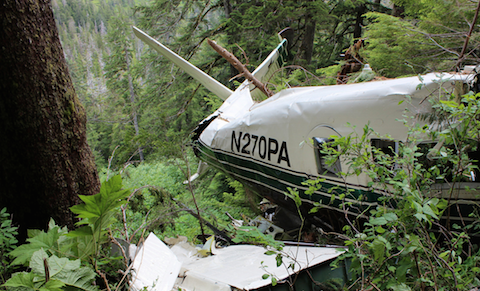
Promech Air crash siteIn the first six months of 2015, AirSafe.com identified eight noteworthy events, but only the two involving passenger deaths on aircraft models commonly used by airlines in the US and the EU. Those two events would be used to compute fatal event rates for particular aircraft models .

The event which has attracted by far the most media attention, as well as the most traffic at AirSafe.com, is the Germanwings crash in March that was apparently due to deliberate actions taken by the first officer. The first officer apparently locked the captain out of the cockpit, and no one was able the get through the armored cockpit door before the aircraft crashed. This was actually the second time in the past two years were one flight crew member locked out the other flight crew member and then crashed the aircraft. The Germanwings event also represented the seventh time since 1980 where a flight crew member deliberately crashed an airliner.

The eight total events consisted of two airliner crashes with passenger fatalities, two airliner landing accidents without fatalities, two crashes involving Hollywood celebrities, one fatal sightseeing flight, and military aircraft that crashed while carrying over 100 civilian family members of military personnel.

The eight total events for the first six months of 2015 were above the average seen in the previous decade, and two the numbered events were below the average. For the 10 years from 2005-2014, there were an average of 6.4 noteworthy events, of which an average of 3.4 were numbered events. In the past decade, the fewest events in the first six months happened in 2006, with one event, which was also a numbered event. The most total events, 12 occurred in 2008, and the most numbered events, five, occurred in 2007, 2009, and 2011.


  1. 4 February 2015; TransAsia Airways ATR 72-600; B-22816; flight GE235; near Magong, Taiwan: The aircraft was on a scheduled domestic flight between Taipei and Kinmen Island, Taiwan. The airplane crashed into a river shortly after takeoff from Songshan Airport in Taipei. The aircraft hit a bridge, as well as a vehicle on that bridge, before plunging into the Keelung River. Shortly before hitting the bridge, the aircraft rolled sharply to the left. Four of the five crew members, including both pilots, and 39 of 53 passengers were killed. The two people who were in the vehicle were both injured.

    This was the second fatal plane crash in less than a year for TransAsia Airways. Having two or more plane crashes in less than a year has happened over 35 times since 1970.
    ATR 72 plane crashes
    Flight GE235 Wikipedia entry
    Other TransAsia Airways plane crashes

    5 March 2015; Delta Air Lines MD88; N909DL; flight DL1086; New York, NY: The aircraft was on a scheduled domestic flight between Atlanta and New York's La Guardia Airport, and had a landing excursion that led to an emergency evacuation. The aircraft landed on runway 13 and departed to the left side of the runway, coming to rest on a dike that separated the runway area from the waters of Flushing Bay. At the time of the event, it had been snowing, with freezing fog conditions and below freezing temperatures. The aircraft was also affected by both a crosswind and a tailwind during the landing. An A319 that had preceded the Delta jet had reported good braking action on runway 13. None of the 125 passengers or five crew members were seriously injured.
    MD80 plane crashes
    Other Delta plane crashes

    5 March 2015; Ryan ST3KR Recruit; N53178; Santa Monica, CA: Actor Harrison Ford was the pilot and sole occupant of a Ryan ST3KR Recruit, a two-seat, open cockpit aircraft that was used extensively as a training aircraft by the US military in WWII. According to a preliminary report from the NTSB, Ford reported a loss of engine power shortly after taking off from the Santa Monica airport, and was attempting to return to runway 3 at Santa Monica.

    Ford chose to land on a nearby golf course, clipping the top of a tree before landing. The aircraft was seriously damage, and Ford was hospitalized with serious injuries. This was Harrison Ford's third crash involving an airplane or a helicopter.
    Plane crashes involving Harrison Ford

  2. 24 March 2015; Germanwings A320-200; D-AIPX; flight 4U9525; near Barcelonnette, France: The aircraft was on a scheduled international flight from Barcelona, Spain to Düsseldorf, Germany. About a half hour after takeoff, while at a cruising altitude of 38,000 feet, the aircraft began losing altitude, and crashed about ten minutes later. The investigative authorities suspect that the first officer deliberately crashed the aircraft. All six crew members and 144 passengers were killed.
    More details on the Germanwings crash
    Lufthansa plane crashes
    A320 plane crashes
    Flight 9525 Wikipedia entry
    Airliners deliberately crashed by a flight crew member

    Early stage of the accident investigation


    29 March 2015; Air Canada A320-200; C-FTJP; flight AC624; near Halifax, Canada: The aircraft was on a scheduled domestic flight from Toronto to Halifax, Canada. At the time the aircraft entered the Halifax area, visibility was limited due to both darkness and snowfall, and the aircraft entered a holding pattern before attempting a landing. During final approach, the aircraft touched down about 300 meters short of the runway, apparently hitting a combination of power lines and a localizer array before sliding onto the runway. The aircraft slid down the runway about 1000 meters, coming to rest just off the left side of the runway.

    Damage to the aircraft included collapsed main and nose landing gear, both engines severely damaged, with the left engine sheared off, separated radome, and damage to the wings, stabilizers, and underside of the fuselage. While there was a fuel leak, there was no post crash fire. There were no severe injuries among the five crew members and 133 passengers.
    Air Canada plane crashes
    A320 plane crashes

    22 June 2015; Short S312 Tucano T; N206PZ; near Ojai, CA: Composer James Horner, who created music for over 150 movies, including "Star Trek II: The Wrath of Khan," "48 Hrs.," and "Aliens," and who won two Oscars for his work in "Titanic," was killed in the crash of his Short Tucano in southern California. Horner was the only person on the aircraft.
    More on this event
    Celebrity plane crashes

    25 June 2015; Promech Air; DeHavilland DHC-3T Turbine Otter; N270PA; near Near Ketchikan, AK: The aircraft was on an unscheduled excursion flight in the area of the Misty Fjords National Monument, and crashed into an area of steep, mountainous terrain. The pilot and all eight passengers were killed. The passengers were from a cruise ship, and were on a sightseeing flight.

    30 June 2015; Indonesia Air Force C130B; A-1310; Medan, Indonesia, AK: The aircraft was on a nonscheduled domestic flight from Medan to Tanjung Pinang and crashed into a residential neighborhood shortly after takeoff. The aircraft had a crew of 12 and 101 civilian passengers. The crew had reportedly requested a return to the departure airport. The passengers were military family members and the aircraft who were headed to Tanjung Pinang for Ramadan related activities.


    Other Years
    1996, 1997, 1998, 1999

    2000, 2001, 2002, 2003, 2004
    2005, 2006, 2007, 2008, 2009

    2010, 2011, 2012, , 2013, 2014

    Most recent crashes

07 May 2015

Ongoing Harvard health studies need input from pilots and flight attendants

Flight attendants and pilots face unique stresses and risks due to exposures that occur in the aircraft, as well as from issues outside of the aircraft such as fatigue brought on by disrupted sleep patterns. Understanding what those risks are, and what factors are associated with those risks, is a difficult and ongoing challenge that is being addressed in part by the following two studies from the Harvard T.H. Chan School of Public Health.

AirSafe.com has teamed up with Harvard to encourage pilots and flight attendants to participate in a pair of studies that will help improve the scientific understanding of health issues faced by airline professionals.

Flight Attendant Health Study
All US flight attendants are encouraged to participate in this flight attendant health study by taking the survey at fahealth.org.

Past studies have found that sleep disorders, fatigue, depression and heart disease were greatly increased in female flight attendants compared to the US population. Check out the survey today to help make it both larger and more comprehensive than previous studies.

Airline Pilot Health Survey
Past studies on flight attendants showed significantly higher prevalence for some types of health risk. This current study intends to collect similar information from pilots to see if their work environment is also associated with increased health risks. All current and former airline pilots, from any country, are encouraged to visit PilotHealthStudy.org to take this anonymous survey.

About your privacy
The researchers have taken steps to ensure that your surveys will be anonymous, and that it will not be possible to link any survey to a specific individual. In addition, you can skip any questions that you do not wish to answer, or withdraw from the survey at any time.

03 April 2015

Are people with a history of depression or suicide attempts allowed to fly? - Yes they are!

The unfolding investigation of March 2015 crash of Germanwings flight 9525 has revealed that it is very likely that the first officer locked the captain out of the cockpit, and proceeded to deliberately crash the aircraft into the French Alps. Reports by French and German authorities, as well as by Lufthansa, the parent organization of Germanwings, suggest that not only did the first officer have a history of depression, but that Lufthansa was aware of the first officer's condition. Reportedly, German investigators stated that the first officer had been recently treated for suicidal tendencies, but it was not clear if Lufthansa or Germanwings were aware of those recent treatments.

One basic question that many air travelers have is how can anyone with a documented mental illness have become a pilot for a major airline. While the answer in the case of the Germanwings crash may not be revealed until the investigation is complete, it is possible to address that question for US airlines.

The role of medical certificates
In the US, in order to fly, a person holding an airline transport pilot (ATP) certificate, which is the type of certification that any US airline pilot must have, must possess an FAA medical certificate. The specific regulatory requirements regarding mental conditions for those holding an ATP certificate holder are spelled out in the US Code of Federal Regulations (Title 14, Part 67.107). The FAA allows physicians with specialized training to be an Aviation Medical Examiner (AME), who is responsible for evaluating a pilots medical fitness. If a pilot does not pass the examination, that pilot is not legally allowed to fly.

FAA Guide for Aviation Medical Examiners
The FAA provides AMEs with detailed guidance in a number of ways, including publications like the 2015 Guide for Aviation Medical Examiners, which had an update on 19 March 2015, just five days before the Germanwings crash. The document clearly states that a pilot has to respond to a detailed medical questionnaire, and must reveal a history of mental disorders, including depression or suicide attempts. While such a revelation would lead to further investigation, it would not automatically lead to a denial of a medical certificate.

The pilot who is suspected to have deliberately crashed Germanwings flight 9525 conducted part of his airline flight training in the United States several years ago, and would have been subject to FAA regulations during that period.

What do the airlines do?
While it is clear that the FAA allows people with a history of depression or suicide attempts to fly, it is unclear what the policy of individual airlines may be with regards to a pilot with this kind of medical history. What and airline knows about a pilot's medical history will depend on what that pilot would voluntarily reveal, as well as what the airline may legally be allowed to know. Because this would largely depend on where that airline is located, it is possible that what an airline in one country can know about their pilot's medical history may be radically different from what an airline in another country may know.

Resources FAA medical certificate questions and answers
Germanwings flight 9525 crash information
Lufthansa plane crashes
Other A320 crashes
Germanwings Wikipedia page
Flight 9525 Wikipedia entry

01 January 2015

2014 airline safety review

This is the 19th annual review since AirSafe.com was launched in 1996. From 1996 to 2013, the number of fatal events in a year have ranged from a low of five in 2013 to a high of 19 in 1997

This review includes all plane crashes that resulted in a fatal event, specifically events involving passenger fatalities in aircraft which have the capacity to seat at least 10 passengers where those models are used in regular airline service in North America, western Europe, Australia, or Japan. Also included are plane crashes and other significant events that did not qualify as a fatal event, but that either had high media interest or that had noteworthy aviation safety or security implications.

Only the numbered plane crashes listed below qualified as a fatal event. Details on how events are categorized are available at the AirSafe.com definitions page.

Quick summary of 2014
While this past year saw massive amounts of media attention for the two events involving Malaysia Airlines, and the crash of an AirAsia A320 in the last week of December, 2014 saw seven numbered fatal events on AirSafe.com, which is on the low end for the number of annual fatal events. Six of those events involved Asian airlines, and the seventh involved an airline in Africa. Of the four significant events, only one involved an airliner.

  1. 16 February 2014; Nepal Airlines DHC-6 Twin Otter 300; 9N-ABB; flight 183; en route between Pokhara and Jumla, Nepal: The aircraft was on a scheduled domestic flight from Pokhara to Jumla, Nepal. Radio contact was lost about 30 minutes after takeoff. The crashed aircraft was found the next day, and all three crew members and 15 passengers had been killed.
    Flight 183 Wikipedia entry

  2. 8 March 2014; Malaysia Airlines 777-200; 9M-MRO; flight MH370; unknown location: The aircraft was on a scheduled international flight between Kuala Lumpur, Malaysia and Beijing, China and went missing while en route. The current status and location of the aircraft, along with that of the 227 passengers and 12 crew members on board, is currently unknown. While it is believed that one or more military radar systems in Malaysia detected the aircraft heading back in the direction of Malaysia, there was no corroborating information such as communications from the pilot or information from the aircraft's transponder associated with that radar data.

    Visit the Malaysia Airlines flight MH370 page for additional information, including links to articles and interviews of Dr. Todd Curtis of AirSafe.com

  3. 24 June 2014; Pakistan International Airlines (PIA); A310-300; AP-BGN; flight PK756; Peshawar, Pakistan The aircraft was on a scheduled international flight from Riyadh, Saudi Arabia to Peshawar, Pakistan, when it was struck by several bullets shortly before landing. Two cabin crew members and one passenger were hit, and the passenger died of her injuries. There were no other injuries among the 10 other crew members or 177 other passengers.
    Fatal PIA Events

  4. 17 July 2014; Malaysia Airlines 777-200ER; 9M-MRD; flight MH17; near Grabovo, Ukraine: The aircraft was on a scheduled international flight between Amsterdam, the Netherlands and Kuala Lumpur, Malaysia. The aircraft in cruise at about 33,000 feet when it experienced a catastrophic in flight breakup. All 283 passengers and 15 crew members were killed.

    Visit the Malaysia Airlines flight MH17 page for additional information, including links to articles and interviews of Dr. Todd Curtis of AirSafe.com

  5. 23 July 2014; TransAsia Airways ATR 72-500; B-22810; flight GE222; near Magong, Taiwan: The aircraft was on a scheduled domestic flight between Kaohsiung and Magong, Taiwan. The airplane crashed into a residential area near the airport during a go around following an attempted landing at Magong, Taiwan, which is on Penghu island. Of the four crew members and 54 passengers, at least 48 occupants were killed. At least five people on the ground were also injured. There was heavy rain in the area at the time of the crash.
    ATR 72 plane crashes
    Flight GE222 Wikipedia entry

  6. 24 July 2014; Air Algerie MD83; EC-LTV; flight AH5017; near Gossi, Mali: The aircraft was on a scheduled international flight from Ouagadougou, Burkina Faso and Algiers, Algeria. The airplane contacted air traffic control about 50 minutes after takeoff, requesting a course change due to weather conditions. The aircraft crashed in the area of Gossi, Mali. All six crew members and 110 passengers were killed.
    MD80 series plane crashes
    Flight AH5017 Wikipedia entry

    10 August 2014; Sepahan Airlines HESA IrAn 140; EP-GPA; flight 217; near Nardaran, Azerbaijan: The aircraft was on a scheduled domestic flight from Tehran to Tabas, Iran. The aircraft crashed shortly after takeoff, resulting in 39 fatalities among the eight crew members and 40 passengers. All five crew members and18 passengers were killed.
    This is a not a numbered event as defined by AirSafe.com because of the aircraft type used.
    Flight 217 Wikipedia entry

    13 August 2014; AF Andrade Empreendimentos e Participações Cessna 560XLS+ Citation Excel; PR-AFA; Guarujá, Brazil: The aircraft was approaching Guarujá Airport after a charter flight from Santos Dumont Airport in Rio de Janeiro, and crashed into a residential area about 4.3 km fro the runway. Both pilot and all five passengers were killed. Among the passengers were a candidate for president of Brazil, Eduardo Campos, his wife, and one of their five children. This event also raises policy issues for democracies.


    7 October 2014; California Dept of Forestry and Fire Protection; Marsh S-2F3AT Turbo Tracker; N449DF; near Foresta, CA: The fire-fighting aircraft, which was based at Hollister Air Attack Base, CA impacted a forested hillside during a fire suppression operation near the Yosemite National Forest, California. The pilot, and sole crew member, was killed.


    31 October 2014; Scaled Composites; Model 339 (SpaceShipTwo); N339SS; near Cantil, CA: The vehicle, which is designed to fly into the lower reaches of space (above 100 km above Earth) was on its first powered test flight with a new engine fuel and oxidizer combination (nylon and nitrous oxide). SpaceShipTwo was dropped from its carrier vehicle at about 45,000 feet, and ignited its engine.

    Roughly two minutes after release, the vehicle experienced an inflight breakup. One of the two crew members was killed, and the other was able to bail out of the vehicle and was injured.

    Prior to the accident flight, there had been the 54 test flights of SpaceShipTwo, of which 34 involved a release from the carrier aircraft, including three powered flights.

    Scaled Composites, which conducted the flight test, is a partner of Virgin Galactic, which had planned on using SpaceShipTwo to take passengers on suborbital trips into space in the near future.
    Review of NTSB accident investigation findings
    Space flight related deaths
    Fatal events involving NASA astronauts


  7. 28 December 2014; AirAsia A320-216; PK-AXC; flight QZ8501; Java Sea: The aircraft was on a scheduled international flight between Surabaya, Indonesia and Singapore, and contact was lost while the airliner was en route. Shortly before contact was lost, the crew requested an altitude change and a deviation from their planned route in order to avoid weather. There were no survivors from among the 155 passengers and seven crew members.
    Other A320 crashes
    AirAsia crashes

07 August 2014

Ebola risks and airline travel

The recent Ebola outbreak in Africa has claimed nearly 1,000 lives since March 2014 in Liberia, Sierra Leone, Guinea and Nigeria, represents a potential risk for air travelers because the virus that causes the disease can be spread by direct contact with an Ebola victim.


Map of 2014 Ebola outbreak (CDC)

Recently, Emirates and British Airways became the largest airlines to suspend airline service in one or more of the most affected countries. Other airlines like Delta have allowed passengers to change flights to, from, or through certain west Africa airports in the affected areas without penalty.

Several media outlets, including the Premium Times of Nigeria stated that the first Ebola death in Nigeria was from a man who flew into Nigeria on July 23rd and two died two days later from Ebola. The report also states that the victim had shown signs of illness during the flight.

What is Ebola?
Ebola, also known as Ebola virus disease (EVD) or Ebola hemorrhagic fever, is a severe, often fatal illness in humans, with a fatality rate of greater than 50%. It is caused by a virus that is commonly spread through close contact with an infected person.

How can a person get Ebola?
A person can become infected with the Ebola virus from direct contact (through broken skin or mucous membranes) with the blood or bodily fluids of infected people, or from contact with objects or environments contaminated with such fluids.

What are the effects of Ebola?
The effects of an infection are not immediate, with symptoms showing up between two and 21 days after infection. A person who falls ill may experience a sudden onset of fever, intense weakness, muscle pain, headache and a sore throat. This is followed by vomiting, diarrhea, rash, impaired kidney and liver function, and in some cases, both internal and external bleeding.

Is there a vaccine or treatment for Ebola?
There are currently no approved vaccines available for Ebola. While symptoms such as dehydration can be treated, there is no proven treatment for the underlying viral infection.

What risks do airline passengers face?
Although there are no reports of airline passengers or airline staff being infected on an airliner, there is the possibility that someone can be infected with Ebola while in an airplane or while at an airport. In areas where there has been an outbreak of Ebola, airlines and governments have done the following to reduce risks to air travelers and airline professionals:

  • Provide updated information about Ebola risks (see links below)
  • Limiting flights to or from areas experiencing Ebola outbreaks
  • Screening passengers prior to boarding

What can passengers do?
The two most important things that you can do is to avoid travel to areas experiencing an Ebola outbreak, and to seek medical attention before traveling if you are experiencing Ebola-related symptoms.If you already have a trip planned into an area with an active outbreak, you can delay or cancel the trip (check with your airline on their policies for areas of high risk).

If you are on a flight where another passenger is exhibiting Ebola-like symptoms, do your best to stay away from that passenger and inform your flight attendant about the situation. If you are unable to do this, avoid direct contact with that person, or with any object or surface touched by that person.

Basic Ebola information
AirSafe.com Ebola information page
World Health Organization (WHO) Ebola fact sheet
Centers for Disease Control (CDC) Ebola overview
Ebola Q&A from the CDC

Travel warnings and advisories
CDC travel health advice
US State Department travel alerts and warnings
UK Foreign and Commonwealth Office
Canadian government travel advice by country

24 July 2014

Do plane crashes happen in threes? - yes, and sometimes in fours and fives

Note:This an updated version of an article first published in February 2009

Since AirSafe.com was launched in 1996, the site has tracked fatal events and other significant events involving airline passengers. When these events occur, especially if two occur a just a few days apart, I sometimes get the "Do bad things like plane crashes always happen in threes?" question asked by visitors to the site, by members of the media, and by others.

I used to just dismiss the question out of hand because events like plane crashes, especially those involving passenger airliners, are very rare, and the circumstances are usually very different for each crash, often involving different airlines, different aircraft types, and even different countries.

Although it's easy to reject the original question, it is quite legitimate to ask a related question about how frequently groups of rare events occur over a relatively short period of time.

One day, just for fun, I turned the "things happening in threes" question into something that could be analyzed systematically using the information within AirSafe.com. I changed the general question into the following specific question: "How frequent are sequences of three or more fatal or significant aviation safety and security events where the time between events is ten days or less?"

For example, a sequence of three events could happen on the same day, or it could be over a period as long as 20 days, with a 10-day gap between the first and second event, and another 10-day gap between the second and third event.

The most recent sequence of three events took place over the course of seven days beginning with the crash of Malaysia Airlines flight MH17 on July 17th, followed by the crash of an TransAsia ATR airliner in Taiwan on July 23th, and ending with the crash of an Air Algerie MD83 in Mali on July 24th.

For the purposes of answering this question, I limited the data to those events that are regularly tracked by AirSafe.com. These would be plane crashes or other airline events that kill at least one passenger, or other events that AirSafe.com considers to be significant with respect to aviation safety or aviation security.

Multiple events due to the same cause (for example, the four crashes associated with 9/11) were treated as one event. Significant events that don't kill anyone sometimes attract more media attention than the average plane crash. The January 2008 ditching of a US Airways A320 in the Hudson River in New York was one example. It was very dramatic, it got a huge amount of media exposure, and no one was killed.

A review of the AirSafe.com records from 1996, the year AirSafe.com was launched, to July 2014 revealed some interesting facts:

  • With the exception of 2007, 2009, and 2013, every year since 1996 included at least one sequence of three fatal or significant events that were separated by no more than ten days. There was a sequence of five significant, but nonfatal, events in January 2008 (one of which involved Senator Barack Obama), and a sequence of eight events in 2010, seven of which involved fatalities.

  • There were 25 sequences of three or more events that were separated no more than ten days. One was a sequence of eight events, three were sequences of five events, five sequences had four events, and the other sixteen consisted of three events each.

  • Most of the fatal and significant events tracked from 1996 to the present were not part of any sequence of three or more events.

  • Well known fatal events that were a part of one of these sequences include the Swissair MD-11 crash in 1998, the Concorde crash in 2000, the August 2006 crash of a Comair jet, in Lexington, KY, the August 2008 crash of a Spanair MD83 in Madrid, and the July 2014 crash of Malaysia Airlines flight MH17.

  • Well known events that were not a part of one of these sequences include the ValuJet and TWA Flight 800 crashes in 1996, the Alaska Airlines crash in 2000, the four crashes associated with 9/11, and the March 2014 loss of Malaysia Airlines flight MH370.

  • For 16 of the past 19 calendar years (1996 to 2014), there has been at least one grouping of three or more fatal or significant events that occurred over a relatively short period.

  • No information has come about in the investigations of any of those events that indicates that there was any sort of connection among the crashes that were part of a sequence of three or more events, or that suggested that earlier events in a sequence made a later event more likely.

After reviewing the facts, I no longer say that plane crashes don't happen in threes. Since 1996, they have happened in sequences of three, four, five, and eight.

- Todd Curtis


Fatal and serious events by year
1996, 1997, 1998, 1999, 2000
2001, 2002,2003, 2004, 2005
2006, 2007, 2008, 2009, 2010
2011, 2012, 2013, 2014

Related information
26 July 2014 - Todd Curtis discusses his findings on the Rudy Maxa Show (6:44)
Related article from Patrick Smith of AskThePilot.com
Losing three airliners in one week is not that rare


AirSafe.com Bonuses
All subscribers to the AirSafe.com mailing list at subscribe.airsafe.com will be able to download free copies of all of the recent AirSafe.com books, including the latest, AirSafe.com Family Air Travel Guide.

Also available is the AirSafe.com Fear of Flying Resource Guide, with an overview of the symptoms of fear of flying, as well as recommended resources for managing or eliminating these fears.

20 July 2014

Jet airliner passengers killed by missiles and other aerial attacks

The 17 July 2014 crash of Malaysia Airlines flight MH17 in Ukraine is not the first time a missile strike or other aerial attack has been suspected in the crash of a jetliner.

The following events involve confirmed or suspected passenger deaths on large jet airliners due to an attack by missiles, anti-aircraft gunfire, or other aerial attacks.

This list includes inflight events involving air-to-air missiles, ground to air missiles, anti-aircraft artillery, or gunfire. The list excludes fatalities due to hijacking, sabotage, or bombings.

  1. 21 February 1973; Libyan Arab Airlines 727-200; Flight 114; Israeli occupied Sinai Desert: The aircraft was shot down by Israeli fighter jets after the 727 had strayed into the airspace of the occupied territory. Eight of the nine crew members and 100 of the 104 passengers were killed.
    727 plane crashes
    Wikipedia page on this event
  2. 20 April 1978; Korean Air Lines 707-300; flight 902; near Kem, Soviet Union: The aircraft diverted from its planned course on a flight from Paris to Seoul and strayed over the Soviet Union. After being fired upon by an interceptor aircraft, the crew made a forced landing at night on the surface of a frozen lake. Two of the 97 passengers were killed by the hostile fire.
    Korean Air Lines plane crashes
    Wikipedia page on this event

  3. 1 September 1983; Korean Air Lines 747-200; flight 007; near Sakhalin Island, Soviet Union: The aircraft was shot down by at least one Soviet air to air missile after the 747 had strayed into Soviet airspace. All 240 passengers and 29 crew were killed.
    International Committee for the Rescue of KAL 007 Survivors
    747 plane crashes
    Korean Air Lines plane crashes
    Wikipedia page on this event

  4. 3 July 1988; Iranair A300; flight 665; Persian Gulf, near Straits of Hormuz: Aircraft was shot down by a surface to air missile from the American naval vessel U.S.S. Vincennes. All 16 crew and 274 passengers were killed.
    Iran Air plane crashes
    Airbus A300 plane crashes
    Wikipedia page on this event

  5. 4 October 2001; Sibir Airlines Tupolev Tu154M; flight 1812; Black Sea near Adler, Russia: The plane crashed about 184 kilometers (114 miles) from southern Russia in the Black Sea, shortly after the aircraft exploded in flight. The aircraft had departed from Tel Aviv, Israel on a charter flight to Novosibirsk, Russia and was at cruise altitude when the explosion occurred. The reason for the in-flight explosion, which was witnessed by another airliner flight crew, is not known. However, various pieces of evidence point to an inadvertent strike by a Ukrainian military missile. All 12 crew members and 64 passengers were killed.
    Wikipedia page on this event

  6. 24 June 2014; Pakistan International Airlines (PIA); A31-300; AP-BGN; flight PK756; Peshawar, Pakistan The aircraft was on a scheduled international flight from Riyadh, Saudi Arabia to Peshawar, Pakistan, when it was struck by several bullets shortly before landing. Two cabin crew members and one passenger were hit, and the passenger died of her injuries. There were no other injuries among the 10 other crew members or 177 other passengers.
    Fatal PIA Events
    Airbus A310 plane crashes

  7. 17 July 2014; Malaysia Airlines 777-200ER; 9M-MRD; flight MH17; near Grabovo, Ukraine: The aircraft was on a scheduled international flight between Amsterdam, the Netherlands and Kuala Lumpur, Malaysia. The aircraft in cruise at about 33,000 feet when it experienced a catastrophic in flight breakup. Substantial circumstantial evidence indicates that the jet was hit by a surface to air missile. All 283 passengers and 15 crew members were killed.
    Fatal Malaysia Airlines Events
    777 plane crashes
    Wikipedia page on this event


Related Pages
Recent plane crashes
Fatal plane crashes by model
Fatal plane crash rates by model

04 July 2014

Three BBC interviews about DHS security enhancements for selected flights from Europe to the US

On July 2, 2014, the Department of Homeland security directed the TSA to implement enhanced security measures at certain overseas airports with direct flights to the United States. These changes were in response to intelligence information that suggested that one or more groups were attempting to detonate explosive devices on one or more aircraft traveling from the US from Europe. These measures were being implemented in the UK, and in other countries, though TSA and Homeland Security did not go into further details.

The Standard newspaper in the UK reported that the threat may be from “stealth” bombs that can't be detected using the screening technologies commonly used by airports. Other media outlets speculate that the devices may be built into specific mobile phone models, or that the people carrying these devices may be passport holders from the US and other western countries. However, this is speculation that has not been either confirmed or denied by official sources in the US and elsewhere.

On July 2nd and 3rd, Todd Curtis of AirSafe.com was interviewed several times by the BBC about several issues that were raised by this latest security situation.


Interview on Rudy Maxa's World
Todd Curtis was also interviewed on this issue on July 5, 2014 on Rudy Maxa's World.


Interview on July 7, 2014 with the Wall Srteet Journal


You can also find additional airline security information at http://security.airsafe.com, or at the following links:


29 June 2014

Six month safety review for 2014

This review of plane crashes and other significant events from the first six months of 2014 discusses three airline events, two of which involved at least one confirmed passengers fatality, and the third, which involved suspected passenger fatalities on Malaysia Airlines flight MH370.

Since AirSafe.com began tracking such events in 1996, there have been three or fewer fatal events in the first six months of a calendar year on five other occasions. There were also three fatal events in the first six months of 2001, 2005, and 2010. There was a single fatal event in the first six months of 2006 and 2013.

This review includes all fatal events, specifically events involving passenger fatalities in aircraft which have the capacity to seat at least 10 passengers where those models are used in regular airline service in North America, western Europe, Australia, or Japan. Also included are plane crashes and other significant events that did not qualify as a fatal event, but that either had high media interest or that had noteworthy aviation safety or security implications.

All of the events in the first half of 2014 were fatal events, and there were no significant events. From 1996 to 2014, there have been a total of 81 fatal events and 35 significant events in the first half of the year, for an average of 4.26 fatal events and 1.94 significant events each year.

The AirSafe.com definitions page has additional details on how an event is assigned to a category. The Malaysia Airlines flight MH370 event led to a change in the definitions, expanding the fatal event category to include situations where an airliner has been missing for at least 30 days, and where there is also substantial indirect evidence that one or more passengers were killed.


Events Killing Airline Passengers

  1. 16 February 2014; Nepal Airlines DHC-6 Twin Otter 300; 9N-ABB; flight 183; en route between Pokhara and Jumla, Nepal: The aircraft was on a scheduled domestic flight from Pokhara to Jumla, Nepal. Radio contact was lost about 30 minutes after takeoff. The crashed aircraft was found the next day, and all three crew members and 15 passengers had been killed.

  2. 8 March 2014; Malaysia Airlines 777-200; 9M-MRO; flight MH370; unknown location: The aircraft was on a scheduled international flight between Kuala Lumpur, Malaysia and Beijing, China and went missing while en route. The current location and status of the aircraft, along with that of the 227 passengers and 12 crew members who were on board, is unknown.

    This is a numbered event as defined by AirSafe.com because there is substantial indirect evidence that one or more passengers were killed.

    Visit the Malaysia Airlines flight MH370 page for additional information, including links to articles and interviews of Dr. Todd Curtis of AirSafe.com

  3. 24 June 2014; Pakistan International Airlines (PIA); A310-300; AP-BGN; flight PK756; Peshawar, Pakistan The aircraft was on a scheduled international flight from Riyadh, Saudi Arabia to Peshawar, Pakistan, when it was struck by several bullets shortly before landing. Two cabin crew members and one passenger were hit, and the passenger died of her injuries. There were no other injuries among the 10 other crew members or 177 other passengers.
    Fatal PIA Events


Other Significant Events

None


Other Years
1996, 1997, 1998, 1999, 2000,
2001, 2002, 2003, 2004, 2005
2006, 2007, 2008, 2009, 2010
2011, 2012, 2013


AirSafe.com Bonuses
All subscribers to the AirSafe.com mailing list at subscribe.airsafe.com will be able to download free copies of all of the recent AirSafe.com books, including the AirSafe.com Family Air Travel Guide.

Also available is the AirSafe.com Fear of Flying Resource Guide, with an overview of the symptoms of fear of flying, as well as recommended resources for managing or eliminating these fears.

14 March 2014

How far Malaysia Airlines flight MH370 could have flown

The search for the missing Malaysia Airlines continues, with recent evidence suggesting that the aircraft may have flown for at least four hours beyond its last known position. The following graphic published 14 March 20114 by the Washington Post illustrates the possible maximum range of the aircraft given the amount of fuel it had at takeoff (about seven hours worth), and the maximum range assuming four hours of flight after last contact.

This graphic illustrates several things that will give you an idea of just how difficult the search for this 777 may be:

  • Potential locations: Countries within a radius of four hours flying time (2,400 statue miles or about 3,900 km) include parts or all of Australia, Indonesia, Philippines, China, Taiwan, India, Bangladesh, Nepal, Palau, East Timor, and the Maldives Islands. Bodies of water include parts or all of the South China Sea, the Sea of Thailand, the Andaman Sea, the western Pacific Ocean, and the central and eastern Indian Ocean.
  • Potential size of the search area: A circle with a radius of 2,400 statue miles has a surface area about 18,095,600 square miles, or 46,847,250 square km, is an area slightly bigger than the combined surface areas of the US, Canada, Mexico, Australia, Brazil, and China.
  • Extent of search area: A circle with a 2,400 mile radius, has a 4,800 mile diameter, which is roughly the distance between the following city pairs:
    • Moscow and Washington, DC
    • Havana and Honolulu
    • Harare and Rio de Janeiro
    • Mumbai and the North Pole

Resources
Dr. Curtis 16 March 2014 Radio New Zealand interview (14:11)
Dr. Curtis 15 March 2014 BBC interview (8:58)
Dr. Curtis 13 March 2014 BBC interview (7:23)
Other 777 events


BBC radio interview from 13 March 2014 discussing the possibility that the aircraft continued to fly for several hours.


NTN 24 La Tarde interview from 13 March 2014 discussing the investigation (Spanish)


07 February 2014

Dr. Curtis Interviewed by iCannabisRadio on 3 February 2014

Dr. Curtis was interviewed by iCannabisRadio.com on 3 February 2014 about airline travel issues for passengers who plan to fly to Colorado or Washington state to legally purchase and consume recreational marijuana.

The hosts Georgia Edson and Jeremy DePinto have had an ongoing involvement with medical and recreational marijuana issues in Colorado, and had a number of insights about how the recent changes in Colorado state law has led to an increased public debate on a number of issues surrounding marijuana legalization, including the kinds of air travel issues discussed by Dr. Curtis.

Watch the video below, or listen to the MP3 of the same interview

Additional resources
Air travel issues and marijuana
Restricted and prohibited items

01 January 2014

AirSafe.com Airline Safety Review for 2013

This 18th annual review discusses five fatal airline crashes and two other significant events from 2013. The five fatal airline crashes from 2013 represents the fewest fatal passenger events since AirSafe.com was launched in 1996. The two significant events both involved cargo jet crashes that killed all of the crew members. This past year was also unusual in that the majority of these events either occurred in the US or involved a US airline.


Crashes Killing Airline Passengers

  1. 29 January 2013; SCAT Airlines Canadair CRJ-200ER; UP-CJ006; flight 760; Almaty, Kazakhstan: The aircraft was on a domestic scheduled flight from Kokshetau to Almaty, Kazakhstan, crashed during approach about five kilometers (3.1 mi) from the destination airport, near the village of Kyzyltu. All five crew members and 16 passengers were killed.
    Wikipedia entry for this crash.

  2. 6 July 2013; Asiana Airlines; 777-200ER; HL7742; flight 214; San Francisco, CA: The aircraft was on a scheduled international flight from Seoul, South Korea to San Francisco, and the rear of the aircraft struck a seawall just short of the runway while landing. The tail section broke apart, and both horizontal stabilizers and the vertical fin separated from the aircraft. Both engines and the main landing gear also separated from the aircraft. The aircraft caught fire after it came to rest, but not before all of the crew and most of the passengers were able to escape. All 16 crew members survived, but thee of the 291 passengers, all teenage girls from China, were killed.
    - AirSafeNews.com article from 13 July 2013
    - AirSafeNews.com article from 10 July 2013 on the role of the autothrottle
    - AirSafeNews.com on early findings of the crash investigation
    - Dr. Todd Curtis and former airline pilot Capt. Tom Bunn on the role of the media
    - Other 777 plane crashes
    - Wikipedia page on this accident
    - Other Asiana plane crashes

  3. 7 July 2013; Rediske Air DHC-3 Otter; N93PC; Soldotna, AK: The aircraft was on a nonscheduled domestic flight from Soldotna, Alaska to Bear Mountain Lodge, alsoo in Alaska. The aircraft crashed during takeoff, killing the pilot and all nine passengers.

  4. 16 October 2013; Lao Airlines ATR 72-600; RDPL-34233; flight QV301; near Pakxe, Laos: The aircraft was on a scheduled domestic flight from Vientiane, the capitol of Laos, to Pakxe in southern part of the country. It crashed into the Mekong river during its approach and sank. The crash occurred about eight kilometers (five miles) from the airport. All five crew members and 44 passengers were killed.
    Fatal ATR 72 crashes

  5. 17 November 2013; Tartarstan Aircompany 737-500; VQ-BBN; flight 383; Kazan, Russia: The aircraft was on a scheduled domestic flight from Moscow to Kazan, Russia, and crashed during a landing attempt. Early reports indicated that it was at least the second landing attempt. All 44 passengers and six crew members were killed in the crash and subsequent fire.
    Fatal events involving airlines of the former Soviet Union


Other Significant Events
  1. 29 April 2013; National Airlines 747-400; N949CA; Bagram Air Base, Afghanistan: The aircraft had just departed on a cargo flight to Dubai, UAE when the aircraft entered a stall and crashed near the end of the runway. At one point, the aircraft had rolled to the right in excess of 45 degrees. Although the crew was able to put the wings more or less level, the aircraft impacted the ground at a high vertical speed, causing an explosion and fire. All seven crew members were killed.
    Fatal 747 crashes

  2. 14 August 2013; UPS A300F4-622R; N155UP; flight 1354; Birmingham, AL: The aircraft was on a domestic cargo flight from Louisville, KY (SDF) to Birmingham, AL (BHM), crashed and burned during a landing attempt. The aircraft was destroyed in the crash and subsequent fire, and both pilots were killed. There were no other occupants, and no one was killed or injured on the ground.
    Additional details on the crash
    Other A300 plane crashes


Fatal and serious events by year
1996, 1997, 1998, 1999, 2000, 2001
2002,2003, 2004, 2005, 2006, 2007
2008, 2009, 2010, 2011, 2012, 2013


AirSafe.com Bonuses
All subscribers to the AirSafe.com mailing list at subscribe.airsafe.com will be able to download free copies of all of the recent AirSafe.com books, including the latest, AirSafe.com Family Air Travel Guide.

Also available is the AirSafe.com Fear of Flying Resource Guide, with an overview of the symptoms of fear of flying, as well as recommended resources for managing or eliminating these fears.

27 December 2013

How to (not) fly with marijuana

In this second article about the upcoming changes in marijuana laws in the states of Washington and Colorado, we answer basic questions about how to fly with marijuana. Starting in 2014, any adult age 21 and over will be able to legally buy and possess small amounts of marijuana for recreational use, but this freedom is limited.

While these two states have changed their laws, the federal laws on the possession and use of marijuana have not changed. However, the federal government is allowing individual states the freedom to allow certain kinds of marijuana possession and use within the borders of those states.

Because federal law prohibits the transportation of marijuana (cannabis) by air, the answer to most of these questions is some variation of no, but for some passengers, saying no is not enough. Below are some detailed explanations behind each question, starting with yes answers.

The following questions are related to airports located in the states of Washington and Colorado, where both recreational and medicinal marijuana will be legal starting in 2014.

Can I bring marijuana to the airport? - That depends on what part of the airport. The secure parts of the airport, including the terminal areas beyond the TSA checkpoints, are under federal control, and federal law prohibits the possession of marijuana in these parts of the airport.

Can I bring marijuana on the plane? - No. You are not allowed to bring marijuana on the plane. In fact, you are not even allowed to bring marijuana past the TSA security screening checkpoints.

Can I put marijuana in a checked bag? - No. You are not allowed to bring marijuana on the plane either in checked or carry on luggage.

Can I mail or ship my marijuana before I get on the plane? - No. Federal law prohibits sending marijuana through the mail or through shipping services like FedEx and UPS.

Can I fly after consuming marijuana? - Yes, but it may not be a good idea. While federal law doesn't prohibit passengers from flying under the influence of drugs, if you are intoxicated, you may be prevented from boarding your aircraft. Also, if you somehow get on the aircraft and are intoxicated, you may not be able to react appropriately in emergency situations, and your behavior may be affected in a way that makes you a hazard to crew members and other passengers.

Can I use marijuana at the airport? - It depends on the situation. Outside of the secure areas of the terminal, state laws determine if you can consume marijuana. In both Colorado and Washington, public consumption of marijuana is illegal, so consumption out of public view would be legal.

Can I smoke marijuana in a designated airport smoking area? - No. These smoking areas are public areas for smoking of tobacco products, not marijuana, so the state laws of both Colorado and Washington would not allow you to smoke marijuana in these areas.

Can I consume marijuana at the airport if I am not smoking it? - Yes, so long as you are consuming your marijuana out of public view.

What is considered out of the public view at the airport? - That is up to the interpretation of law enforcement in Colorado and Washington. Also, airports may have additional restrictions on the use of marijuana on airport property.

Can I fly with medical marijuana if I have a prescription? - No. Federal law does not allow any kind of marijuana, whether it is medical or recreational marijuana, on airliners or in the secure parts of the airport terminal (beyond the TSA screening stations), and it does not matter if you have a prescription for medical marijuana.

Am I allowed to fly into an airport in Colorado or Washington with marijuana? - No. If you somehow have managed to bring marijuana with you on your inbound flight, you have broken the law.

What if I am on an incoming international flight from a country where marijuana is legal? - The answer is still no. If you are entering the country, you will have to go clear US customs, and federal law prohibits the importation of marijuana, or any drug paraphernalia.

Follow upcoming developments
AirSafeNews.com will publish a series of articles about the implementation of the changes in marijuana laws and regulations in Colorado and Washington and how they may affect air travelers. To receive those updates, please subscribe to the AirSafe.com mailing list.

Related resources
Airline travel and marijuana

15 December 2013

Airline travel and marijuana

Starting next month, two US states, Washington and Colorado, will allow any adult aged 21 or over to purchase small amounts of marijuana (cannabis), without any prescription, license, or other special permission.

While marijuana has been available for sale for medicinal purposes for several years in numerous states, including Washington and Colorado, the changes that will happen in 2014 are significant because the general public, including air travelers from other states and countries, will be able to legally buy and consume marijuana.

Although many of the details of how marijuana laws and regulations will be enforced within Colorado and Washington are still being worked out, the laws and regulations related to airline travel and marijuana are very clear. Any airline passenger who intends to travel to the states of Washington or Colorado for the purpose of legally consuming marijuana should be aware of a few basic realities about air travel and marijuana.

Key things passengers should know
There are a few key things that any airline passenger should understand about the changes in the laws that may impact their decisions to travel to or from the states of Washington or Colorado:

  • Federal law has not changed: Marijuana has been, and continues to be illegal at the federal (national) level. No federal laws have changed, but the federal government has allowed the governments of individual states to allow for the production, distribution, and consumption of marijuana related products within that state's borders. While about 20 states allow the use of medical marijuana, only two, Washington and Colorado, have also allowed for the sale and use of non-medical marijuana.
  • Possession is limited at airports: The federal government has banned marijuana from any federal property, or any areas under federal control. That would include the secure areas of the airport (the areas inside the TSA screening areas), and on any airliners.
  • You can't fly with marijuana: The federal government bans marijuana, even medical marijuana, on aircraft, whether in a carry-on item, in checked bags, or in any package being shipped by air.
  • Medial marijuana is treated the same: The federal government makes no distinction between medical marijuana and other kinds of marijuana.

The TSA and marijuana

The TSA is not a law enforcement agency, and the TSA has stated that its security officers do not specifically search for illegal drugs. If a marijuana-related item is discovered, even in states where marijuana is legal, TSA's policy is to refer the matter to law enforcement to make a determination on how to proceed.

Since law enforcement at an airport typically handled by a local or state level law enforcement agency, how a passenger will be treated will depend on the location and the circumstances. At the very least, the passenger's marijuana will likely be confiscated.

Entering the US with marijuana
The situation is different for someone traveling to Colorado or Washington from outside of the US. All passengers entering the US must pass through US customs, and the federal government will not allow marijuana to enter the country. Also banned are any articles that are intended to be used with marijuana. In addition, non-US citizens who attempt to enter the US with marijuana or marijuana-related items may be prevented from entering the US.

US customs officials may also bar from the country non-US citizens who are attempting to enter the US for the purposes of engaging in illegal activities. Since the consumption of marijuana is still illegal at the federal level, if you are not a US citizen and you are entering the US for the purpose of consuming marijuana in Washington or Colorado, it is possible that you could be prevented from entering the country, even though your activity is considered legal within those states.

Follow upcoming developments
This article is the first of many that will discuss these upcoming changes in Washington and Colorado, and how those changes may affect airline passengers who are traveling to or from those states for the purpose of consuming marijuana. In the next few weeks, AirSafeNews.com will be publishing a number of updates about the changes in marijuana laws and regulations and how they may affect air travelers. To receive those updates, please subscribe to the AirSafe.com mailing list.

Photo credit: JonRichfield

31 October 2013

FAA to allow airlines to lift many mobile device restrictions

The Federal Aviation Administration (FAA) announced on 31 October 2013 that it will allow passengers to use personal electronic devices (PEDs) during all phases of flight, and is immediately providing the airlines with guidance for implementing these changes.

These changes will not happen immediately. Airlines will first have to review their fleets and prove to the FAA that that they can safety allow passengers to safely use their devices in all phases of flight. The FAA expects that many airlines will be able to do so by the end of the year.

As with most changes to FAA regulations, these changes happened only after extensive consultations with technical experts and other representatives from the experts from the airlines, aircraft manufacturers, and the consumer electronics industry, as well as representatives from pilot, passenger, and flight attendant organizations.

What this means for passengers
These upcoming changes mean that passengers will soon be able use smaller devices like iPads, mobile phones, handheld video games, and ebook readers on the ground or in the air, with very limited exceptions. Electronic items will have to be either held or placed the seat back pocket during the actual takeoff and landing. The key rule changes that passengers should be aware of include the following:

  • Changes to PED policies will not happen immediately and will vary by airline, and may not apply to your particular aircraft. Check with your airline to see if and when you can use your PED.

  • Current PED policies remain in effect until an airline completes a safety assessment, gets FAA approval, and changes its PED policy.

  • Your airline may have a PED use policy that is more restrictive than the FAA policy.
  • While in flight, mobile phones and devices that can connect to the Internet will have to remain in airplane mode while in flight (the cellular connection must be disabled).

  • You may use the Internet connection on your device if your airline offers an in-flight wireless connection.

  • Even if your airline offers an in-flight wireless connection, it may not allow you to make voice calls using Skype or a similar Internet-based voice communication system.
  • Your airline may also allow you to use short-range Bluetooth accessories, like wireless keyboards.

  • You will have to stow heavier devices like laptops under seats or in the overhead bins during takeoff and landing.

  • During the safety briefing, the airline will request that you pay attention to the safety briefing.

  • There may still be some situations where the airline may request that you not use your PED, and if this happens, follow crew instructions and immediately turn off your device.

Related resources

Photo credit: Anna Langova

17 October 2013

Lao Airlines ATR 72 crash kills all 49 on board

16 October 2013; Lao Airlines ATR 72-600; RDPL-34233; flight QV301; near Pakxe, Laos: The aircraft was on a scheduled domestic flight from Vientiane, the capitol of Laos, to Pakxe in the southern part of the country. It crashed into the Mekong river during its approach and sank. The crash occurred about eight kilometers (five miles) from the airport. All five crew members and 44 passengers were killed.

About this aircraft
According to Airfleets.net, this ATR 72 was the newest aircraft in the Lao Airlines fleet, having been delivered to the airline fewer than seven months ago.

About the ATR 72
This is the sixth crash of an ATR 72 passenger flight involving at least one fatality. The previous events were:

  1. 31 October 1994; American Eagle (Simmons Airlines) ATR 72-200; N401AM; flight 4184; near Roselawn, IN: This was a scheduled domestic flight from Indianapolis, IN and Chicago, IL. During descent, the crew activated the airframe deicing system. The crew was in a holding pattern at about 10,000 feet (3050 m) and while the aircraft was descending to 8,000 feet, the aircraft went out of control due to the effects of icing and crashed. The four crew members and 64 passengers were all killed. The icing occurred in areas of the wings that were beyond the area protected by the deicing system.
    Fatal American Airlines Events
    Wikipedia Entry for this Accident
    NTSB Accident Report Volume I  (Summary)
    NTSB Accident Report Volume II  (Summary)

  2. 6 August 2005; Tuninter ATR 72-200; near Palermo, Italy: The aircraft was on an unscheduled international flight from Bari, Italy to Djerba, Tunisia when the aircraft reportedly developed engine trouble. The crew ditched the aircraft off the coast of Palermo. The aircraft had been on a scheduled domestic flight from Kish Island in the Persian Gulf. Two of the four crew members and 14 of the 35 passengers were killed.
    Fatal Events for Airlines of the Middle East and Africa

  3. 4 August 2009; Bangkok Airways ATR 72-200; HS-PGL; flight 266, Koh Samui, Thailand: The aircraft was a scheduled domestic flight from Krabi to Koh Samui, Thailand, and skidded off the runway during the landing, hitting the control tower building. One of the four crew members was killed, but all 68 passengers survived.

  4. 4 November 2010; AeroCaribbean; CU-T1549; ATR 72-212; Flight 883; near Guasimal, Sancti Spiritus Province, Cuba: The aircraft was on a domestic flight from Santiago to Havana, Cuba. The crew reported an emergency situation shortly before the aircraft crashed in mountainous terrain. All seven crew members and 61 passengers were killed.
  5. 2 April 2012; UTair ATR 72-200; VP-BYZ;flight 120; Tyumen, Russia: The aircraft was on scheduled domestic flight from Tyumen to Surgut, Russia. The airplane crashed broke up, and caught fire in a field about 1.5 miles (2.5 km) from the end of the departure runway. All four crew members and 27 of the 39 passengers were killed. This was the second fatal passenger jet crash involving this airline. The first was a 17 March 2007 crash of a UTair Tupolev Tu134A in Samara, Russia that killed six passengers.
    Fatal crashes of airlines of Russia and the former Soviet Union
    Additional information about this crash

Graphic: Central Intelligence Agency

02 October 2013

Review of the new fear of flying book from SOAR

The new book from long time pilot and therapist Captain Tom Bunn, Soar: The Breakthrough Treatment for Fear of Flying, takes a unique approach when it comes to dealing with a fear of flying. In short, he brings the systematic and logical approach of an aviator to address anxieties and fears that make it difficult or impossible for some people to fly. Because of this systematic approach, Captain Bunn is able to explain the foundation for his methods for treating fear of flying in terms that make sense to the average passenger.

With this book, Captain Bunn has provided both fearful flyers and other airline passengers with three distinct benefits. The first was his development of a conceptual model of how the mind experiences and deals with fear, and explaining it in terms that are understandable to someone who is not an expert in psychology or sociology. His second benefit was to explain the basics of airline operations in ways that demystifies the mechanics of flight and gives an average passenger a very clear idea of how pilots can calmly deal with situations that can lead to debilitating anxiety in a fearful flyer.

Using his conceptual model of the mind as a foundation, Captain Bunn provided his third and most significant benefit for a fearful flyer by creating numerous resources and techniques that a passenger can use to overcome flying related fears, and showing how a person can systematically use his or her mind to consciously and unconsciously control fear.

The SOAR approach to regulating emotions
The basic SOAR approach is to first help a fearful flyer understand the basis of their fears and how their mind and body reacts to fear inducing stress, and then to show them how to automatically regulate and control their flight anxiety. The book, which is based on Captain Bunn's decades of experience helping thousands of fearful flyers, asks the reader to do two things, the intellectual task of reading the book, and the emotional task of working through numerous exercises that when completed will provide a fearful passenger with numerous tools and techniques to address their anxieties before, during, and after a flight.

Combining aviation with psychology
At first glance, it may seem that aviation and psychology don't have much in common, but Captain Bunn manages to combine elements of both worlds in his book. Like a pilot who has a combination of systems to fly a plane under normal and stressful conditions, so too does a human being have multiple systems to control emotions. As with an aircraft, there may be systems that run for the most part automatically or are used for routine situations, and others that come into play during stressful situations or when primary systems fail or are overwhelmed. So too with the mind, where an automated, unconsciously controlled system for dealing with fear is moderated by several other systems that can be consciously guided and controlled by any airline passenger.

What this book provides the reader
Just like the case with an airline pilot, having multiple sophisticated control systems at your fingertips won't give you any benefit unless you have a basic understanding of how they operate, and a good working knowledge of what procedures to use and when to use them. Just as a pilot doesn't have to become an aeronautical engineer to fly a plane, a fearful passenger does not have to become a psychologist to understand how to manage their emotions. Captain Bunn's greatest gift to the reader is the way that he has successfully combined a basic explanation of how the mind deals with fear with practical instructions for how to eliminate or manage that fear.

If you are a passenger who has anxieties about flying and don't know how you can deal with it, reading this book would be a good first step toward overcoming your fear of flying.

Additional resources
Buy the book
About the SOAR fear of flying program
Fear of flying basics
Fear of flying warning signs

04 September 2013

The role of unidentified aerial phenomena in airline safety

Ongoing technological advances and other developments in the airline industry continue to lead to a greater understanding of the causes of accidents and incidents, one area that has not received much attention is unidentified aerial phenomena, also known as UAP. These are visual phenomena that occur in the sky that don't have a logical or rational explanation, even after a close review of the evidence by relevant experts.

Why UAP events are a safety issue
Unexplained aerial phenomena are important to aviation safety because some of these events are associated with effects to an aircraft's navigational or flight control systems, and also because sightings may cause flight crews to take abrupt, unplanned, and potentially hazardous maneuvers because the UAP is perceived as a threat to the aircraft.

NARCAP dedicated to studying UAP

NARCAP, the National Aviation Reporting Center on Anomalous Phenomena, is a private, non-profit organization dedicated to studying unexplained aerial phenomena (UAP) and their role in aviation safety. They regularly accept confidential submissions from pilots, air traffic controllers, and other aviation professionals who have witnessed UAP events, and have published a number of studies about UAP. You can find out more about NARCAP at uap.airsafe.com.

Interview with Dr. Richard Haines of NARCAP
Last month, Dr. Todd Curtis interviewed Dr. Richard Haines, the chief scientist of NARCAP, where they discussed his organization's efforts to reduce threats to aviation caused by unidentified aerial phenomena (UAP).

Dr. Haines, who founded the organization in 1999, provided several examples of why unidentified aerial events may have put aircraft and their occupants at risk in the past, and also explained that such events happen to a significant fraction of active airline pilots. Dr. Haines also encouraged crew members who have observed such events to contact his organization at narcap.org and file a report on any past sightings.
Listen to the interview (1:01:28)

NARCAP resources and research studies
NARCAP advice to pilots
Report unidentified aerial phenomena (UAP)
NARCAP technical reports

30 July 2013

FAA suggests non-US airline crews lack basic piloting skills

On Sunday 28 July 2013, the FAA issued a recommendation that non-US airlines landing at San Francisco International airport (SFO) use their GPS systems to help guide them during landings operated under visual flight conditions at the airport's longest runways, including runway 28L, which was the one being used by the Asiana 777 that crashed at SFO on 6 July 2013 . This implies that non-US pilots may not have the basic piloting skills needed to consistently land aircraft at SFO under visual flight rules.


Dr. Todd Curtis on new FAA recommendations

An FAA representative stated that the recommendation was a response to concerns that some non-US airline pilots may not have sufficient experience or expertise to land an airliner using visual approach procedures, which don't rely primarily on electronic landing aids.

Neither the FAA or the NTSB has stated that the visual approach procedures were a factor in the crash of Asiana flight 214 on July 6th. However, since that crash, the FAA has revealed that an unspecified number of flights involving Asiana, EVA Air, and other non-US carriers have had more aborted landing attempts than usual at SFO.

Since last week, the FAA has instituted a different landing protocol for visual approaches on runway 28L, the intended landing runway for Asiana flight 214, and the parallel runway 28R. That protocol will have air traffic controllers at SFO requesting that non-US airliners use a GPS-based navigation system to assist those flight crews in landing on either of those runways.

In a visual approach, pilots typically don't rely on a variety of electronic aids like an instrument landing system to align the aircraft with the runway and to keep to the aircraft on the proper glide slope. On runway 28L, the glide slope system was not operable on the day of the accident, and is scheduled to be out of commission until 22 August 2013. During a visual approach, pilots may use the glide slope system, as well as other systems like the precision approach path indicator (PAPI) system, which was used by the crew on Asiana fight 214.

While the FAA did not state when the recommendation for non-US airlines would be lifted, it would likely not be necessary once the glide slope system is back in operation.

Additional information

25 July 2013

Key safety and technology trends affecting airline passengers

The last few weeks has seen the world media pay a tremendous amount of attention airline safety issues, especially in the wake of the fatal crash landing of Asiana flight 214 in San Francisco on 6 July 2013 and the landing incident on 22 July 2013 involving a Southwest Airlines 737 in New York. These two events have actually highlighted several of the key safety trends in aviation that will likely affect passengers not only in the US, but around the world.

How the crash of an Asiana 777 demonstrated improvements in aircraft
This accident represented not only the first fatal accident involving the 777, but the first fatal accident involving a large jet airliner in the US in almost 12 years. Perhaps more significant was that an accident that resulted in significant damage to the aircraft and a post-crash fire resulted in only three fatalities.


777 accident in San Francisco

While luck plays a part in any fatal accident with survivors, perhaps a more significant role was played by improvements in aircraft design and crew procedures that have occurred over the last few decades, including the following:

  • Aircraft designs that minimize the risk of rupturing fuel tanks when landing gear are sheared away,
  • Cabin materials that are designed to be both more fire resistant and less prone to give off dangerous fumes if they do catch fire,
  • Passenger seats that are designed to withstand greater crash forces,
  • Crew training that emphasizes coordination of cabin crew and flight crew actions during emergencies, and
  • Stricter requirements for passenger evacuation to allow the evacuation of a full aircraft in 90 seconds or less, even if half of the exits are not useable.

How safe is flying?
Since the beginning of large scale airline operations, and especially in the last 30 years, the risks of flying, specifically the risk of a fatal event that kills passengers, has steadily decreased, and the likelihood of survival increasing, in part through innovations in technology and procedures. These improvements are happening because of deliberate efforts by the aviation community and the governments that regulate aviation to identify risks and find ways to eliminate them, make them less likely to occur, or lessen the effects of unwanted outcomes like plane crashes.

Working on the important risks
Aircraft manufacturers, international aviation organizations, and government regulators regularly share information on where the major problems are and what steps have to be taken to address them. The two recent accidents in the US, both of which are being investigated by the NTSB, will be part of this sharing process. They were both landing related accidents, which happens to be a area of high interest among airline manufacturers, airlines, and regulatory authorities.

The findings of the investigation, as well as any recommended changes to technology or procedures, will be provided not only to the organizations involved in the accidents, but to the general public, and will likely contribute to future changes to airline industry, changes that will make these kinds of accidents less likely.

How technology puts power in the hands of the people
The recent accidents in San Francisco and New York were also examples of how technology in the hands of passengers and the public has radically changed the relationship the public has with the airlines. In both cases, news of the accidents, including photos and videos, went out not only through traditional news media, but also through Twitter, YouTube, Vine, and other social media applications. In the case of the crash in San Francisco, the NTSB used Twitter and YouTube to put photos, press conferences, and other information from the investigation online, allowing any interested person to get the information direct from the source, without waiting for traditional media to filter the content.


737 landing accident at LaGuardia

Other key technology trends
The growth in the availability of affordable and portable online access continues to be a reality in virtually all areas of the globe. While it is impossible to say where that technology is going, it is clear that there are several areas where this technology has made a huge difference to airline passengers compared to ten or even five years ago:

  • Allow for easy ticket price comparisons and ticket purchases online,
  • Provide personalized in-flight entertainment,
  • Provide passengers with the means to document accidents, incidents, and poor airline customer service, and to share it with the world, and
  • Allow passengers to access a full range of information about an airline 24 hours a day.

Perhaps the greatest change for passengers is that the existence of the Internet makes the entire aviation system much more transparent to everyone. When accidents occur, the news flashes around the world in seconds. It has become very difficult for an airline, aircraft manufacturer, or government agency to hide the truth about their activities from the public, either because someone publishes a photo or other information that reveals the truth, or because information such as accident and incident data that used to be very difficult for the public to find is now much easier to find.

This last point may not be important to airline passengers who live in countries with a free and open press where critical reporting on the activities of governments and corporations in the norm. In many parts of the world, especially countries where there has been a rapid increase in the standard of living and much greater access to air travel services, having the ability to find information from sources that are not controlled by their government, especially information about airlines that are often partly or completely controlled by their government, would be next to impossible without access to the Internet.