The AirSafe.com News

↑ Grab this Headline Animator

Showing posts with label france. Show all posts

06 May 2015

French authorities release preliminary report on the Germanwings crash investigation

On 6 May 2015, the BEA (Bureau d'Enquêtes et d'Analyses pour la Sécurité de l'Aviation Civile) released a preliminary report on the crash of Germanwings flight 4U9525 which highlighted the following findings:

  • At about three minutes after the aircraft reached its cruising altitude of 38,000 feet, the captain left the cockpit.

  • Within 30 seconds of the captain leaving the cockpit, the first officer commanded the aircraft to descend to 100 feet, which is well below ground level.

  • Within five minutes of the commanded altitude change, the airspeed was changed at least ten times, reaching a maximum of 350 knots (402 mph, 648 kph).

  • The descent rate reached a maximum of 5,000 feet per minute, and averaged about 3,500 feet per minute.

  • The descent was continuous, and controlled by the autopilot.

  • Air traffic controllers and the French military attempted to contact the aircraft several times, but received no response.

  • Before the collision with the terrain, there were multiple aural warnings heard on the CVR.

  • The aircraft impacted the ground about 10 minutes and 13 seconds after the aircraft started its descent.

  • Autopilot and autothrust remained engaged until impact.

  • On the previous flight, while the captain was out of the cockpit, the first officer twice commanded the aircraft to descend to 100 feet for short periods of time.

The role of the first officer in the crash
The preliminary report did not state a definitive cause of the crash, but it did state that during the cruise phase, the first officer was alone in the cockpit and intentionally modified the autopilot instructions to order the aircraft to descend until it collided with the ground. The report also stated that the first officer did not open the cockpit door during the descent, despite requests for access made via the keypad, with cabin interphone, and by knocking on the door.

Aircraft trajectory

(click to enlarge)

First officer training history
The preliminary report provided an outline of the first officer's training history, including the fact that he started his flight training at the Lufthansa Flight Training Pilot School in Germany on 1 September 2008, but that his training was suspended for medical reasons for over eight months, from 5 November 2008 to 26 August 2009. It was during this period, specifically from April to July 2009, that the first officer did not have a valid medical certificate due to depression and his medical treatment for his condition.

From October 2010 to March 2011, he continued his flight training in the US, but was under contract as a flight attendant with Lufthansa for over two years before beginning his training to become an A320 first officer. He was appointed as an A320 copilot in June 2014.

Related information
Germanwings crash details from AirSafe.com
Lufthansa plane crashes
Other A320 crashes
Germanwings Wikipedia page
Flight 9525 Wikipedia entry

27 March 2015

At least seven deliberate crashes by airline pilots since 1980

24 March 2015; Germanwings A320-200; D-AIPX; flight 4U9525; near Barcelonnette, France: The aircraft was on a scheduled international flight from Barcelona, Spain to Düsseldorf, Germany. About a half hour after takeoff, while at a cruising altitude of 38,000 feet, the aircraft began losing altitude, and crashed about ten minutes later. The investigative authorities suspect that the first officer deliberately crashed the aircraft. All six crew members and 144 passengers were killed.

A review of the cockpit voice recorder made the authorities suspect that the first officer locked the cockpit door while the captain was outside of the cockpit. The online flight tracking service FlightRadar24 reported than an analysis of their data showed that the autopilot was set to the minimum altitude of 100 feet, which is well below the ground level where the crash took place.

These recent revelations of the suspected cause of the Germanwings crash highlight the reality that despite all of the changes that the airline industry has made since 9/11 to prevent passengers or other outsiders from threatening aircraft, there is still a risk that crew members have the opportunity and the ability to deliberately crash airliners.

At least seven events since 1980
Since 1980, there have been at least seven occasions where an airline pilot is suspected to have deliberately crashed an airliner. One one occasion in 1994, a FedEx DC10 crew had to fight off an off duty pilot who had intended to crash the aircraft, and were barely able to survive the attack. For more details on these eight events, please visit http://t.co/XbqXIThVjB

Related information
Lufthansa plane crashes
A320 plane crashes
Airliners deliberately crashed by a flight crew member

24 March 2015

Germanwings A320 crashes in France with the loss of all on board

24 March 2015; Germanwings A320-200; D-AIPX; flight 4U9525; near Barcelonnette, France: The aircraft was on a scheduled international flight from Barcelona, Spain to Düsseldorf, Germany. About a half hour after takeoff, while at a cruising altitude of 38,000 feet, the aircraft began losing altitude, and crashed about ten minutes later. All six crew members and 142 passengers were killed.

Germanwings is owned by Lufthansa, and this crash was the fourth Lufthansa or Lufthansa-related crash since 1970

Related information
A320 plane crashes
Flight 4U9525 Wikipedia entry

Below is the flight track of flight 4U9525 showing the flight track ending in southeastern France


Source: FlightAware.com

29 May 2011

Air France BEA investigation update from 27 May 2011

The latest BEA update on the Air France Flight 447 investigation, which was released on 27 May 2011, is based primarily on data recovered from the cockpit voice recorder and flight data recorder. This update is not a full or final report on the investigation, and only provides a small amount of the data that was contained in the black boxes.

The update indicates that the aircraft experienced a stall at high altitude, and remained in a stall condition until the aircraft struck the surface of the ocean. While the update implies that combination of pilot inputs and faulty flight data may have played a role in the crash, no probable causes or contributing causes were given.

Below is a summary of the events in the latest update:


- Three pilots were on board, (two-pilot cockpit)

- Captain takes rest break about two hours after takeoff

- About eight minutes later at 2:08:07, flight crew adjusts heading to avoid area of turbulence

- Starting at about 2:10:05, the autopilot and autothrust disengaged, and the crew took over manual control of the aircraft. Shortly thereafter, the airspeed indicated in the cockpit dropped from 275 knots to 60 knots and the stall warning sounded twice. Note that the flight data recorder only recored some of the airspeed indicators in the cockpit, not all of them.

- At 2:10:16, one of the pilots stated that airspeed indication had been lost, and that the flight control system was in a condition where it would no longer automatically prevent the aircraft from going beyond an angle of attack limit. This limit prevents the aircraft from losing aerodynamic lift and entering a stall condition. The A330 would however still provide stall warnings. Note that there is no angle of attack indicator available to the pilots. Angle of attack is the angle between the airflow and the longitudinal axis (an imaginary line running through the middle of the fuselage).


Angle of Attack
The angle of attack is the angle at which relative wind meets an airfoil. The angle is formed by the chord line of the airfoil and the the direction of the relative wind over that airfoil. The angle of attack changes during a flight as the pilot changes the direction of the aircraft. Increasing the angle of attack increases lift up to a point. Too high an angle of attack results in a loss of lift, and can cause an aircraft to stall.


- Aircraft pitched up and climbed from about 35,000 feet to about 37,500 feet

- At about 2:10:50, one of the pilots attempted to call the Captain back to the cockpit, and about a second later the stall warning sounded again. The engines were at a high thrust setting, and the pilot flying maintained a nose-up flight control inputs and the recorded angle of attack continued to increase, with altitude increasing to about 38,000 feet and angle of attack increasing to 16 degrees at about 2:11:06.

- At about this same time, the speed recorded on a standby instrument system increased to 185 knots, and was now consistent with the speed recorded on the primary flight display.

- The Captain entered the cockpit at around 2:11:40 (about 90 seconds after the autopilot disengaged), and in the following seconds, all of the recorded speeds became invalid and the stall warning stopped. This may not indicate that the plane exited the stall condition since the flight control system considers the angle of attack value to be invalid when measured speeds are below 60 knots. Also, speed values become invalid below 30 knots.

- The aircraft rapidly lost altitude, dropping to about 35,000 feet with a vertical descent rate of -10,000 feet per minute.

- The recordings stopped at 2:14:28. The last recorded values were a vertical speed of -10,912 feet per minute, a ground speed of 107 kt, a pitch attitude of 16.2 degrees nose-up,and a roll angle of 5.3 degrees left.

- The descent lasted about three and a half minutes, during which time the airplane remained in a stalled condition, with the angle of attack increasing to and remaining above 35 degrees.


Join the AirSafe.com Discussion on Air France flight 447
AirSafe.com has started a new LinkedIn discussion group on the crash of Air France flight 447. Whether you are a LinkedIn member or not, feel free to add your comments to the discussion.


Related AirSafe.com and AirSafeNews.com articles

Initial AirSafe.com Reports on This Event (4:10)
Audio: MP3 | Video: iPod/MP4 | WMV | YouTube


Additional Resources
AirSafe.com Flight 447 page
Synopsis of second BEA interim report (English)
Complete second BEA interim report (English)
Complete second BEA interim report (French)
First BEA Interim Report (English)
First BEA interim report (French)
Other Air France Plane Crashes
Other Airbus A330 Plane Crashes
BEA Flight 447 page
Wikipedia Flight 447 page

Most Recent AirSafeNews.com Articles
Air France AF447 Flight Data Recorder Recovered - 1 May 2011
AirSafeNews.com article from 4 April 2011 about first sightings of wreckage

Other AirSafeNews.com Articles
Initial AirSafeNews.com article 3 June 2009
Air France Flight 447 Update 9 June 2009
Air France Flight 447 Update 10 June 2009
Air France Flight 447 Update 15 June 2009
Air France Flight 447 Update 19 June 2009
Air France Flight 447 Update 26 June 2009
Todd Curtis BBC Interview about Air France Flight 447 - 9 July 2009
FAA orders A330 pitot tube replacements - 3 September 2009
Article on Second Interim Report from the BEA - 18 December 2009

05 April 2011

Wreckage found from 2009 Air France A330 Crash

Air France flight 447, an A330-200 (F-GZCP) on a scheduled international flight from Rio de Janeiro, Brazil to Paris, France, departed Rio late on 31 May 2009, and crashed in the Atlantic Ocean in the early hours of 1 June 2009. While some wreckage and the bodies of about 50 of the 228 passengers and crew were found floating on the surface of the ocean in the weeks after the crash, most of the aircraft and aircraft occupants remained lost.

On April 4th, the French Bureau d'Enquetes et Analyses (BEA), which is leading the accident investigation, announced that significant portions of the aircraft, including an engine, a landing gear assembly, and a large part of the fuselage, were found on the ocean floor about 4,000 meters (about 13,000 feet) below the surface. Some passenger remains were also spotted (BEA presentation).

This fourth search was concentrated in an area of about 10,000 sq km (about 3,900 sq mi) about 75 km (46.6 mi) from the last known position of the aircraft. So far, the black boxes (cockpit voice recorder and flight data recorder) have not been located, but the French government plans to continue searching for additional wreckage and to begin an effort to raise some of it to the surface.

Photos of wreckage on the sea floor


Related AirSafe.com and AirSafeNews.com articles

Initial AirSafe.com Reports on This Event (4:10)
Audio: MP3 | Video: iPod/MP4 | WMV | YouTube


Additional Resources
AirSafe.com Flight 447 page
Synopsis of second BEA interim report (English)
Complete second BEA interim report (English)
Complete second BEA interim report (French)
First BEA Interim Report (English)
First BEA interim report (French)
Other Air France Plane Crashes
Other Airbus A330 Plane Crashes
BEA Flight 447 page
Wikipedia Flight 447 page

Previous AirSafeNews.com Articles
Initial AirSafeNews.com article 3 June 2009
Air France Flight 447 Update 9 June 2009
Air France Flight 447 Update 10 June 2009
Air France Flight 447 Update 15 June 2009
Air France Flight 447 Update 19 June 2009
Air France Flight 447 Update 26 June 2009
Todd Curtis BBC Interview about Air France Flight 447 - 9 July 2009
FAA orders A330 pitot tube replacements - 3 September 2009
Article on Second Interim Report from the BEA - 18 December 2009

22 April 2010

Search for Air France Flight 447 Wreckage Hits Snag

The following is based on the article Runaway Sub Hampers Air France 447 Search from the blog Christine Negroni ON


About the crash of Air France flight 447
The A330-300 aircraft was on a scheduled international flight from Rio de Janeiro, Brazil to Paris, France. The aircraft departed late on 31 May 2009 from Rio, and crashed in the Atlantic Ocean in the early hours of 1 June 2009. The crash occurred about three hours and 45 minutes after takeoff, in an area of the Atlantic Ocean about 435 nautical miles north-northeast of Fernando de Noronha island. There were no emergency or distress messages sent by the crew, though there were numerous automatically generate maintenance messages that were sent by the aircraft back to Air France.

Debris from the aircraft was found near the estimated position of its last radio communication. There were 216 passengers and 12 crew members on board, representing 32 nationalities. A total of 50 bodies were recovered from the ocean, and the remaining passengers and crew are missing and presumed dead.


A runaway mini-sub temporarily halted progress on the French government’s search of the Atlantic for the black boxes from Air France Flight 447. The remote operated underwater vessel, the Remus, is part of a team of recovery watercraft hired by the French as they investigate last June's crash of an Airbus 330.

On April 9th, the Remus mini-sub surfaced and moved 62 miles before it could be recovered and returned to the search site.

The French aircraft accident investigation bureau the Bureau d’Enquêtes et d’Analyses (BEA) is almost three weeks into its latest effort to find the flight data and cockpit voice recorder from the jetliner that disappeared mysteriously on a flight from Rio de Janeiro to Paris June 1, 2009. Two hundred and twenty eight people were killed.

The BEA reported last week that the team of two work ships, the 260 foot crane equipped Seabed Worker and the 230-foot supply and load-line vessel the Anne Candies, three remote-operated subs and a sonar tow has accomplished a search of 1800 square miles of the Atlantic.

In addition to the delay resulting from the runaway sub, the agency reported rain and stormy weather but good search conditions.

At the time the jetliner fell into the ocean, it was traveling at an altitude of 35,000 feet and was too far from land to use radio communications. A satellite system on the aircraft designed to report certain maintenance and aircraft information to dispatchers on the ground, sent several error messages.

Investigators seeking to discover what went wrong, have little to go on beyond these communications and some of the wreckage that has been found. Their eagerness to find the flight data recorder that documents the plane’s flight information and cockpit voice recorder detailing the crew conversations can be seen by the amount of time and money that has gone into the search of the Atlantic. Before this latest effort, an estimated $40 million had been spent by the governments of France, Brazil and the United States.

The crash has prompted calls for the use of new technology to keep airplanes in communication with the ground even on flights operating over remote areas. As Christine Negroni reported in an article in The New York Times, last month, European air safety agencies sent a letter to the International Civil Aviation Organization (ICAO) asking that the international body mandate that commercial airliners regularly send basic flight information such as heading, altitude, speed and location to a receiving station off the airplane.

In an interview last month with AirDat, a company that equips airliners with satellite systems to transmit meteorological information, Jay Ladd the chief executive told me the kind of information useful for investigators of the Air France disaster could be obtained using weather reporting systems already deployed.

“If we had our typical sensor on the plane, as it encountered turbulence, we’d be getting a rapid stream of information and we’d know where the plane was, we’d have an exact position and altitude for that plane when it last recorded data.”

Ladd’s company is not the only one looking at ways to incorporate on airplanes, the kind of high tech solutions already in use by teenagers twittering about their every activity.

Mr. Ladd told me, “We would like to be pro active and start tracking airplanes, even without ICAO intervention.”

Related AirSafeNews.com Articles
Initial AirSafeNews.com article 3 June 2009
Air France Flight 447 Update 9 June 2009
Air France Flight 447 Update 10 June 2009
Air France Flight 447 Update 15 June 2009
Air France Flight 447 Update 19 June 2009
Air France Flight 447 Update 26 June 2009
Air France Flight 447 Update 18 December 2009
Todd Curtis BBC Interview about Air France Flight 447
FAA orders A330 pitot tube replacements


Initial Report on the Air France Accident

Audio: MP3 | Video: iPod/MP4 | WMV | YouTube


For more videos, visit the AirSafe.com YouTube channel.


About Christine Negroni
AirSafeNews.com is pleased to welcome Christine Negroni as a guest contributor. Her reporting appears in The New York Times and many other publications. She has worked as a network television correspondent for CBS News and CNN. She is also a published author. Her book, Deadly Departure, on the crash of TWA Flight 800, was a New York Times Notable Book. Her upcoming book The Crash Detectives goes in-depth into the world of transportation accident investigation.

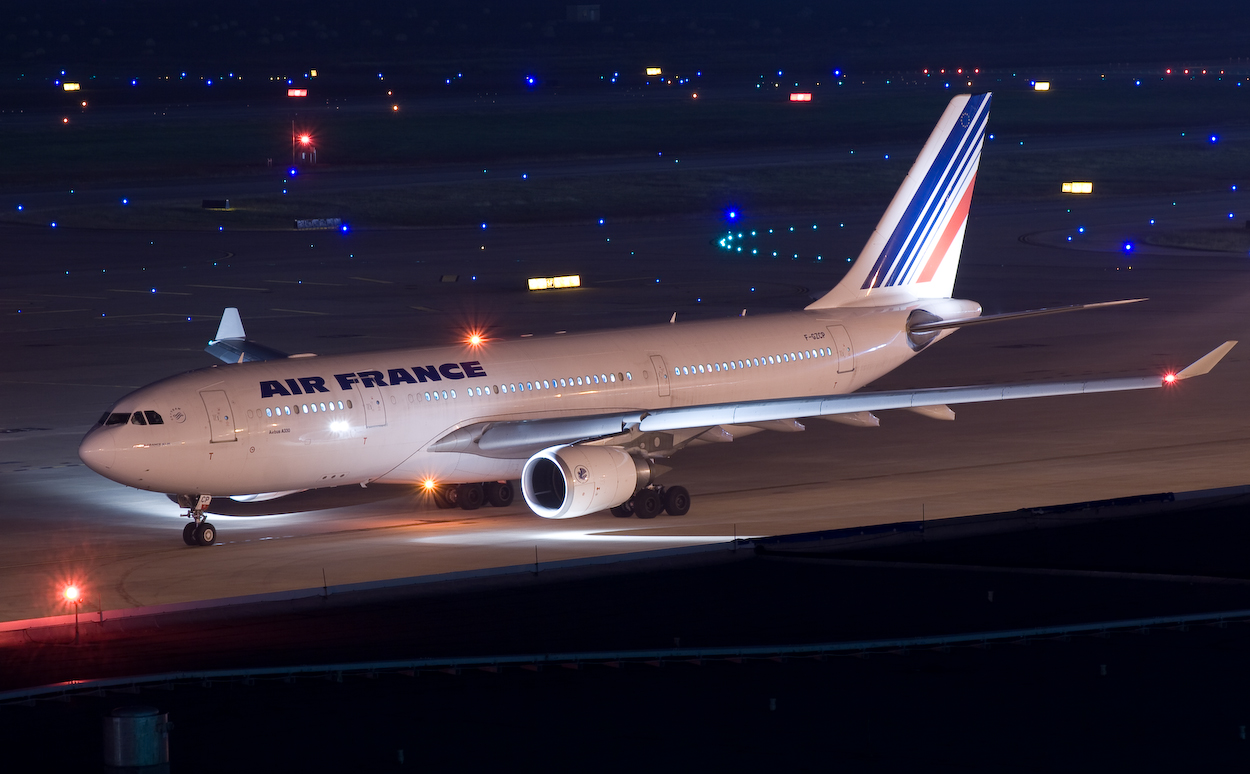
Photo Credits: A330 Accident aircraft photo by Garret Lockhart / Houstonspotters.net

18 December 2009

Second Interim Report on Air France Flight 447 Investigation Released - No Causes Found Yet

Report Summary
The organization responsible for investigating the 1 June 2009 crash of Air France Flight 447, the French Bureau d’Enquêtes et d’Analyses pour la sécurité de l’aviation civile (BEA), released their second interim report on the accident investigation. Although the BEA did not identify one or more causes of the crash, it did conclude that inconsistencies in airspeed measurement led to the disconnection of various flight control systems, the autopilot, and the autothrottle.

Similar airspeed inconsistencies had occurred on other A330 and A340 flights, and the BEA performed a detailed analysis of 13 significant events involving five airlines operating these aircraft models. These events had several similarities with the accident flight. They occurred when the aircraft was in an area of unstable air masses with deep convective phenomena, the autopilot disconnected, and invalid airspeeds were reported to the flight control system. However, unlike Flight 447, these five aircraft had altitude deviations less than 1000 feet, and all remained within their normal flight envelope.

The BEA concluded that inconsistency in the measurement of airspeeds was one of the elements in the chain of events that led to the accident, though these inconsistencies did not fully explain why the airplane crashed. The BEA has so far not been able to recover the flight data recorder or the cockpit voice recorder. The information from these black boxes, as well as an examination of additional wreckage, may help the BEA figure out the cause of the accident.

The second interim report went into quite a bit of detail about what has so far been uncovered in the investigation, and the highlights of that interim report are below.

Accident Overview
The aircraft aircraft, an Air France A330-200 (F-GZCP), operating and flight 447, was on a scheduled international flight from Rio de Janeiro, Brazil to Paris, France. The aircraft departed late on 31 May 2009 from Rio, and crashed in the Atlantic Ocean in the early hours of 1 June 2009. The crash occurred about three hours and 45 minutes after takeoff, in an area of the Atlantic Ocean about 435 nautical miles north-northeast of Fernando de Noronha island.

There were no emergency or distress messages sent by the crew, though there were numerous automatically generate maintenance messages that were sent by the aircraft back to Air France. The last contact between the airplane and Brazilian air traffic control happened around 35 minutes before the crash.

Debris from the aircraft was found near the estimated position of its last radio communication. There were 216 passengers and 12 crew members on board, representing 32 nationalities. A total of 5o bodies were recovered from the ocean, and the remaining passengers and crew are missing and presumed dead.
Automated Maintenance Messages
The automated maintenance messages sent by the aircraft back to Air France provided information on the state of the airplane's systems and on the position of the aircraft. Almost all of these messages were linked to faults in the system used to measure the speed of the aircraft. These airspeed measurement issues were discussed in more detail in an earlier AirSafeNews.com article and on AirSafe.com's Flight 447 page.

Condition of the Airplane When it Struck the Ocean
Based on an examination of the recovered debris the BEA reported that the airplane struck the surface of the sea violently, with a slight pitch-up attitude and with a slight bank. The airplane was largely intact at the moment of the impact since the debris found came from all over the airframe. The airplane was pressurized, the oxygen masks had not been released, all of the life jackets that were found were still in their containers, and the airplane’s flaps were retracted at the time of the impact with the water. All of the wreckage that has been located or collected, and bodies that have been recovered had been floating on the surface of the ocean.

The investigators also said that 43 of the 50 bodies, which based on their assigned seats were from all parts of the cabin, showed multiple fractures to their spinal columns, pelvises and chests. These injuries were consistent with an upward shock to passengers seated in an aircraft that struck the water belly first.

Planned Undersea Search Operations
The BEA, with the help of Airbus, Air France, and a host of organizations from the US, Europe, and Brazil, will conduct an undersea search operation scheduled to start in February 2010 and with a planned duration of 60 days.

Initial AirSafe.com Reports on This Event (4:10)
Audio: MP3 | Video: iPod/MP4 | WMV | YouTube


Additional Resources
AirSafe.com Flight 447 page
Synopsis of second BEA interim report (English)
Complete second BEA interim report (English)
Complete second BEA interim report (French)
First BEA Interim Report (English)
First BEA interim report (French)
Other Air France Plane Crashes
Other Airbus A330 Plane Crashes
BEA Flight 447 page
Wikipedia Flight 447 page

Previous AirSafeNews.com Articles
Initial AirSafeNews.com article 3 June 2009
Air France Flight 447 Update 9 June 2009
Air France Flight 447 Update 10 June 2009
Air France Flight 447 Update 15 June 2009
Air France Flight 447 Update 19 June 2009
Air France Flight 447 Update 26 June 2009
Todd Curtis BBC Interview about Air France Flight 447
FAA orders A330 pitot tube replacements

A330 Photo: Garret Lockhart

18 November 2009

Updates on Two Recent Qantas Accidents Involving an A330 and a 747

Second Interim Report on Qantas Accident of 7 October 2008
The Australian Transport Safety Bureau (ATSB) released its second interim report about a 7 October 2008 event when a Qantas A330-300 (VH-QPA, Flight 72) experienced an unexpected and rapid change in altitude while the aircraft was in cruise at 37,000 feet. The accident resulted in injuries to 110 passengers and nine crew members.

The first interim report identified two significant safety factors. First, one of the air data computers provided incorrect data that was not detected by the aircraft systems. Second, the aircraft's flight control computers did not process some of the aircraft's attitude data in a specific situation.

The second interim report did not identify the cause of the October 2008 event, but detailed the safety actions that have been taken that would prevent a recurrence of the event, including modifications to the A330's primary flight control computer and changes in flight crew operational procedures.


The ATSB addressed the possible relationship between the October 2008 Qantas A330 event and the June 2009 crash of an Air France A330-200 (F-GZCP, Flight 447). Although both investigations are ongoing, the ATSB pointed out several key differences between the two events:

• The air data computers on the two aircraft were different models, and constructed by different manufacturers.

• The cockpit messages and maintenance fault messages from both flights showed a significantly different sequence and pattern of events, with the maintenance messages that were transmitted by the Air France aircraft prior to the accident showing inconsistencies between the measured airspeeds and the associated consequences on other aircraft systems. No such messages were recorded by by the Qantas aircraft.

• The airspeed sensors (pitot probes), which were a issue of great concern in the Air France Accident, were not an issue in the Qantas accident because they were different airspeed sensor models made by different manufacturers.

Update on Qantas 747 Decompression Event
On 25 July 2008, a Qantas 747-400 (VH-OJK, Flight 30) experienced a rapid decompression while cruising at 29,000 feet after an oxygen cylinder that was part of the emergency oxygen system exploded and blew a hole in the fuselage. In their second interim report on the decompression event, the ATSB reported that there is no evidence of a safety problem with the oxygen bottles of the type involved in the accident.

ATSB reported that among the actions taken by Qantas were a fleet-wide safety inspections of oxygen system installations and a revision of flight crew emergency procedures, including the introduction of a new depressurisation checklist. Also, various tests have not been able to replicate the cylinder failure that initiated the accident.

Additional Information
You can find more details about these three accident investigations, including links to the interim reports from the investigating authorities, at the following pages:
Qantas 747 Depressurization Accident 25 July 2008
Qantas A330 In Flight Upset Accident 7 October 2008
Air France A330 Crash 1 June 2009

09 July 2009

Air France Flight 447 - the BBC Interviews

After more than a month, most of the wreckage and many of the victims of Air France Flight 447 remain lost at sea. The public's and the media's attention remain focused on the the causes of the crash and on the recovery of the black boxes.

This podcast features two interviews with Vincent Dowd from the BBC World Service. In the first interview on June 12th, 2009, we discussed several issues, including differences in flight control philosophy between Airbus and Boeing, and how aircraft manufacturers respond when one of their airplanes crash.

In the second interview, recorded on June 23rd 2009, we discussed the progress of the accident investigation. We also talked about how the circumstances of this accident showed how it may be possible to use advanced technologies to supplement or even replace the cockpit voice recorder and flight data recorder.

Please listen to the interviews, and feel free to send your comments or questions to AirSafe.com.

Resources
Listen to the Interviews (18:38)
Additional Accident Information
Other Air France Plane Crashes
Other Airbus A330 Plane Crashes
Earlier AirSafe.com Audio and Video Podcasts About the Accident

15 June 2009

Air France Flight 447 Update for 15 June 2009


As the investigation into the crash enters its third week, ships, planes, and submarines continue to search the Atlantic Ocean for wreckage, for the bodies of the victims, and especially the black boxes. Ships, planes, and submarines from Brazil, France, the US, and other countries have searched for clues to the crash in a large area of the Atlantic ocean between Brazil and Africa. So far, a wide variety of wreckage, and the remains of about 50 of the 228 occupants, have been recovered. At least two ships with detection equipment from the US Navy are on their way to the search area, as is a French submarine. Smaller French submersibles will be used to explore the bottom of the ocean once wreckage from the aircraft is located.


Evidence Points to In-flight Breakup
Initial evaluation of 16 of the recovered bodies by the Brazilian authorities suggests that the aircraft had some sort of catastrophic event while in flight. Bodies were recovered in two areas of the ocean about 50 miles (80 km) apart. Given the amount of time that the bodies were in the water, it is unlikely that this distance was due to the actions sea currents and winds. Also, there was no indication of burns, inhaled smoke, or the effects of an explosion on the examined bodies. No water was found in the lungs, which suggests that none these 16 victims drowned, and there were extensive fractures in many of the bodies. These findings are consistent with the bodies experiencing the kind of trauma associated with impacting water at high speed.


Previous Air France Airbus Incidents

According to a report in the Times of London, there were six previous Air France incidents on Airbus aircraft since 2008 that involved “a rather incoherent cocktail of alarms” and “severe breakdowns”. These appear to have originated with malfunctioning pitot tubes in stormy weather.

In one reported incident, the crew on a flight between Paris and Tokyo issued a mayday call in turbulent weather after a loss of speed indication information resulted in the disengagement of the automatic pilot and set off several alarms. In these previous six incidents, the pilots regained control of the aircraft.

Insurance Costs
Le Monde newspaper of France estimates that the estimated insurance related costs of the accident will range between $330 and $750 million. The estimated value of the aircraft was 67.4 million euros ($94.4 million).

Other News
In a bizarre and tragic turn of events, the ANSA news agency reported that a married couple from Italy who missed the accident flight after arriving late to the airport were involved in a car accident in Austria, killing the wife and seriously injuring the husband.

Resources
Additional Accident Information
Other Air France Plane Crashes
Other Airbus A330 Plane Crashes
AirSafe.com Audio and Video Podcast About the Accident

10 June 2009

Air France Flight 447 Update for 10 June 2009


Update for 10 June 2009: The number of bodies recovered has increased to 41, and Brazilian authorities have begun the process of identifying bodies. The Brazilian Air Force has also incorporated the recommended change of the pitot system in the presidential aircraft, an A319. Air France has accelerated its effort to replace pitot tubes on its A330 and A340 Airbus fleet after members of one pilots union threatened to refuse to fly the unmodified airplanes. The airline also estimates that all the affected pitot tubes will be replaced by the end of July.


The vertical stabilizer is the largest piece of the aircraft that has been recovered. It shows no outward sign of fire or explosion, and a closer examination of the damage on that stabilizer will provide clues about whether it separated from the rest of the fuselage on impact with the water or while in flight. AirSafe.com will continue to provide updates to the accident investigation as more information becomes available.

Latest Accident Updates
Other Air France Plane Crashes
Other Airbus A330 Plane Crashes
Accident Analysis from 7 June 2009 Issue of the Times (UK)

09 June 2009

Air France Flight 447 Update for 9 June 2009

By Tuesday June 9th, the number of bodies recovered increased to 28, and a substantial amount of wreckage has been recovered, including the vertical stabilizer. The bodies and wreckage were recovered about 400 miles (640 kilometers) northeast of the Fernando de Noronha islands off Brazil's northeastern coast, and about 45 miles (70 kilometers) from where the jet was last estimated position. Equipment for locating the beacons attached to the cockpit voice recorder and flight data recorder is not yet in place, but will be in the next few days.

Naval forces from Brazil, France, and the US will all be actively involved in this search. In other developments, Air France revealed that their entire A330 fleet had been scheduled to have part of their airspeed measuring system replaced, specifically a device called a pitot tube. While some Air France A330 aircraft had the replacement done, the accident aircraft had not. There is no indication that the this device was related to the sequence of events that led to this crash. AirSafe.com will continue to provide updates to the accident investigation as more information becomes available.

Initial AirSafe.com Reports on This Event (4:10)

Audio: MP3 | Video: iPod/MP4 | WMV | YouTube


Additional Resources
Accident Investigation Updates and Resources
Fatal Events for Airlines from Europe
Fatal Air France Plane Crashes
Other A330 Crash Events
Air France Wikipedia Page
Flight 447 Accident Wikipedia Page

03 June 2009

Air France Flight 447 Debris Spotted


1 June 2009; Air France A330-200; Atlantic Ocean:: The aircraft was on a scheduled international flight from Rio de Janeiro, Brazil to Paris, France. The aircraft crashed in the Atlantic Ocean in an area roughly 390 miles (650 kilometers) northeast of Brazil's Fernando de Noronha islands, which are about 220 miles (354 kilometers) off the northeast coast of Brazil. Debris from the aircraft was found near the estimated position of its last radio communication. All 216 passengers and 12 crew members, together representing over 32 nationalities, are missing and presumed dead.


Recovery Efforts
Brazilian military aircraft have spotted several areas of suspected debris, and ships from Brazil and elsewhere are converging on these areas to recover any floating debris and the bodies of any crash victims. What isn't yet known is the location of any wreckage, including either of the black boxes (cockpit voice recorder and flight data recorder). Each recorder is equipped with an underwater locator beacon, also called a "pinger," which is activated when the recorder is immersed in water. It transmits an acoustical signal that can be detected with a special receiver at depths of up to 14,000 feet (over four kilometers).


Investigation and Possible Causes
The investigation is headed by the French Bureau d'Enquêtes et d'Analyses (BEA), the equivalent of the NTSB in the US or the AAIB in the UK, and the BEA will be assisted by a variety of other nations, including Brazil and the US. So far, the most direct evidence of the cause of the accident is the presence of aircraft debris on the ocean surface and a series of automatically generated maintenance messages that were transmitted from the plane shortly before the crash. According to Air France officials, these messages indicated that there were several problems with the aircraft, including some unspecified problems with the electrical system and cabin pressurization system.

While there were severe thunderstorms in the area of the crash, and some suspicion that the aircraft was hit by lightning or encountered severe turbulence, there is no direct indication that this occurred. The presence of the debris field on the ocean surface also does not imply that the aircraft broke up in flight.

AirSafe.com will update crash information as it becomes available.

Podcast About this Event (4:10)
Fatal Events for Airlines from Europe
Fatal Air France Plane Crashes
Other A330 Crash Events
Air France Wikipedia Page
Flight 447 Accident Wikipedia Page

Credits: A330 Accident photo by Garret Lockhart / Houstonspotters.net